


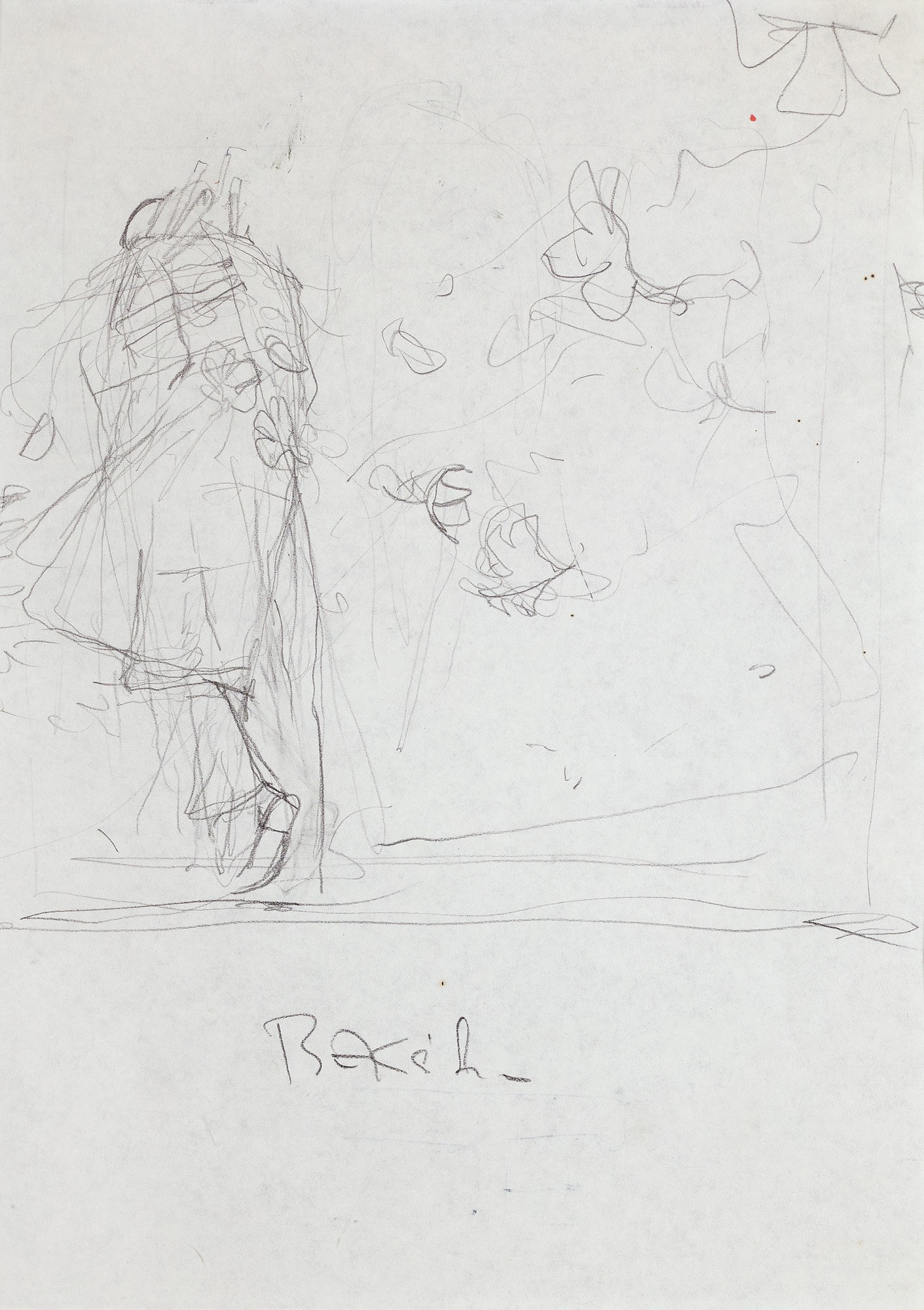
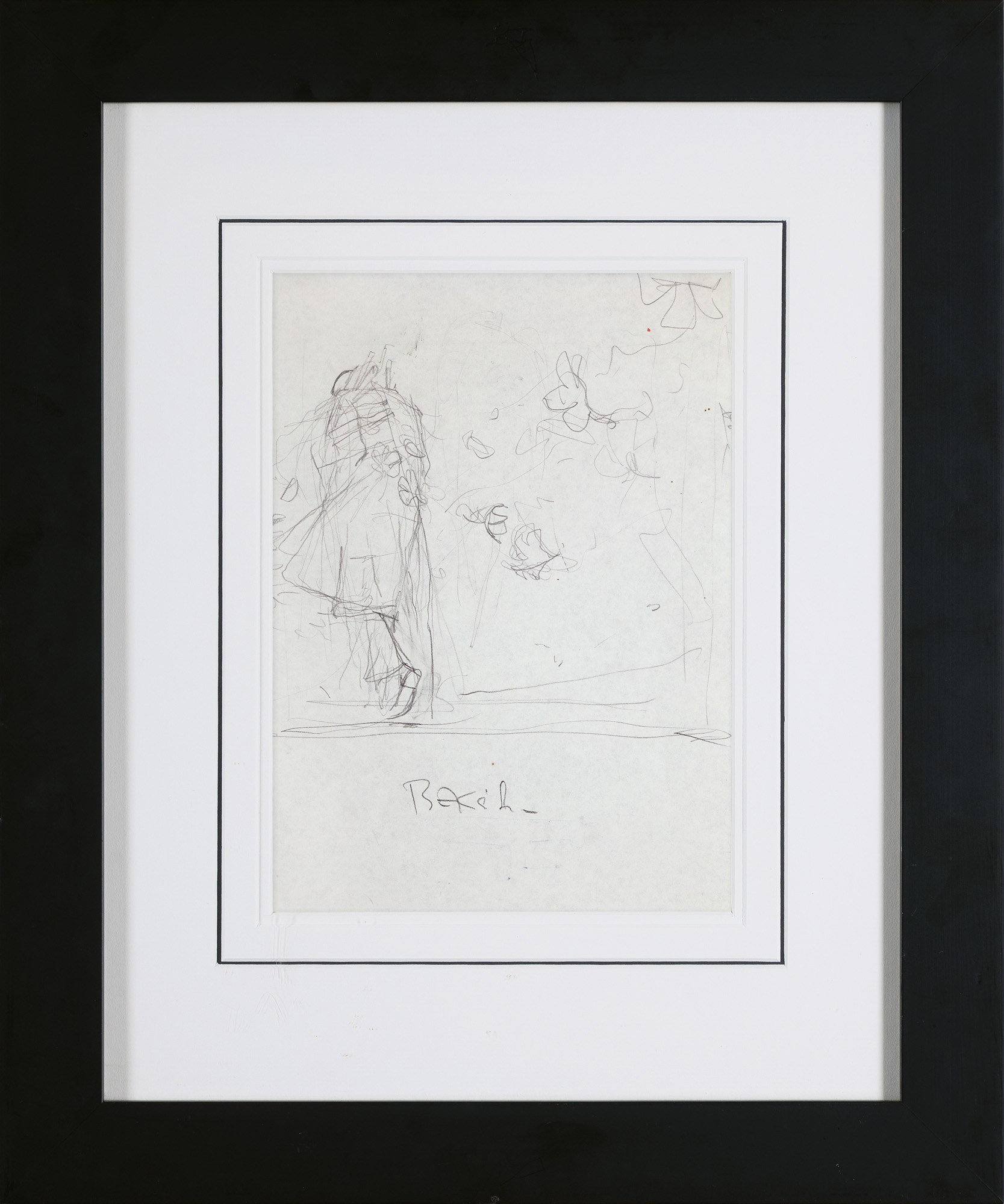
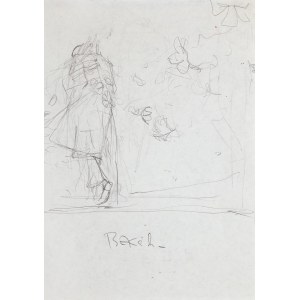
29.8 x 21 cm - pencil, paper
pencil, paper, signed in the center: BEKsiński
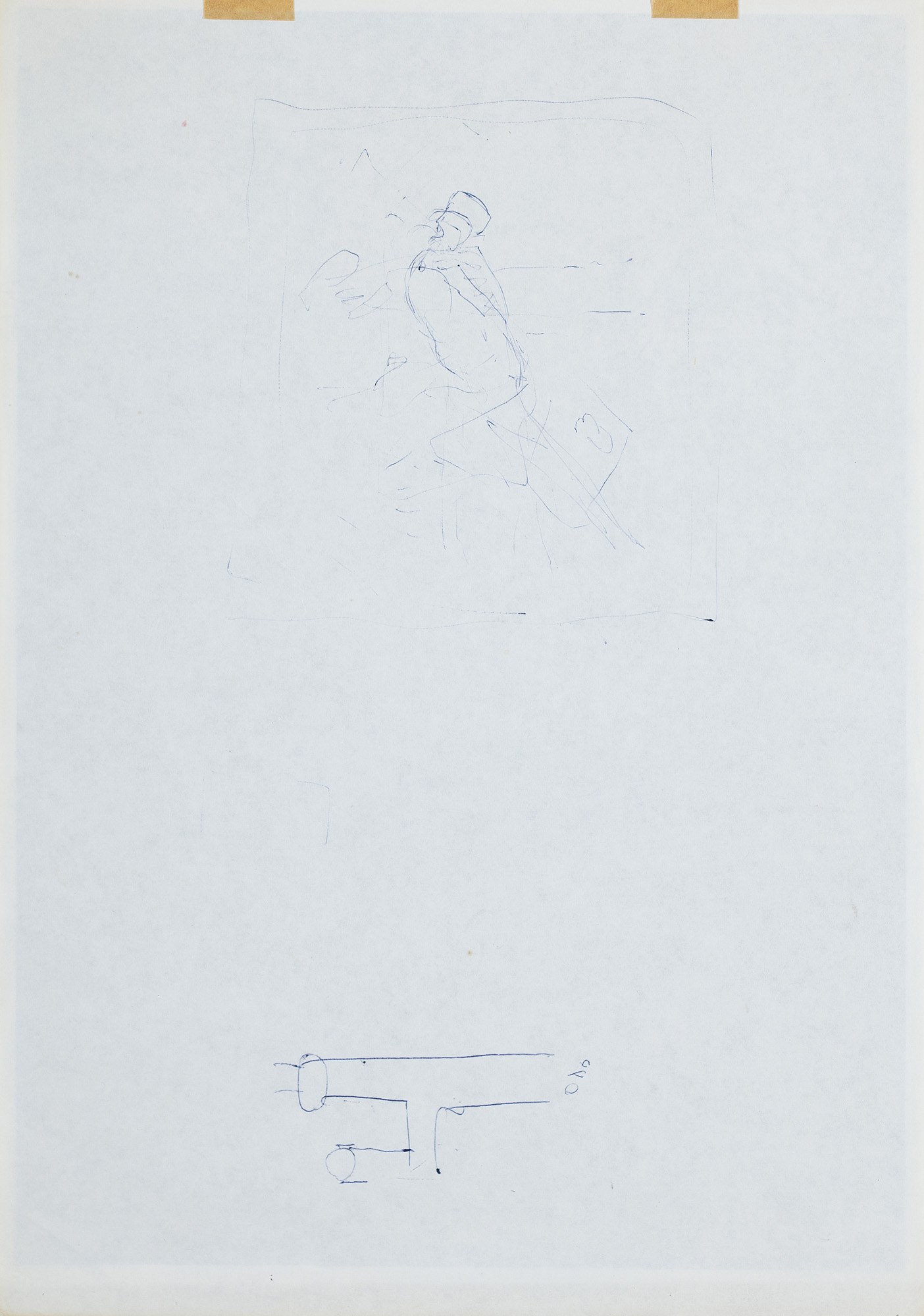
Sketches in ballpoint pen on the reverse.
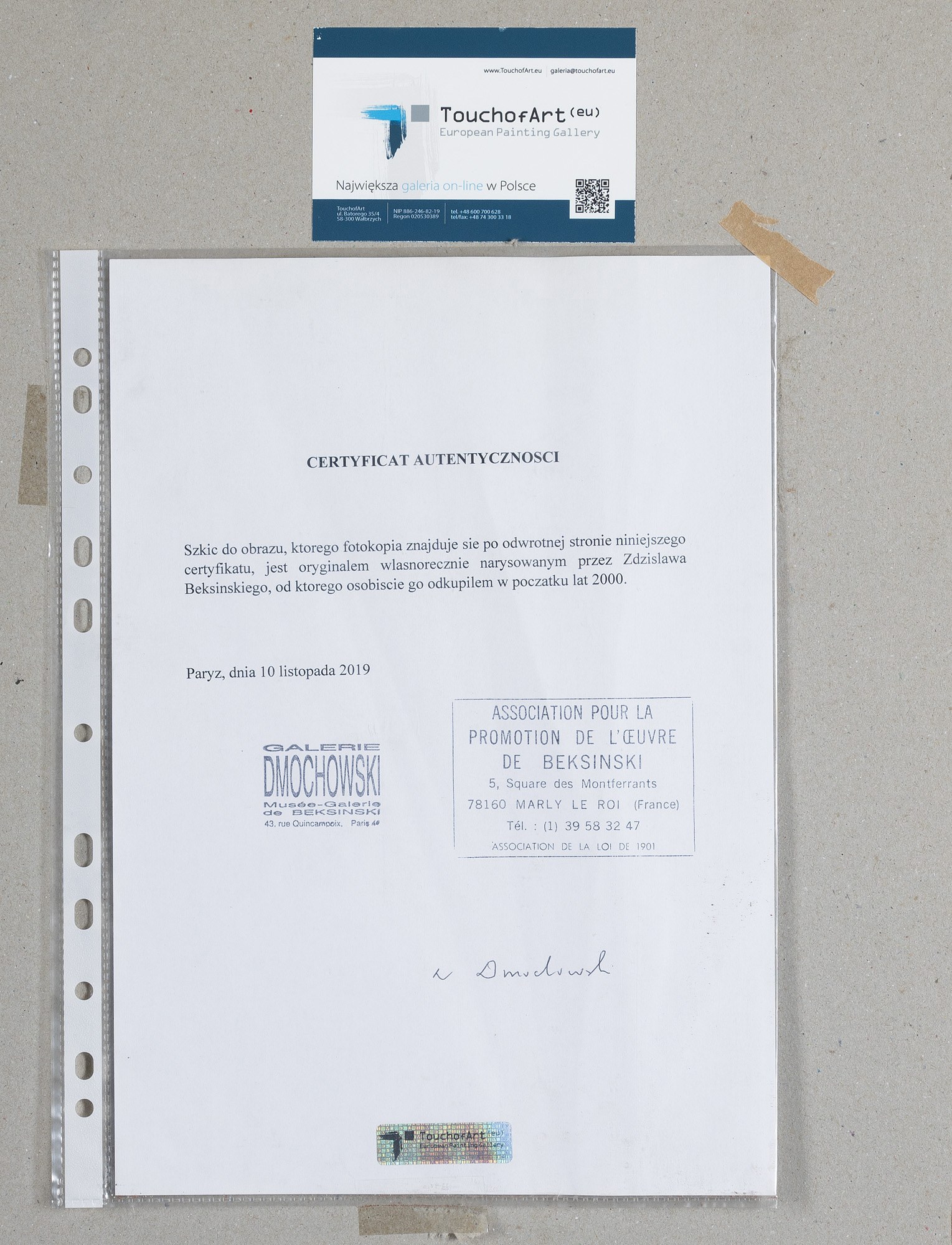
The work is accompanied by a certificate of authenticity issued by Piotr Dmochowski on November 10, 2019.
♣ Droit de suite: ♣ An additional fee will be added to the Purchase Price pursuant to the right of the artist and his heirs to receive remuneration in accordance with the Act of February 4, 1994, on Copyright and Related Rights (droit de suite).
Zdzisław Beksiński (Sanok, February 24, 1929 – Warsaw, February 21, 2005) studied at the Faculty of Architecture of the Kraków University of Technology from 1947 to 1952. He was a self-taught artist who achieved an unquestioned status in Polish contemporary art, confirmed by the presence of his works in prestigious exhibitions and museum collections. Initially, he focused on photography, a field he had been interested in since his student years; after 1956, he gained recognition as a creator of photograms whose aesthetic was based on textural effects. From 1958 to 1962, he created abstract relief paintings with rich textures—mainly made of metal—which were a variation on material painting. Toward the end of this period, he created openwork forms in the shape of figures and full-relief metal sculptures. The next phase of his career spanned the years 1962–1974, when he devoted himself primarily to drawing. In the 1960s, he drew figural compositions in pen and ink, characterized by caricatured deformations of the figures. From the late 1960s onward, he created drawings in charcoal and colored pencils, which served as a monochromatic counterpart to his parallel work in painting. From 1974 onward, he devoted himself almost exclusively to painting. His distinctive style was based on technical perfection, accompanied by an extraordinary vision. He painted a world after a catastrophe, marked by the stigma of death and decay. His paintings are populated by figures and creatures that, while human or animal in form, possess the characteristics of phantoms, automatons, or decaying corpses. The artist did not give his paintings and drawings titles (apart from organizational symbols), thereby emphasizing his lack of interest in the literary aspect of his depictions. He himself said that when painting, he completely surrenders to his vision, “photographing” it. In recent years, he incorporated electronic image-generation techniques into his artistic practice, which he used to create computer photomontages. Beksiński’s art, which has been exhibited and discussed numerous times, evokes extreme reactions among experts and the public.
The largest, systematically expanded collection of his works in Poland is housed at the Historical Museum in Sanok; abroad, it is located in Paris, in the collection of Piotr Dmochowski, who has been collecting and promoting the artist’s work since 1983. He organized solo exhibitions of Beksiński’s work, including at the Galerie Valmay in Paris in 1985, 1986, and 1988, as well as a permanent exhibition at his own Galerie Dmochowski—Musée-galerie de Beksiński, which operated from 1989 to 1996. It was also under his auspices that the artist’s monumental albums were published in 1988 and 1991.
In Poland, a monograph on Beksiński by Tadeusz Nyczek was published by Arkady in 1989 (second edition in 1992). In the spring of 2005, a major exhibition of Beksiński’s paintings took place at the Abbots’ Palace in Gdańsk-Oliwa, and Wiesław Banach, director of the Museum in Sanok, published a comprehensive monograph on the artist.
Since October 2016, the Nowa Huta Cultural Center in Kraków has hosted a permanent exhibition of 250 works (paintings, drawings, and photographs) by Zdzisław Beksiński from the private collection of Anna and Piotr Dmochowski. Since June 2021, a permanent exhibition of 30 paintings by Beksiński from the Dmochowski collection has also been on display at the Archdiocesan Museum in Warsaw.
(photo: Piotr Dmochowski, CC BY-SA 3.0, https://commons.wikimedia.org/w/index.php?curid=8960820)













最近瀏覽過的
登錄以查看拍品列表
收藏
登錄以查看拍品列表