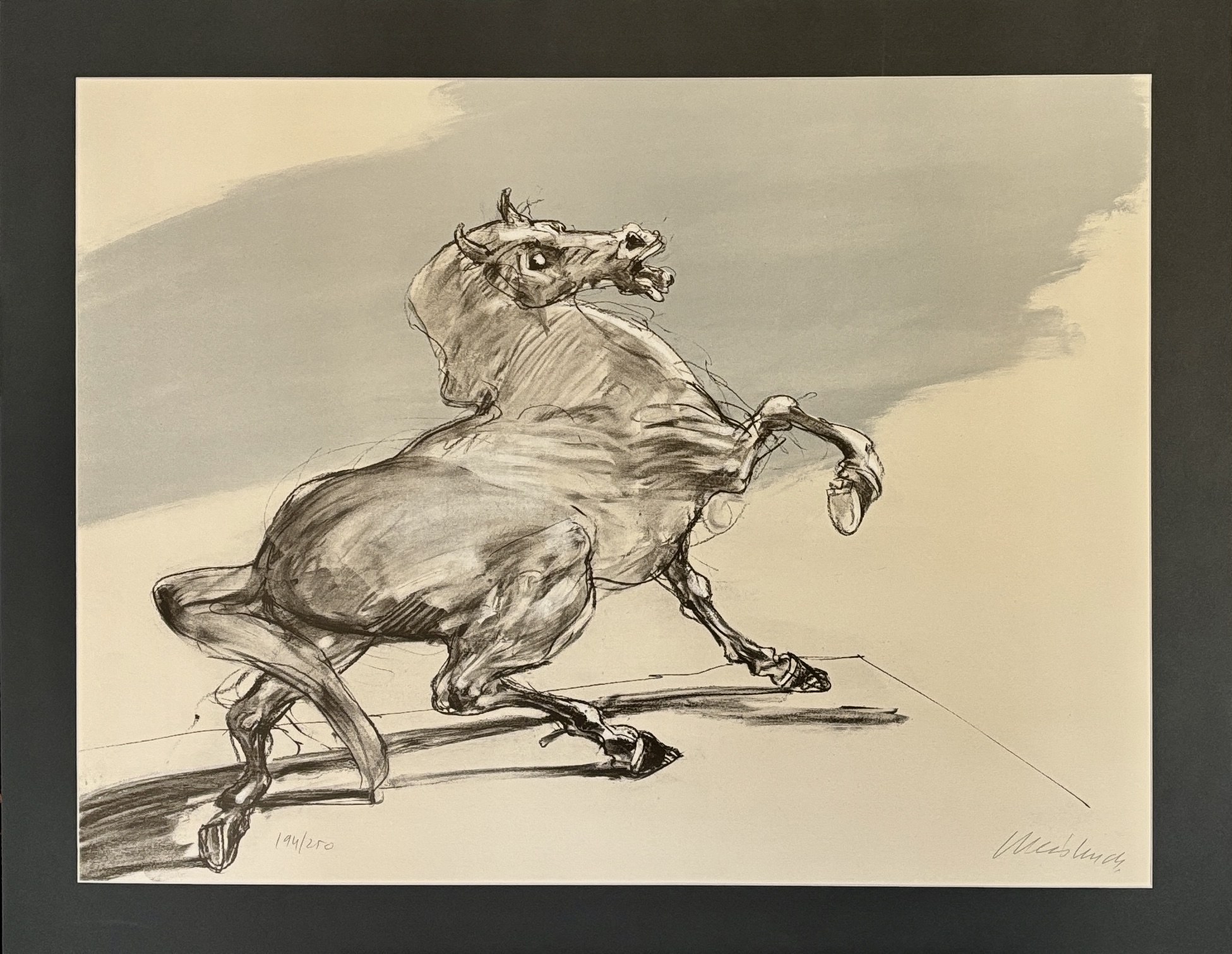
Lithograph, Velin Arches paper, dimensions: 57 x 75 cm light passe-partout, 67 x 86 signed in pencil by the author p.d. "Weisbuch" and hand-numbered 194/250.
Publisher: Vision Nouvelle (Paris).
Gallery certificate of authenticity attached.
(Vision Nouvelle was a powerful gallery and publishing house that promoted the most prominent printmakers of the era, and they organized major editorial campaigns and Weisbuch exhibitions (including a famous exhibition in Paris just about 1977).
Claude Weisbuch is an absolutely unique figure in the world of 20th century printmaking and painting. His works are instantly recognizable, which in the art world is one of the highest forms of ennoblement.
Claude Weisbuch is a French artist who made a name for himself primarily as a painter, engraver and lithographer. His first exhibition in Paris was held in 1957, and in 1961 he received the prestigious Critics' Prize (Prix de la Critique), which launched his international career. In 1968, he became a member of the Société des peintres-graveurs français. In 1987, he was awarded the Order of the Chevalier of the Legion of Honor.
He is often called a master of the line. Unlike artists who try to represent reality perfectly, he focused on the invisible - on energy, vibration and movement. As an accomplished printmaker, Weisbuch operated with lithography and dry needle with unprecedented lightness. His lines are nervous, fast, almost violent, yet each line is exactly where it should be. Claude Weisbuch had two great passions that define his work: music and movement. This horse is the quintessence of the latter.
Weisbuch is an artist for "connoisseurs of the workshop." His works are in the most important museums in the world, such as MoMA in New York and Centre Pompidou in Paris. He is not a "local" artist, he is a name of global significance. At a time when art has become increasingly conceptual and abstract, Weisbuch has remained faithful to masterful drawing. This makes him respected by other artists and collectors who value the "hand of the master." Weisbuch's art has one quality that guarantees its longevity: timelessness. He did not create in the fashionable style of the 1970s or 1980s. He drew from Rembrandt, Goya and Daumier. As a result, his works do not "age" visually. In 50 years this lithography will look as modern and fresh as it does today.
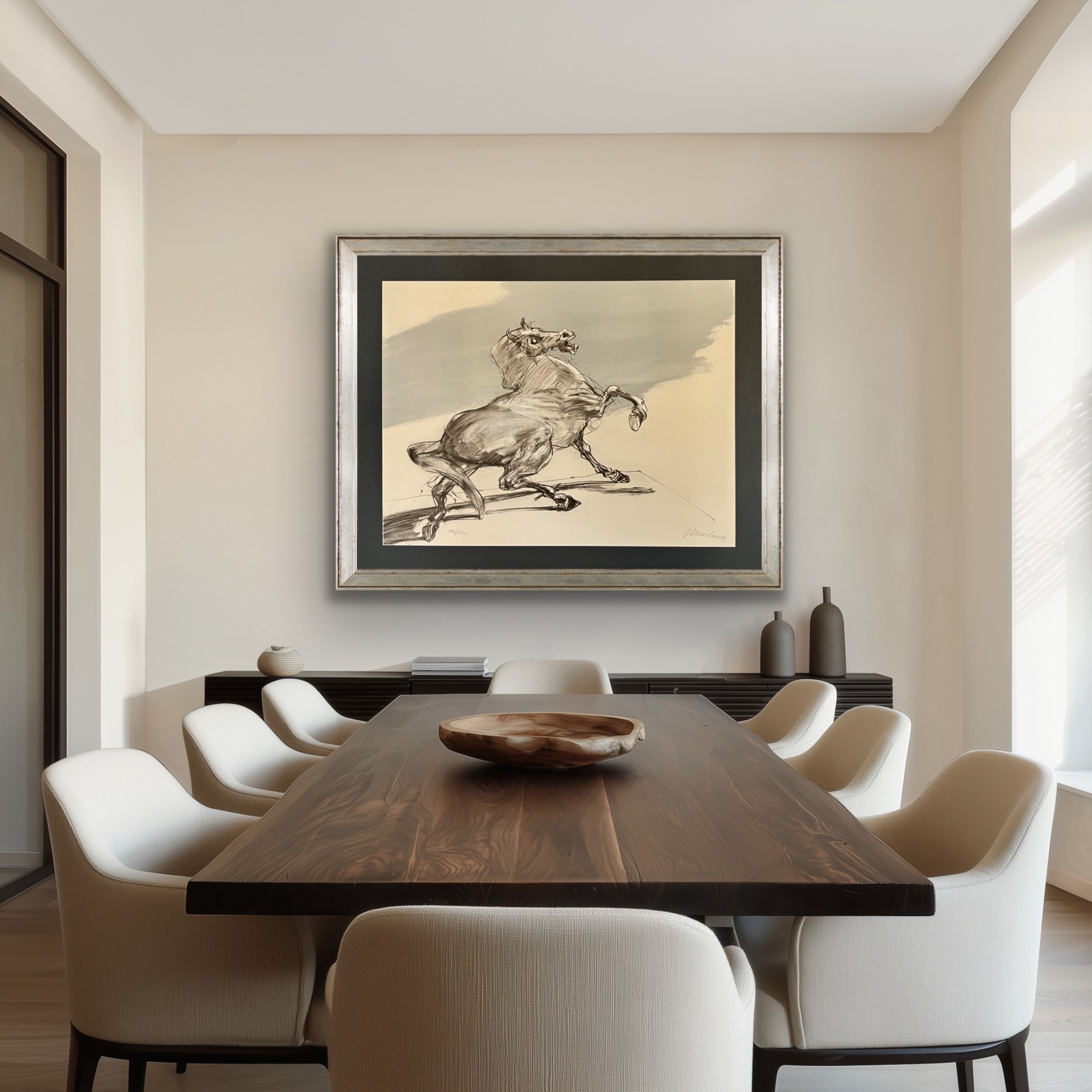
The framing shown in the visuals is for illustrative purposes only and does not constitute a commercial offer.