


45.7 x 63.7 cm - pastel, paper glued to cardboard
signed lower right: L. Wyczół. | 905
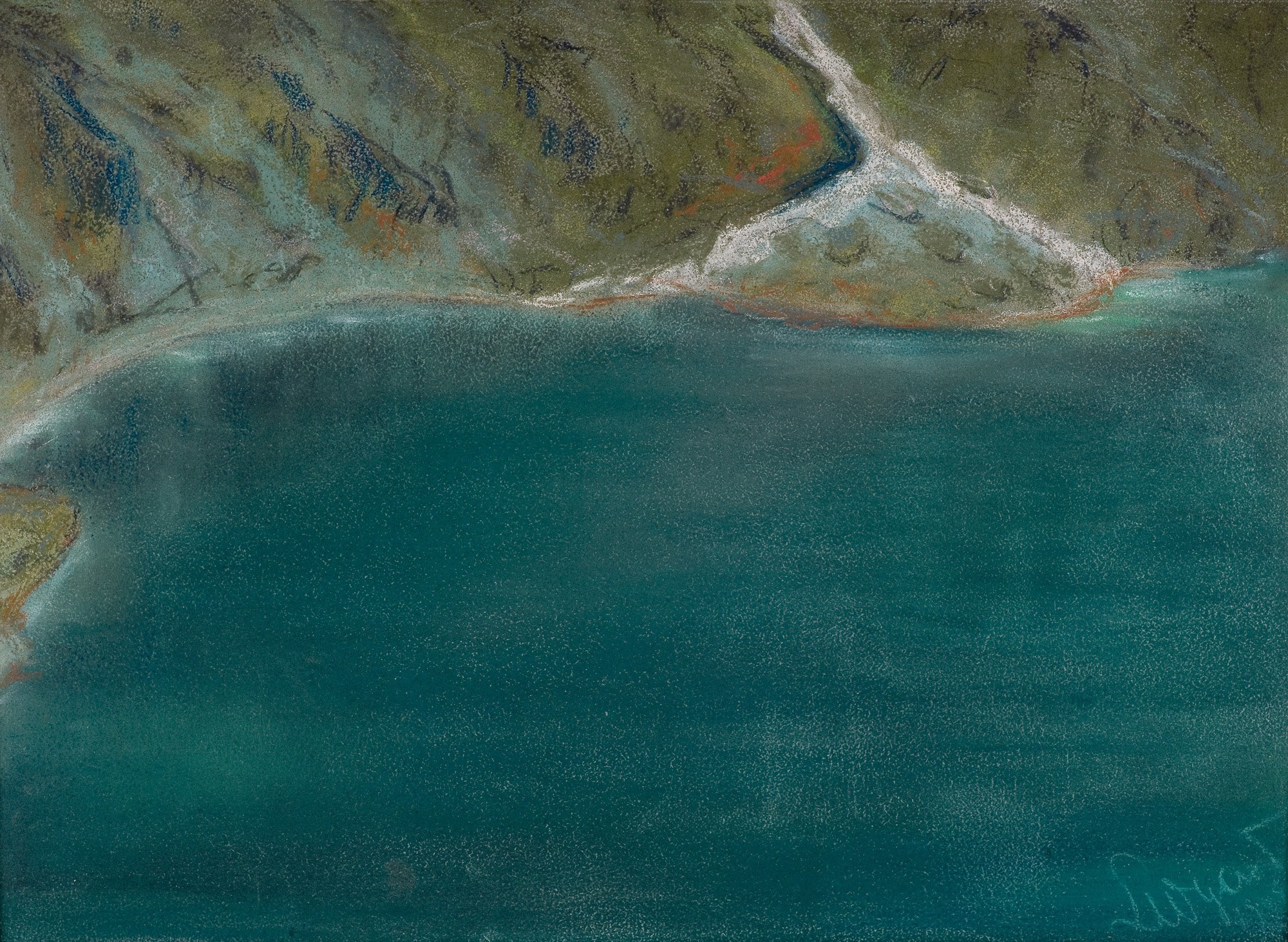
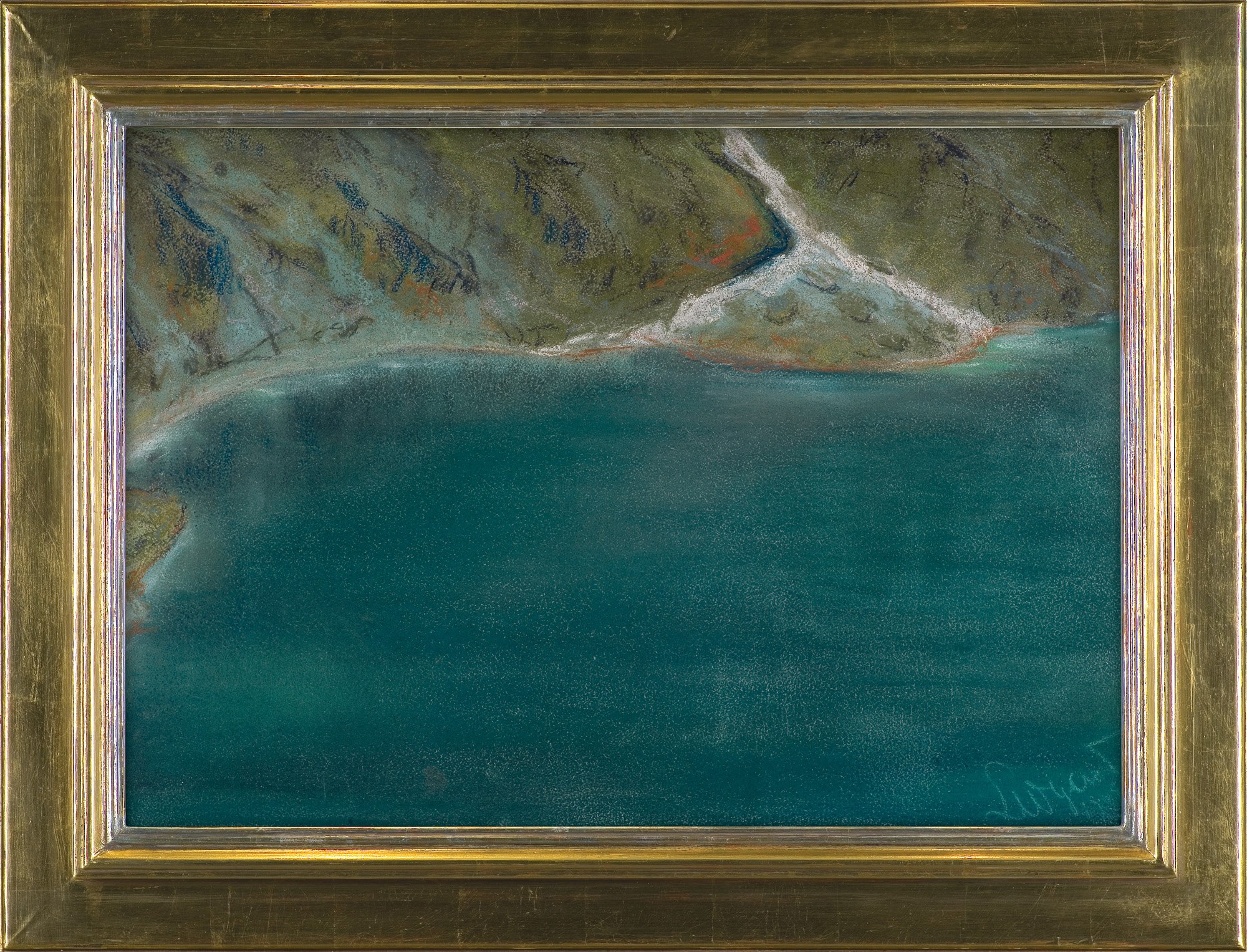
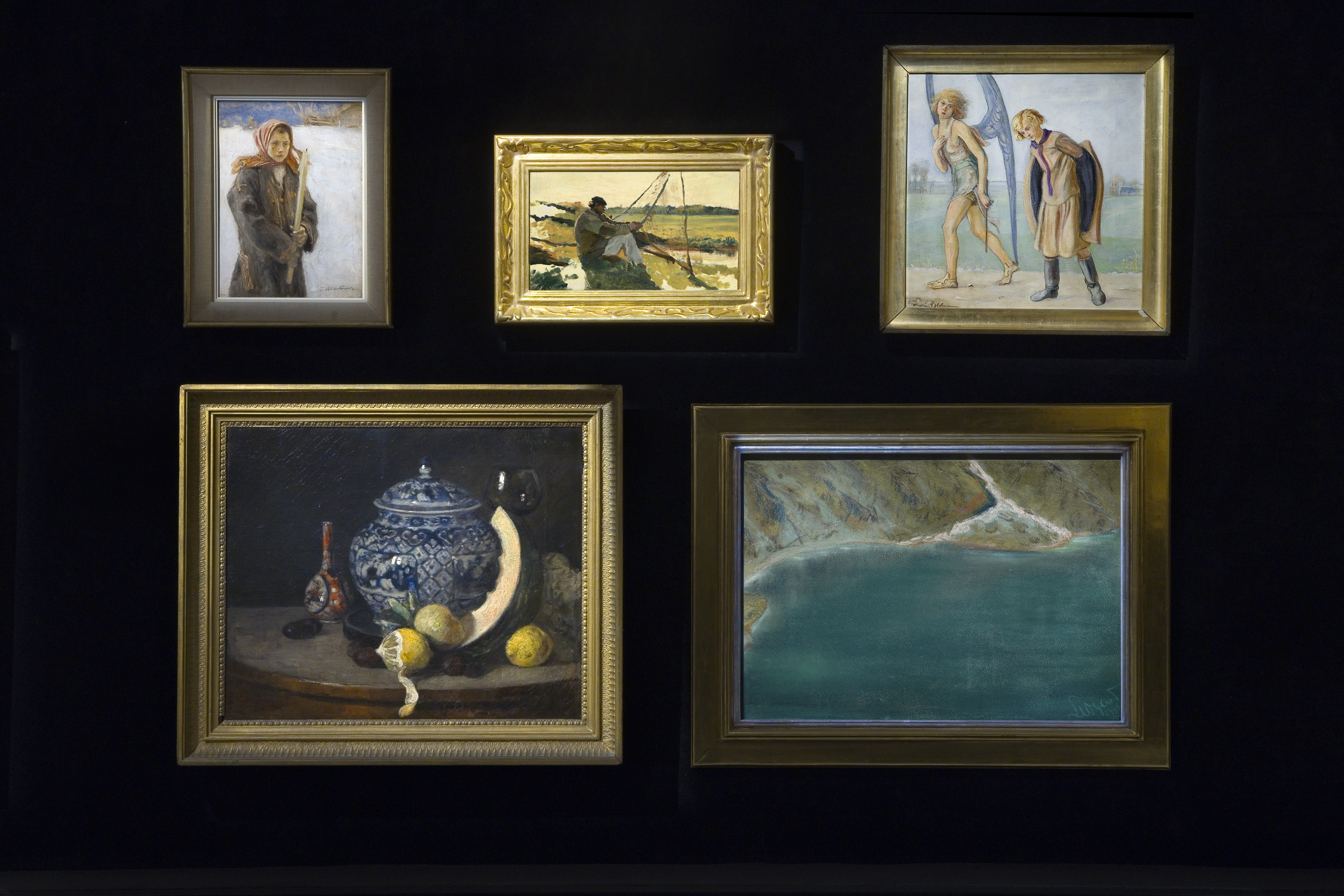
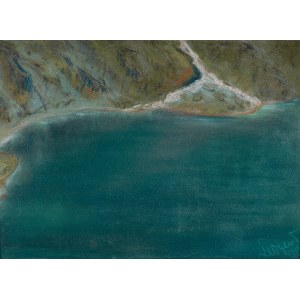
The blue-emerald surface of Morskie Oko is depicted from a high, bird’s-eye view. Wyczółkowski employed a selective framing technique in which the dominant portion of the composition is occupied by the water’s surface, transitioning from dark tones reflecting the shadows of the slopes along the shores to turquoise greens in the distance. The mirror-like surface of the water contrasts with the steep slope towering above it, rendered in a palette of earthy browns and olive greens. This is broken by a bright streak of a scree-filled gully, flowing down toward the lake’s surface.
The depicted Morskie Oko can be compared to the oil painting *Czarny Staw* from 1906 (in the collection of the National Museum in Kraków). These two works are characterized by a very sparse, almost synthetic composition, a dark, limited color palette, and the use of a relatively thin layer of paint or pastel. A similar atmosphere can be observed in the paintings, as well as an expression of the artist’s fascination with the rugged beauty of the landscape and the monumentality of the mountains. In both works, the view is depicted fragmentarily, below the horizon line—in this technique, as well as in the zoned composition and the contemplative mood of the paintings, the influence of Far Eastern art is evident, to which the artist succumbed, much like other artists of that time.
Leon Wyczółkowski’s Tatra Mountains series occupies a significant place in the artist’s oeuvre and, at the same time, ranks among the foremost achievements of Polish landscape painting. Returning to the Tatra Mountains in 1904–1906 and 1910–1911, Wyczółkowski closely observed the play of light and the constant transformations of the landscape, as Piotr Czyż writes: “No landscape fascinated him as much as the mountains.” Many anecdotes have survived that attest to the artist’s perseverance as he studied the Tatra Mountains’ changeable weather and worked undaunted despite adverse conditions (Pastel Masters: From Marteau to Witkacy. Collection of the National Museum in Warsaw, exhibition catalog, scientific editor Anna Grochala, National Museum in Warsaw, Warsaw 2015, p. 466). Critic Tadeusz Jaroszyński described this series as “a great painterly epic about the Tatra Mountains,” and Anna Król counts these works among the most outstanding examples of Polish Japonism. Wyczółkowski himself, who in the early 20th century abandoned oil painting in favor of pastels, was already recognized by contemporary critics as “Poland’s greatest pastelist,” capable of bringing this technique “to the height of perfection,” and to this day he is counted among the most outstanding masters of this medium.
The painting has been exhibited, mentioned, and reproduced, among others, in: – Ryszard J. Kluszczyński, Leon Wyczółkowski, published by WBC, Kraków 2022, p. 92;
– Ryszard J. Kluszczyński, History of Polish Painting: From Gothic Panel Painting to Stefan Gierowski, WBC, Kraków 2022, p. 266.
Leon Wyczółkowski (Huta Miastkowska near Siedlce 1852 – Warsaw 1936) —painter, printmaker, and teacher—was one of the most outstanding Polish artists working at the turn of the 19th and 20th centuries. He began his artistic studies in Warsaw’s Drawing Class under the guidance of Wojciech Gerson and Aleksander Kamiński (1869–1873), then continued them at the Munich Academy of Fine Arts under Aleksander Wagner (1875–1877), in Kraków under Jan Matejko (1877/78), and during two trips to Paris (1878 and 1889). After completing his studies, he settled in Lviv and later moved to Warsaw. He spent the years 1883–1893 traveling through Ukraine and Podolia. In 1895, he moved to Kraków after being appointed a lecturer at the local School of Fine Arts. In the following years, he traveled extensively—to Italy, France, Spain, the Netherlands, and England. He was among the founding members of the “Sztuka” Society of Polish Artists. He exhibited extensively both in Poland and abroad. He spent the years 1929–1936 in Poznań and Gościeradz, commuting to Warsaw, where (beginning in 1934) he headed the Department of Graphic Arts at the Academy of Fine Arts. He painted landscapes, portraits, genre scenes, still lifes, and flowers. He frequently used pastels and watercolors; he was an outstanding printmaker and also worked in sculpture.













最近瀏覽過的
登錄以查看拍品列表
收藏
登錄以查看拍品列表