


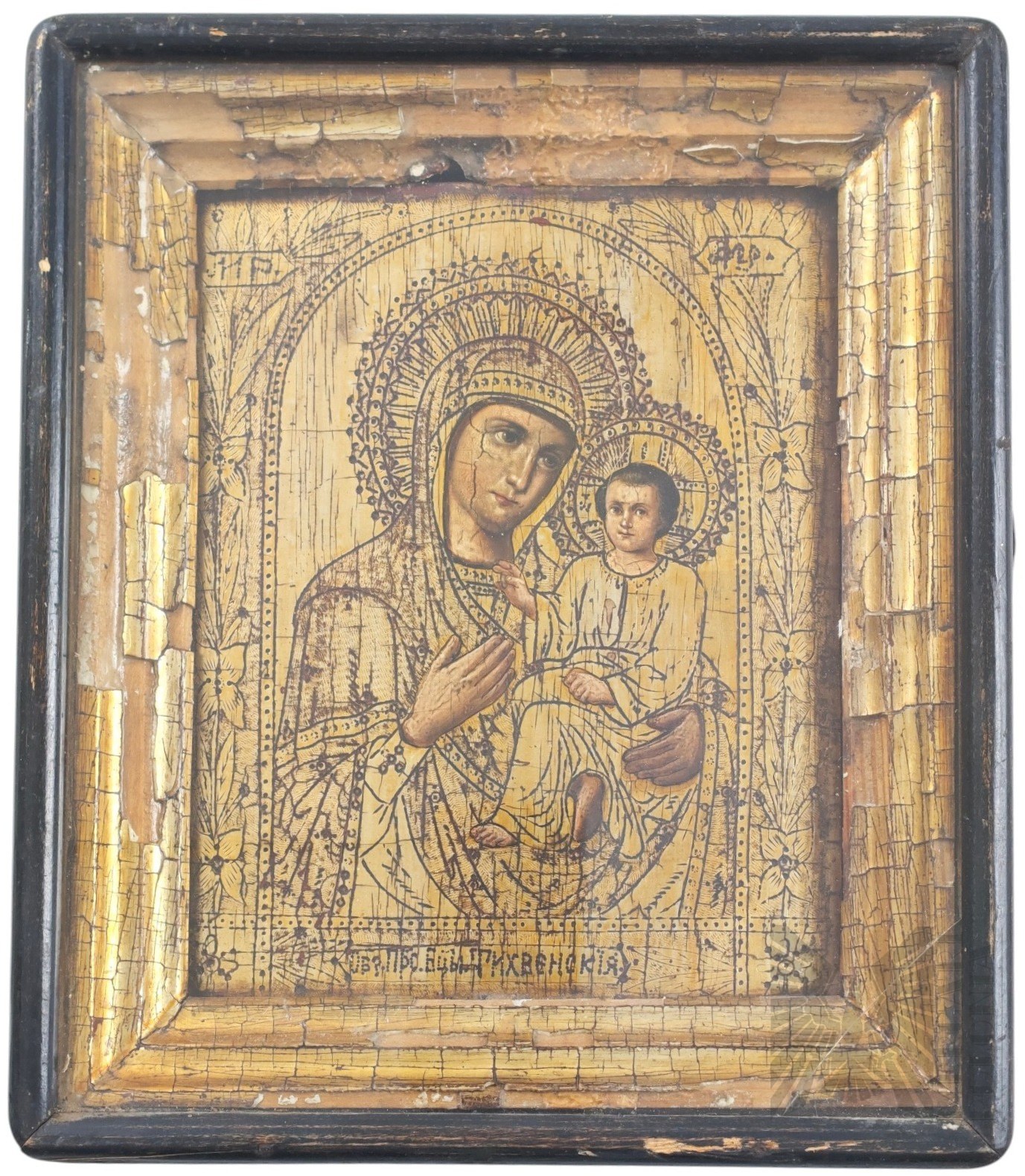
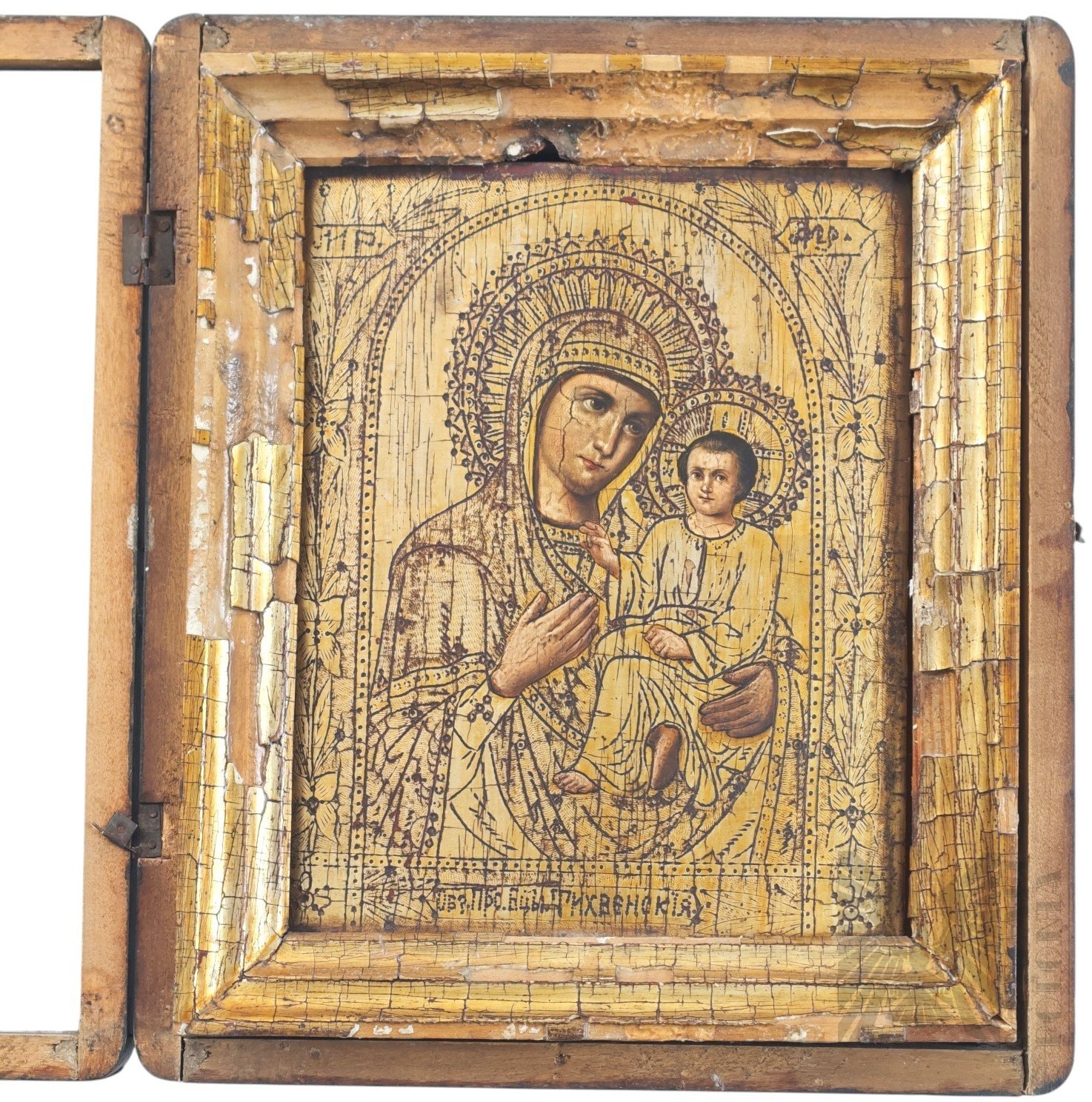
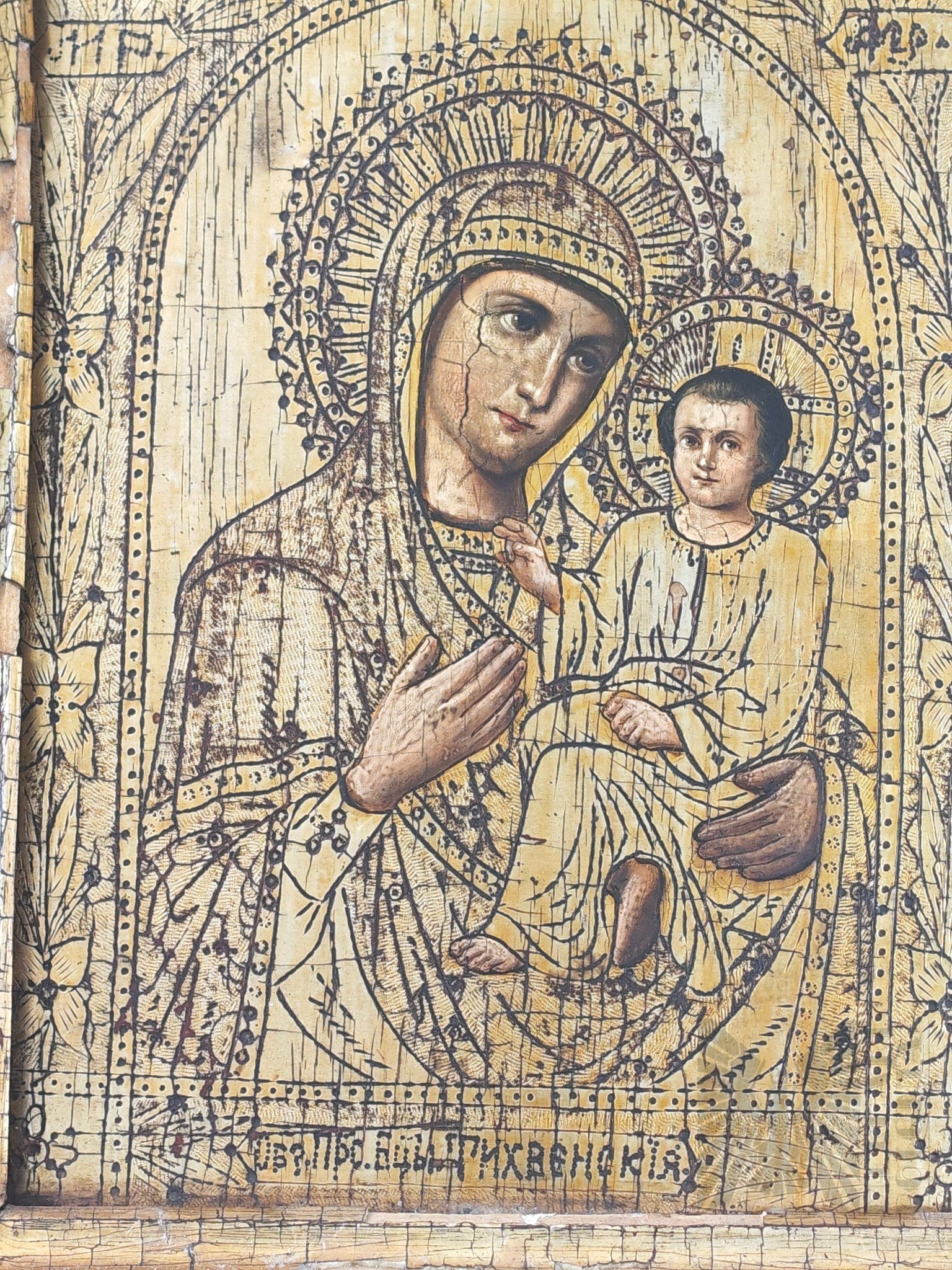
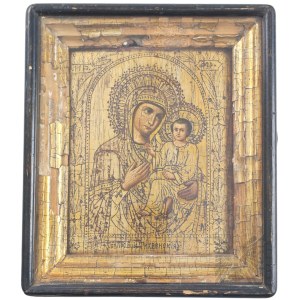
The icon depicts the Mother of God in a frontal view, holding the Infant Christ on her left shoulder. The Mother of God’s head is slightly tilted toward her Son, creating a subtle emotional connection between the figures. Christ is seated in a half-profile pose, with his hand raised in a gesture of blessing. The background and robes are rendered in an ornamental style, dominated by gilding. The faces and hands are drawn with thin, precise lines, using a limited color palette. The icon is set in a deep box frame (kiot), showing visible signs of wear. The entire piece is covered with protective glass.
Tempera on wood
Dimensions: 17 x 21 cm.
Frame: 26 x 30 cm.
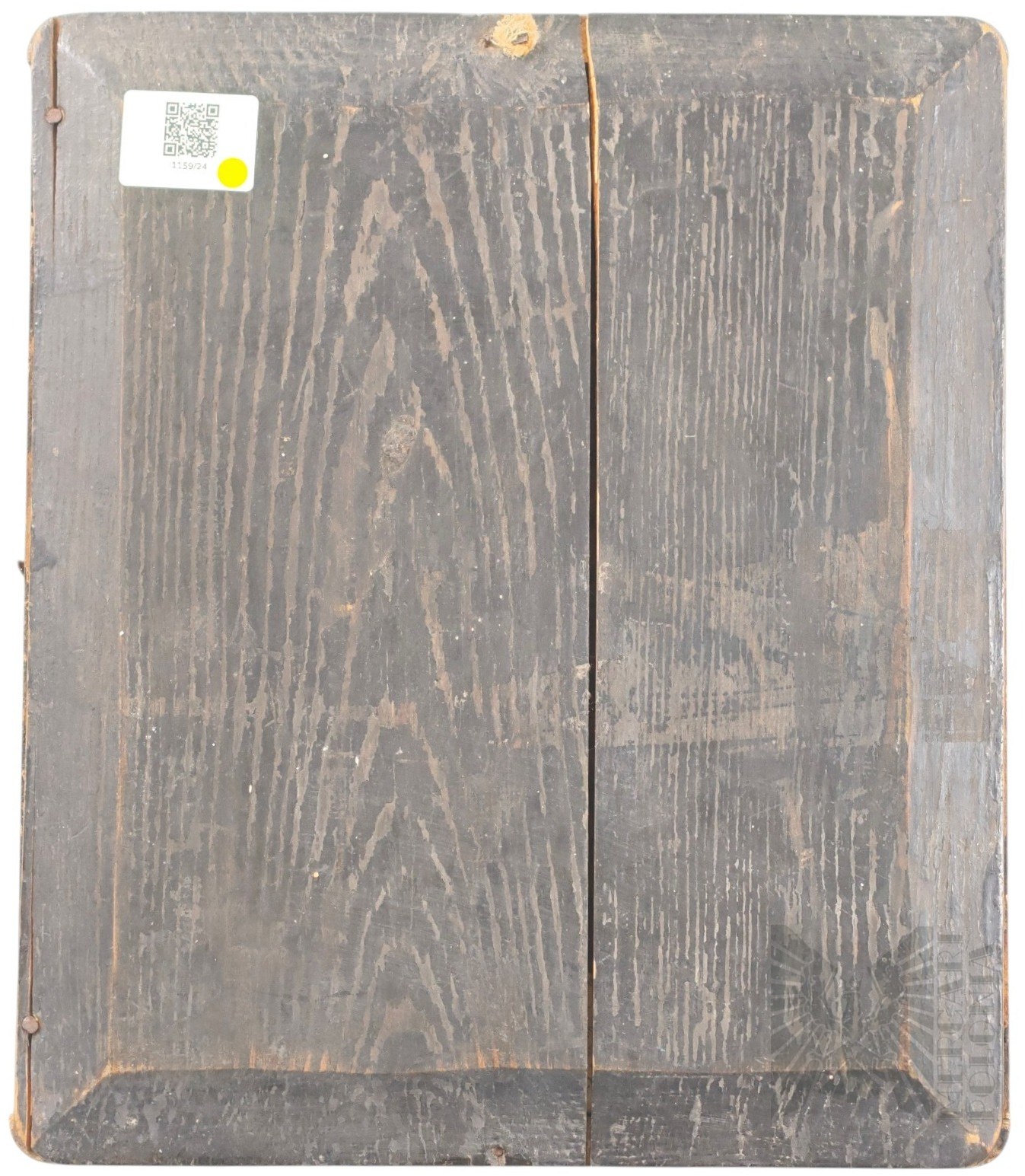
Condition as shown in the photos.
The depiction belongs to the Hodegetria type—one of the most important and widespread iconographic schemes in Byzantine and Russian art. The Tikhvin variant, to which this example refers, has been the object of special veneration in Russia since the 16th century, as it is associated with a miraculous icon housed in the monastery in Tikhvin.
Icons of this type served both liturgical and private functions—they were present in the “krasnye ugolki” (sacred corners) of homes, serving as the center of prayer and spiritual life. The stylization characteristic of the 19th century is evident in the simplification of forms, the linearization of the drawing, and the repetition of ornamental motifs, which points to workshop production, often associated with craft centers.
The object is a representative example of 19th-century Russian devotional iconography, combining canonical tradition with the aesthetics of the late icon-painting period.











最近瀏覽過的
登錄以查看拍品列表
收藏
登錄以查看拍品列表