Jan Lebenstein (1930-1999)
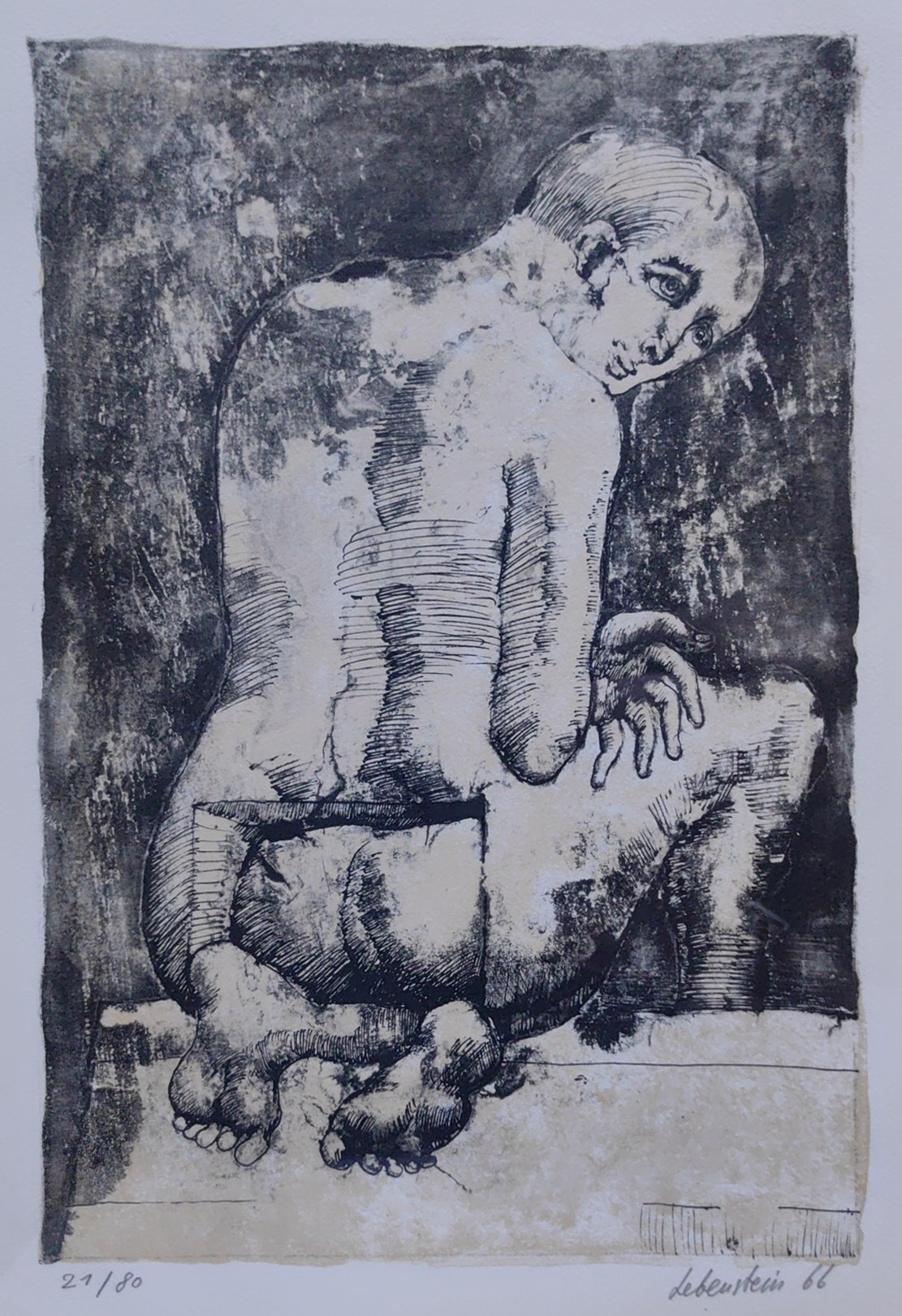
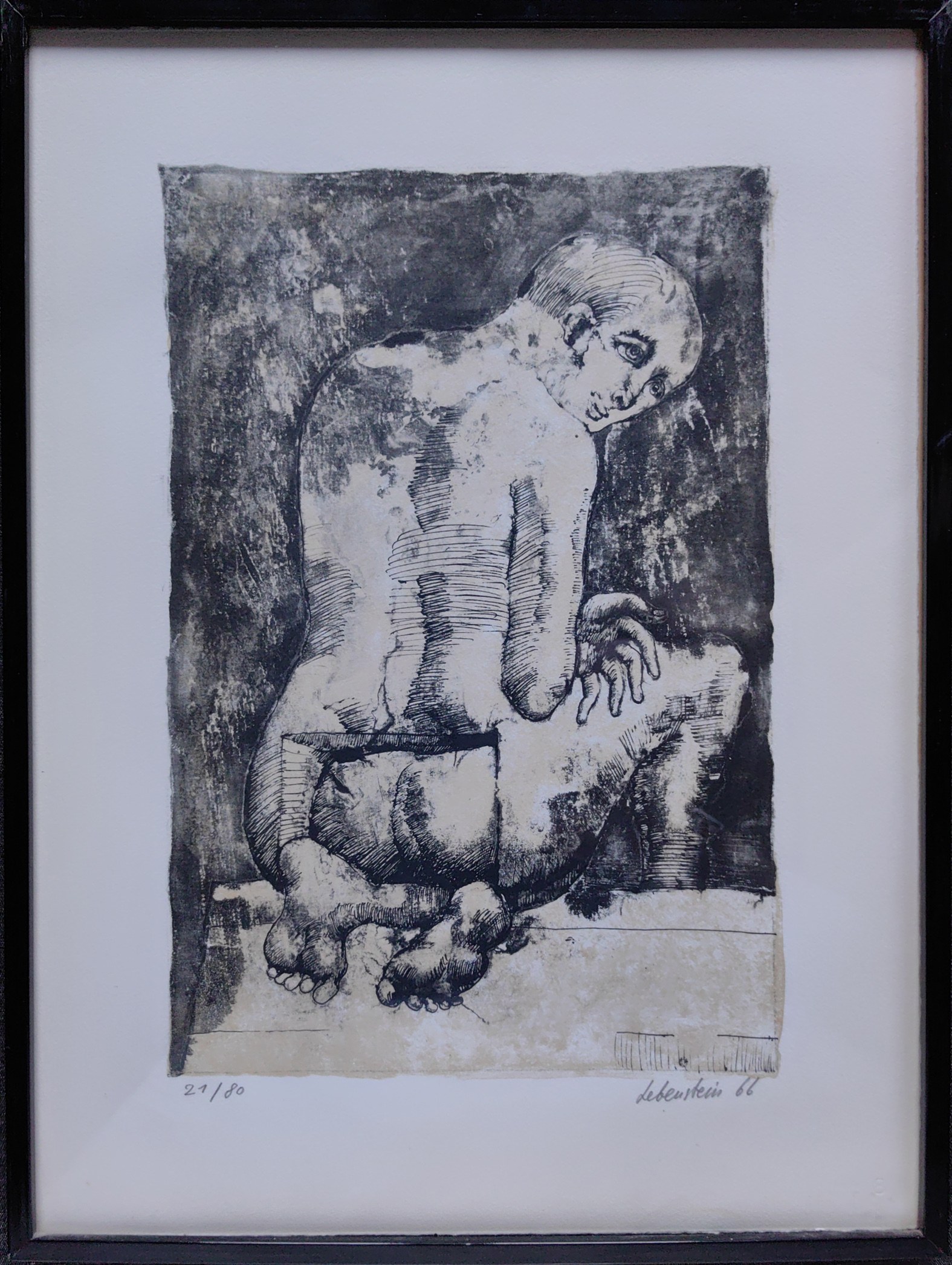
Composition, 1966
Two-color lithograph on paper, framed in black frame, behind glass
Dimensions: 36.5 × 24.5 cm (print), 50 × 37.3 cm (framed)
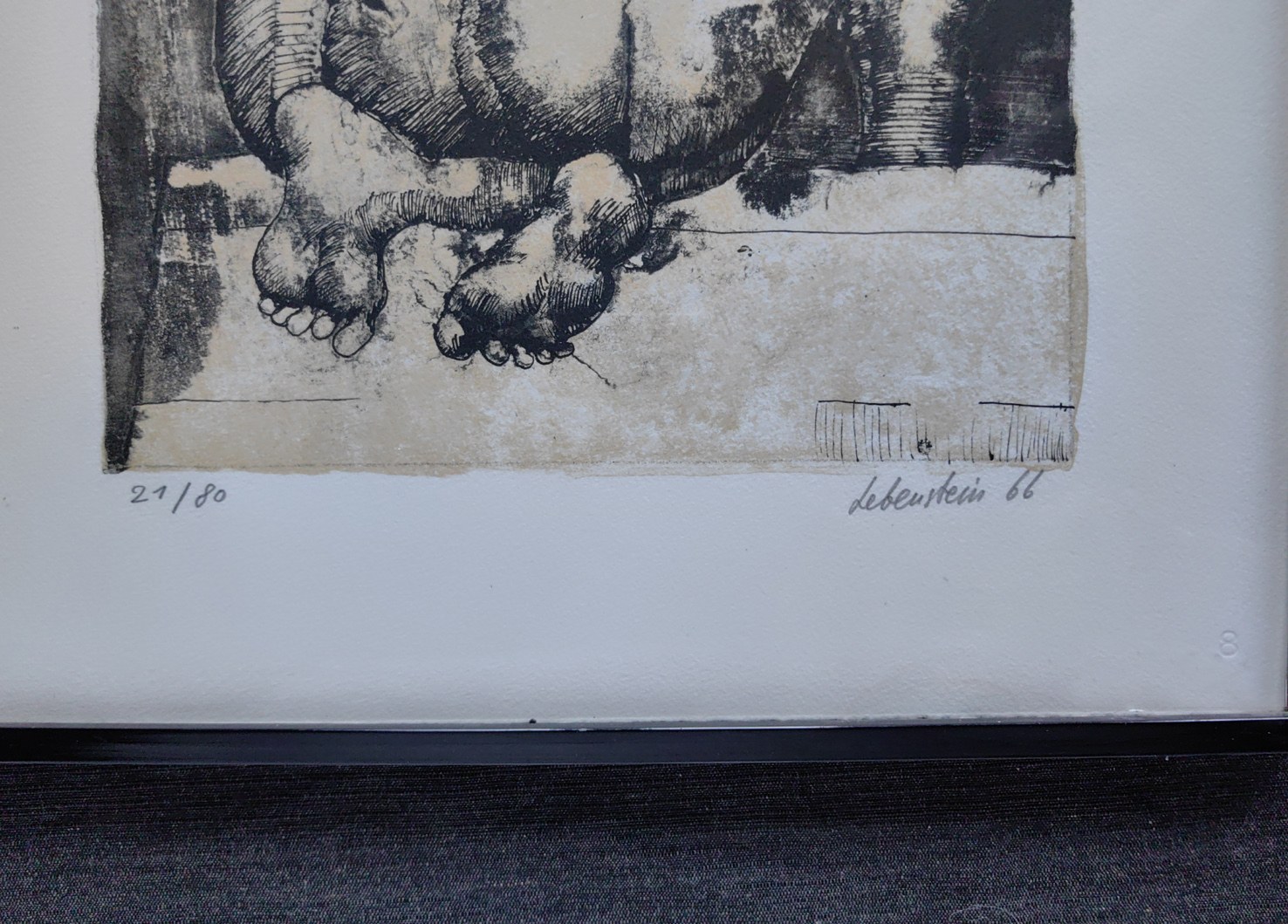
Signed and dated in pencil p.d.: Lebenstein 66, inscribed l.d.: 21/80
Additionally embossed number: 8
Certificate of authenticity
Jan Lebenstein's sensual and expressive lithograph from the mid-1960s depicts a hunchbacked human figure set against a stark, existential background. The artist operates with his characteristic line, in which one can see the tension between corporeality and metaphysics, deformation and symbolic narration. The delicate beige color contrasts with the strongly drawn line of black, intensifying the impression of bodily presence and psychological tension. The print belongs to a limited edition of 80 pieces - the offered piece is numbered 21.
Jan Lebenstein (born January 5, 1930 in Brest, died May 28, 1999 in Cracow) - one of the most prominent Polish artists of the 20th century. He studied painting at the Warsaw Academy of Fine Arts, and in 1959 won the Grand Prix at the Biennale of the Young in Paris, which opened the way to an international career. Lebenstein's work combines expressive figurativism with metaphor and symbolism. He is best known for his "Axial Figures" series and later compositions of a narrative nature, full of eroticism, grotesque and references to literature (including "Apocalypse" and "A Tale of a Thousand and One Nights"). His works are in the collections of the Centre Pompidou in Paris, MoMA in New York and the National Museum in Warsaw, among others.