


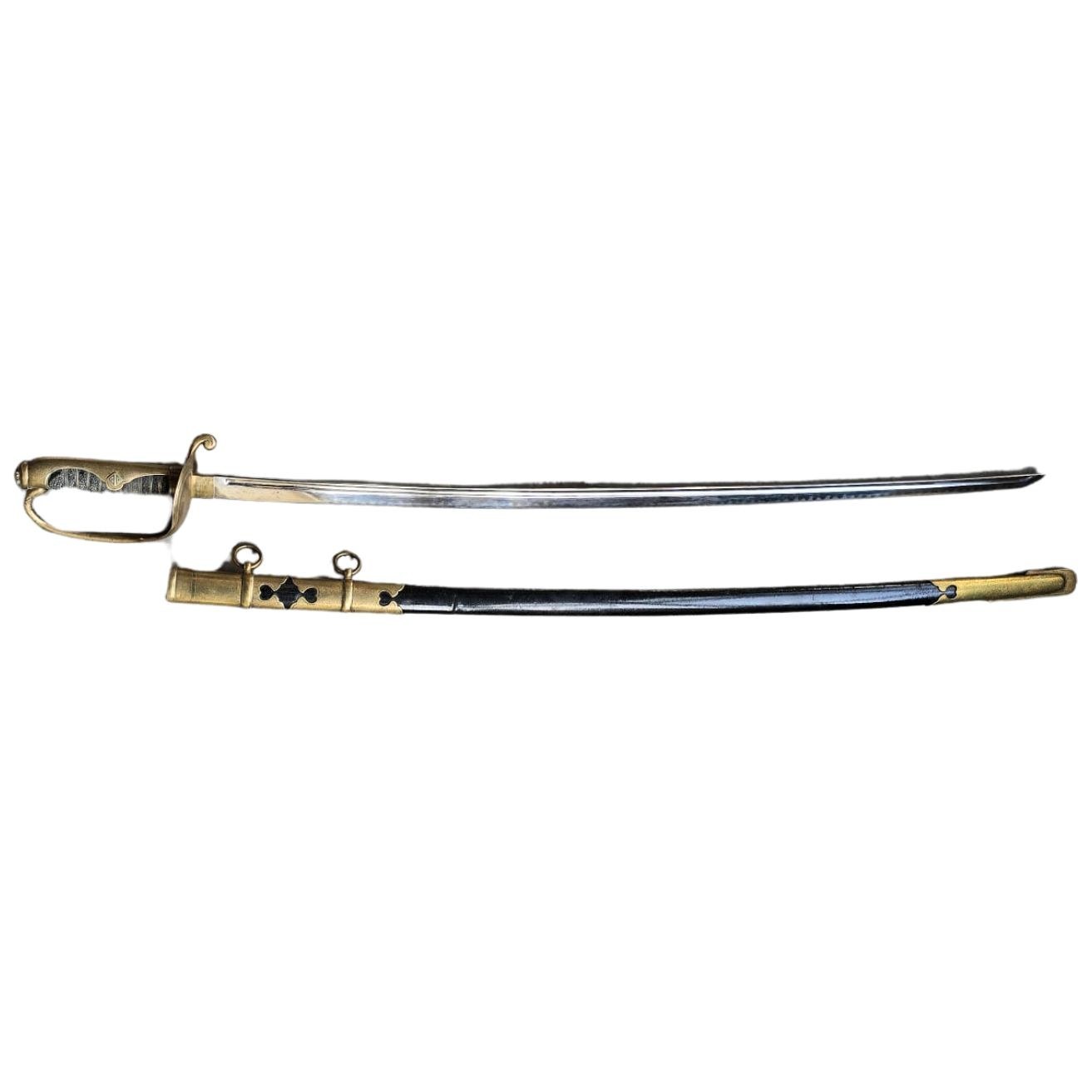
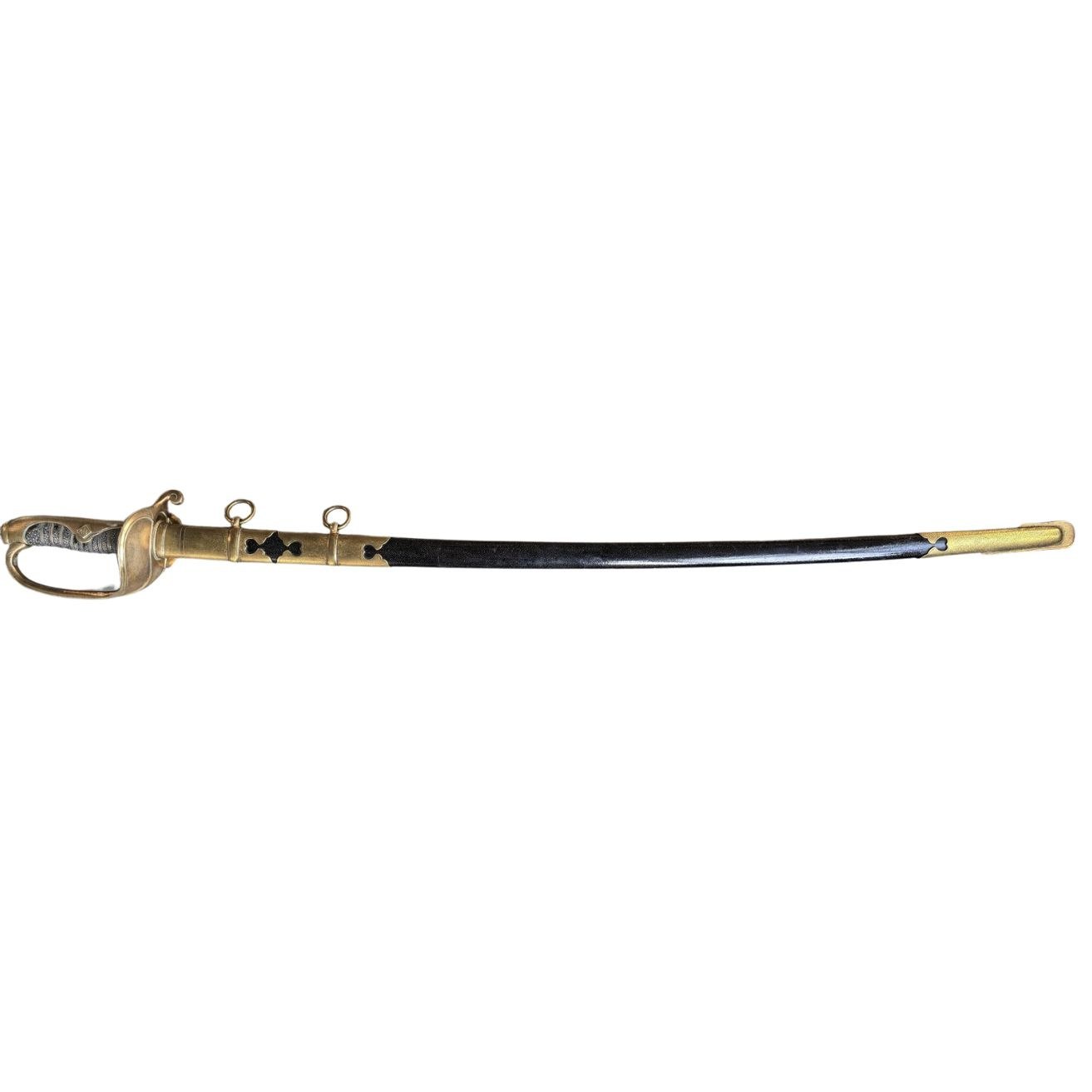
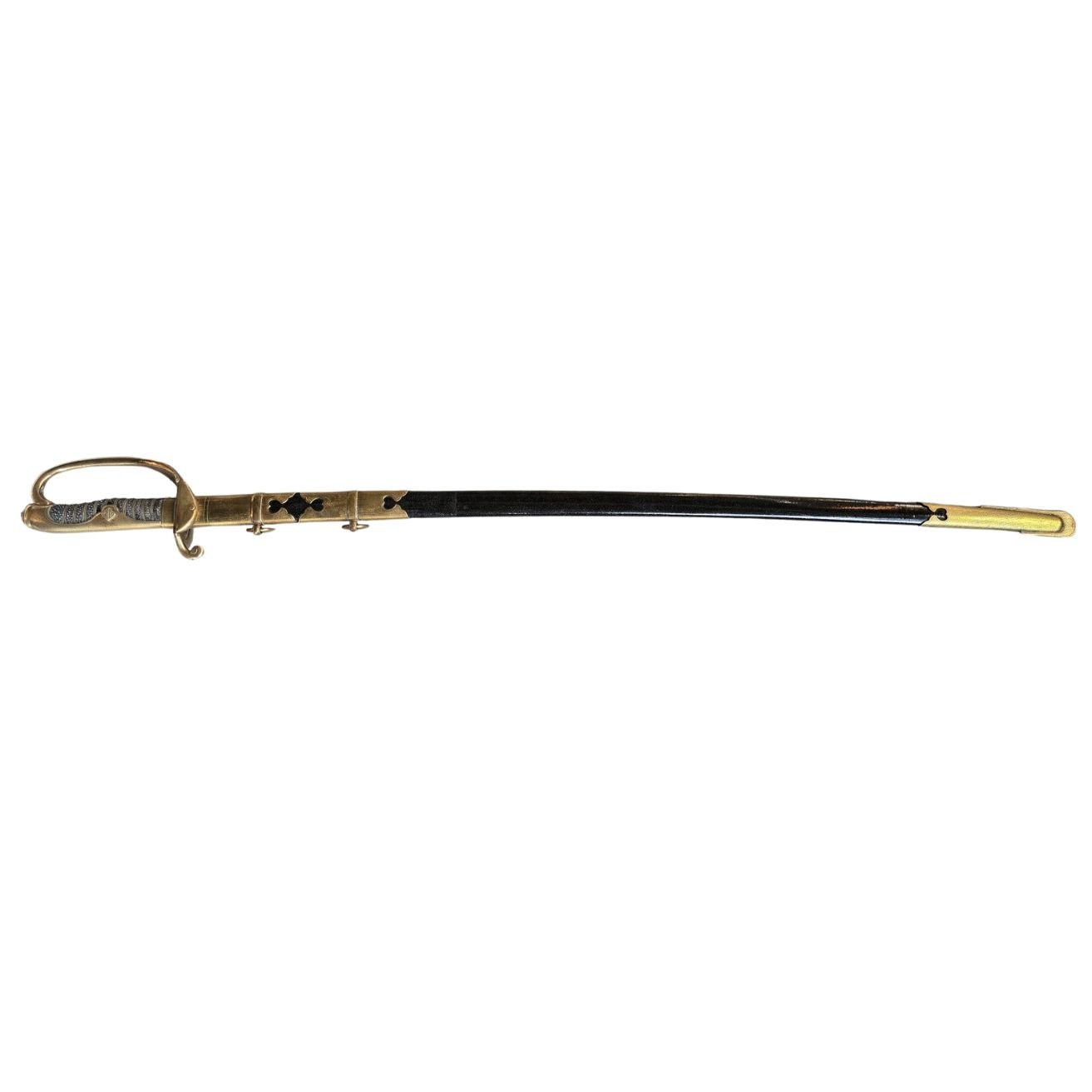
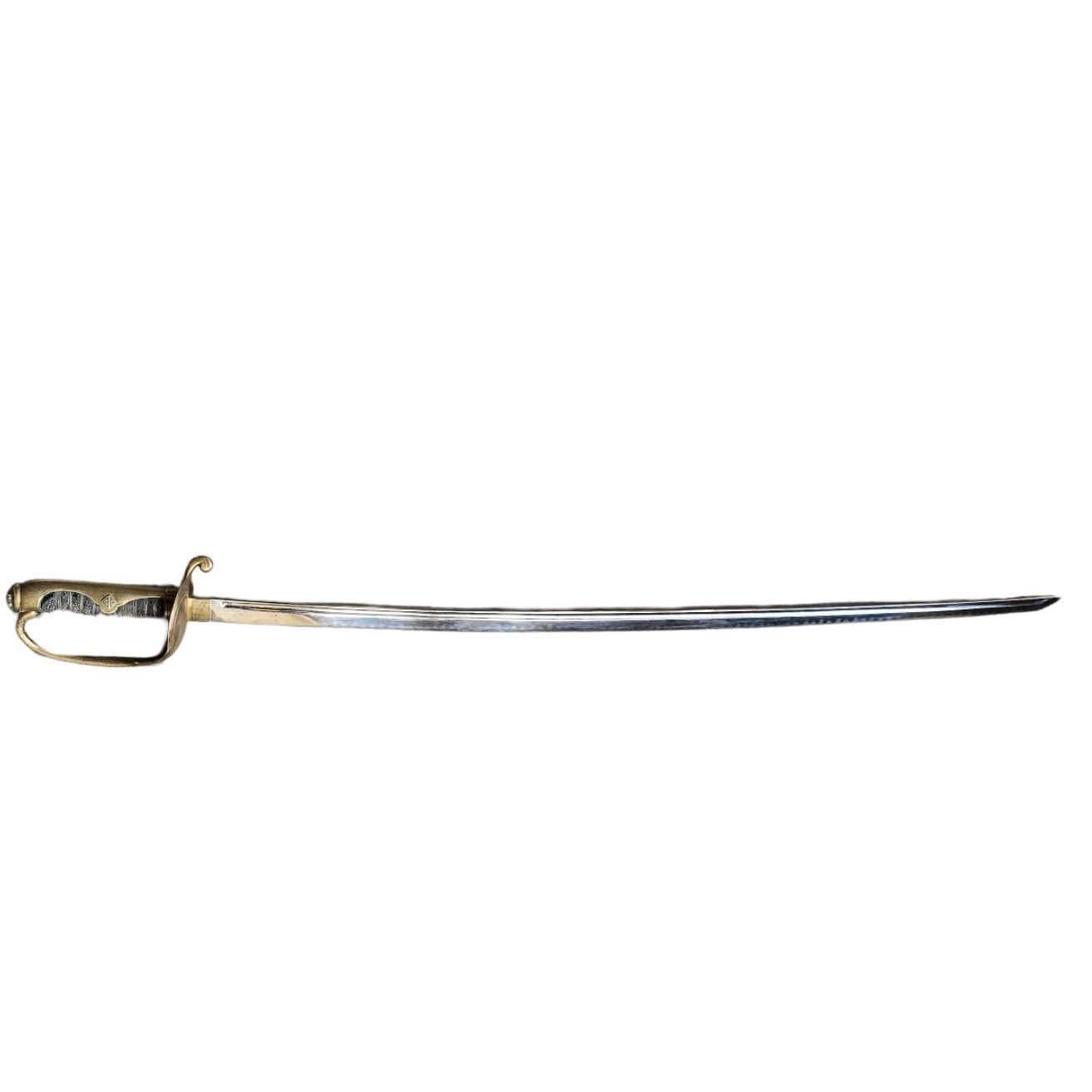
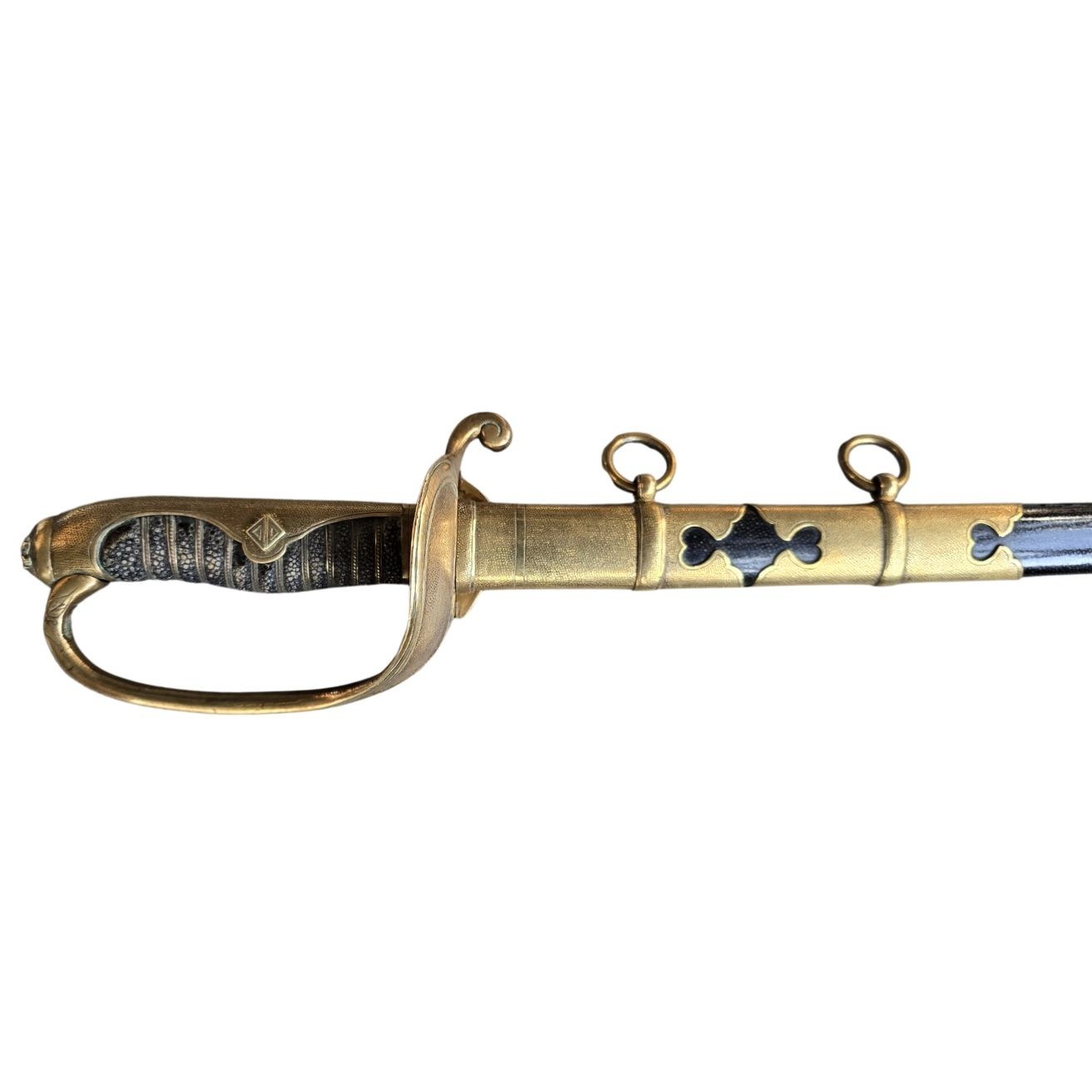
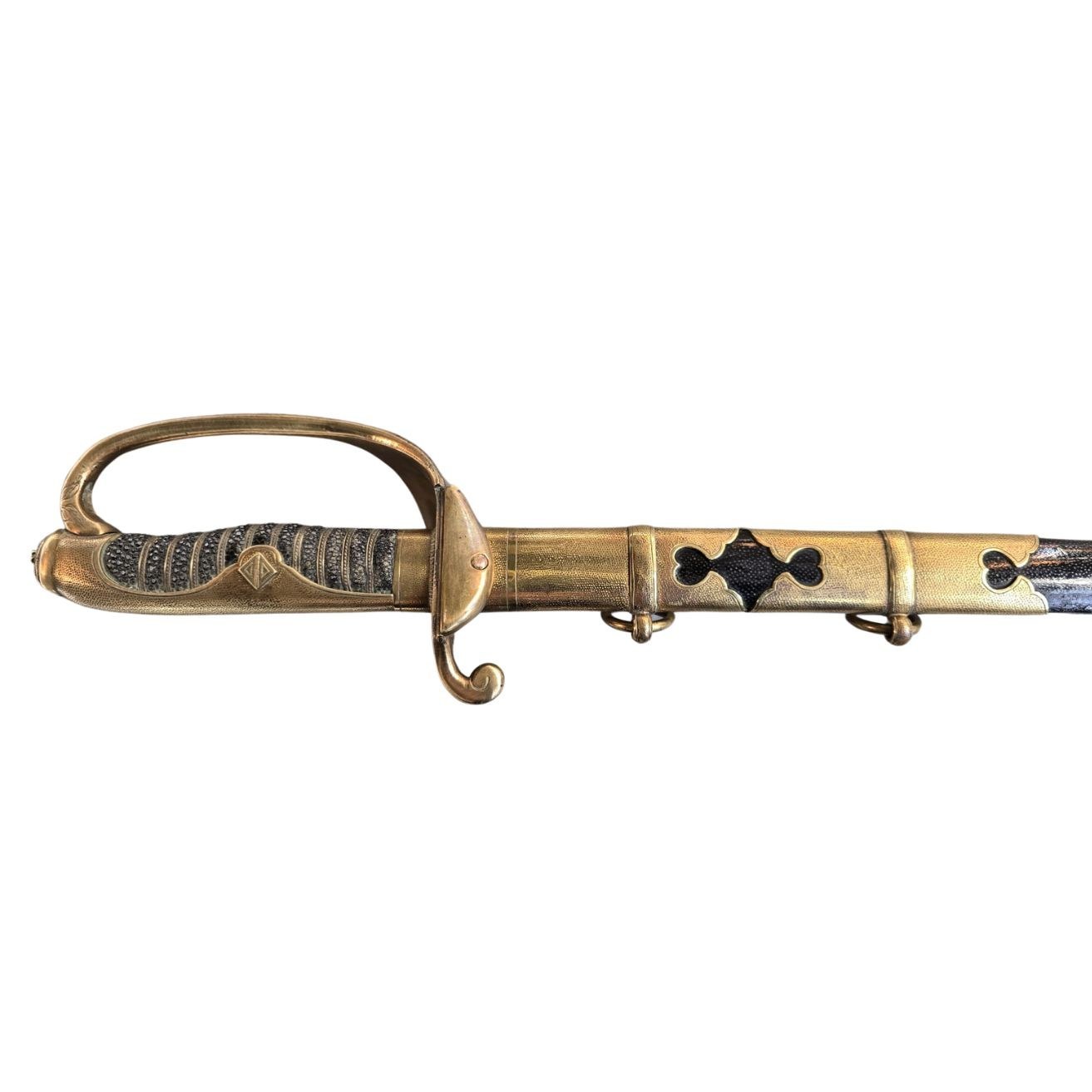
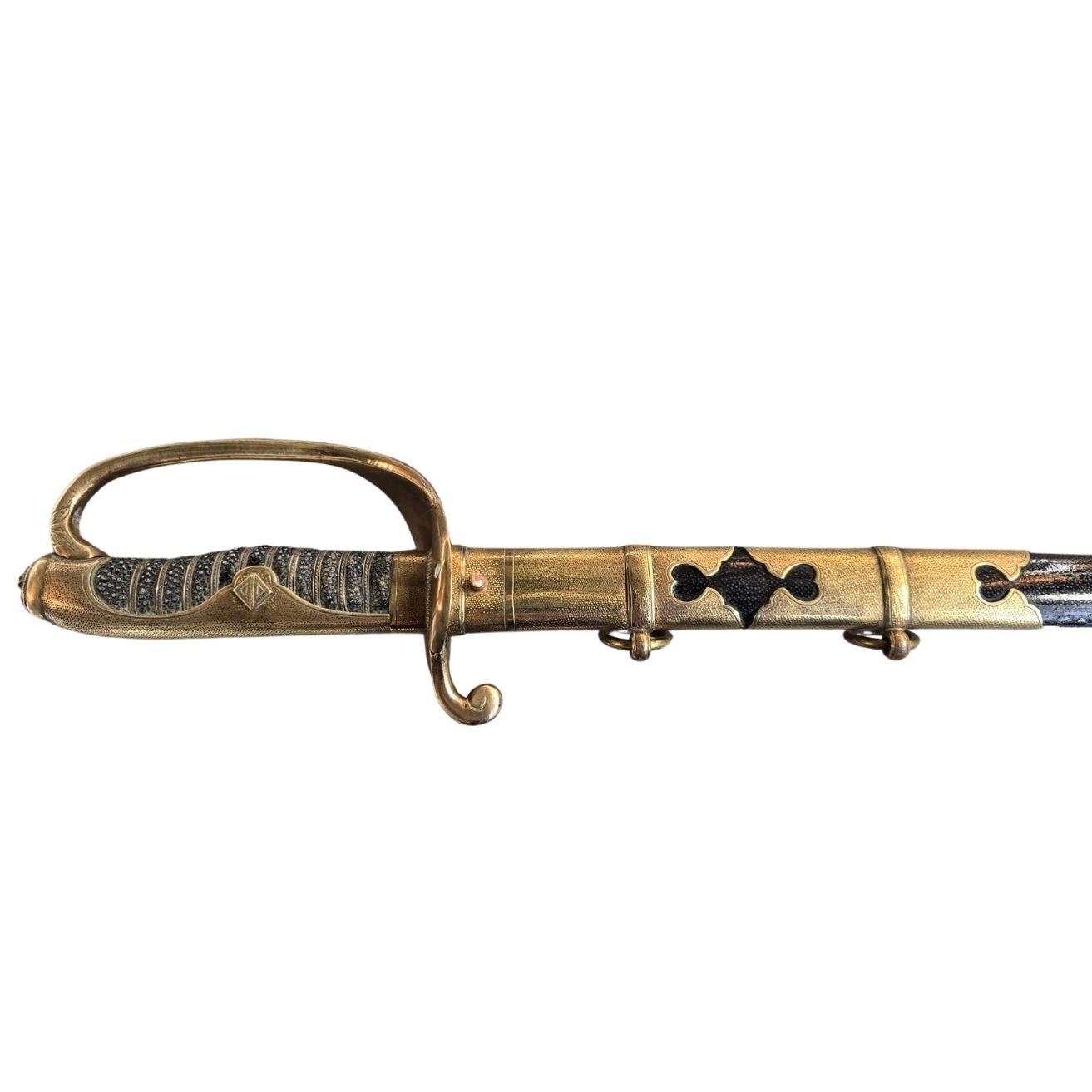
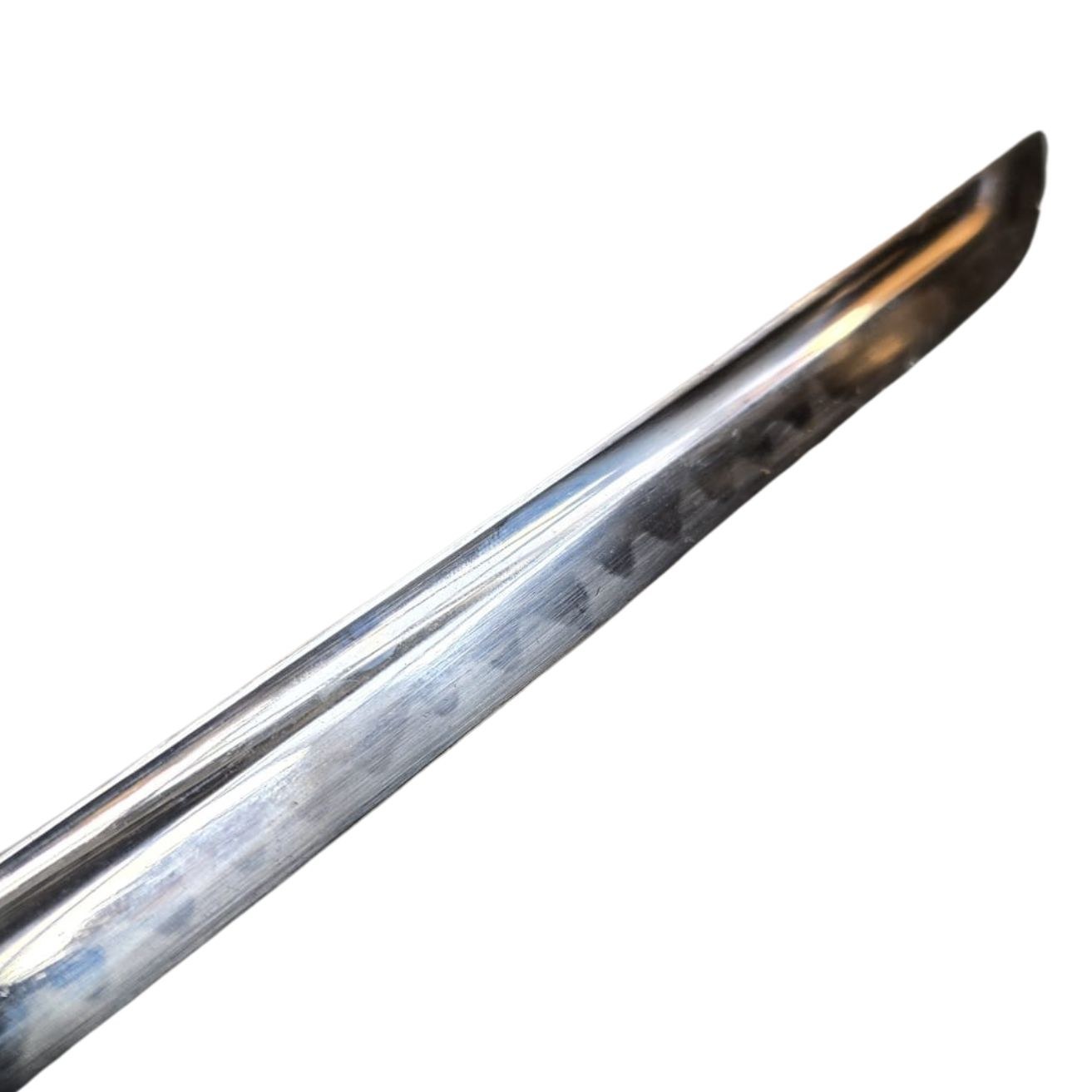
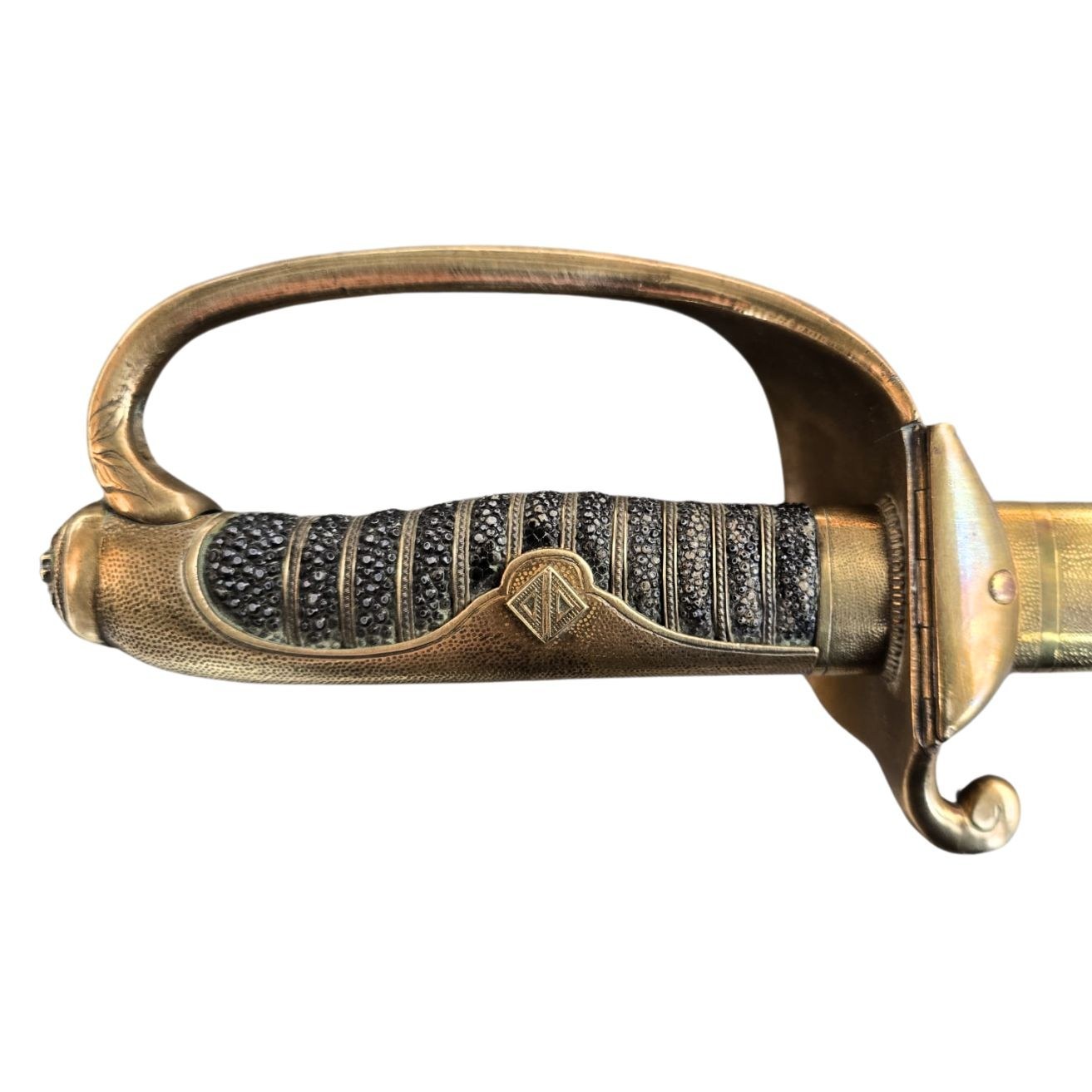
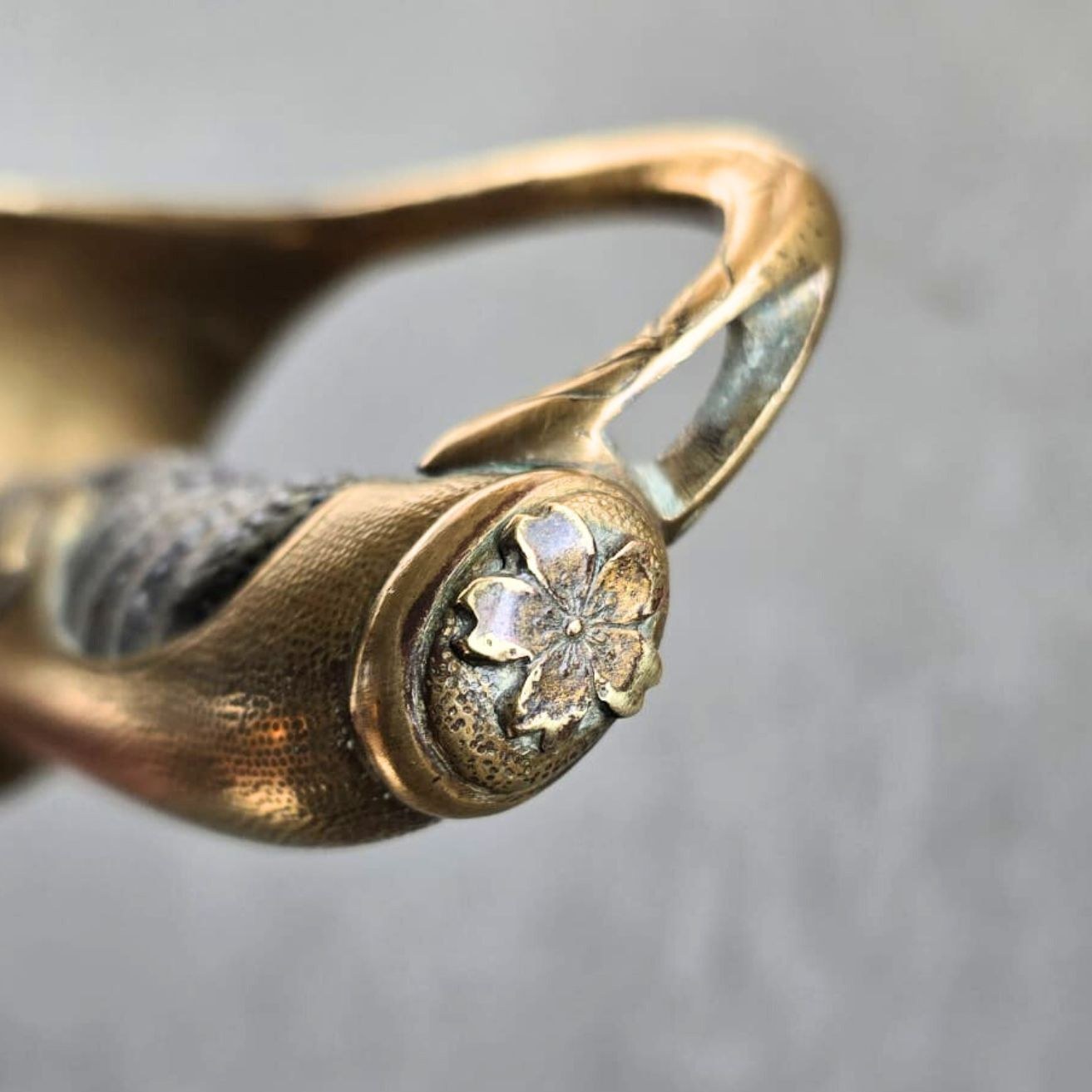
Japanese officer's sword (saber) Kyū guntō
Japan, produced between 1900 and 1934.
Dimensions:
- total length in scabbard: 86 cm,
- length of the head (from kissaki to the hilt): 68 cm.
The kyū guntō (旧軍刀, an old military sword) is the Japanese army's first statutory small-arms weapon. Its production was started by General Murata Tsuneyoshi (1838-1921), who had previously produced rifles. The kyū guntō swords were used by the Japanese army from 1875 to 1934, and were used during the Sino-Japanese War (1894-1895) and the Russo-Japanese War (1904-1905). The kyū guntō swords were intended to resemble European and American sabers of the time, primarily through the use of a bowed hilt (the so-called D-shaped Garda) and a chrome scabbard (saya). Around 1900, oxidized steel scabbards, such as those of the offered piece, came into use. Despite the cessation of production in 1934, kyū guntō swords were also used thereafter. Around 1945, they were used to fill gaps in the equipment of officers, whose numbers were increasing toward the end of the war. Handles made in the "Western European" style were replaced by mounts referring to samurai traditions (Shin guntō - the new military sword, as a regulation equipment from 1935).
[PK]









