


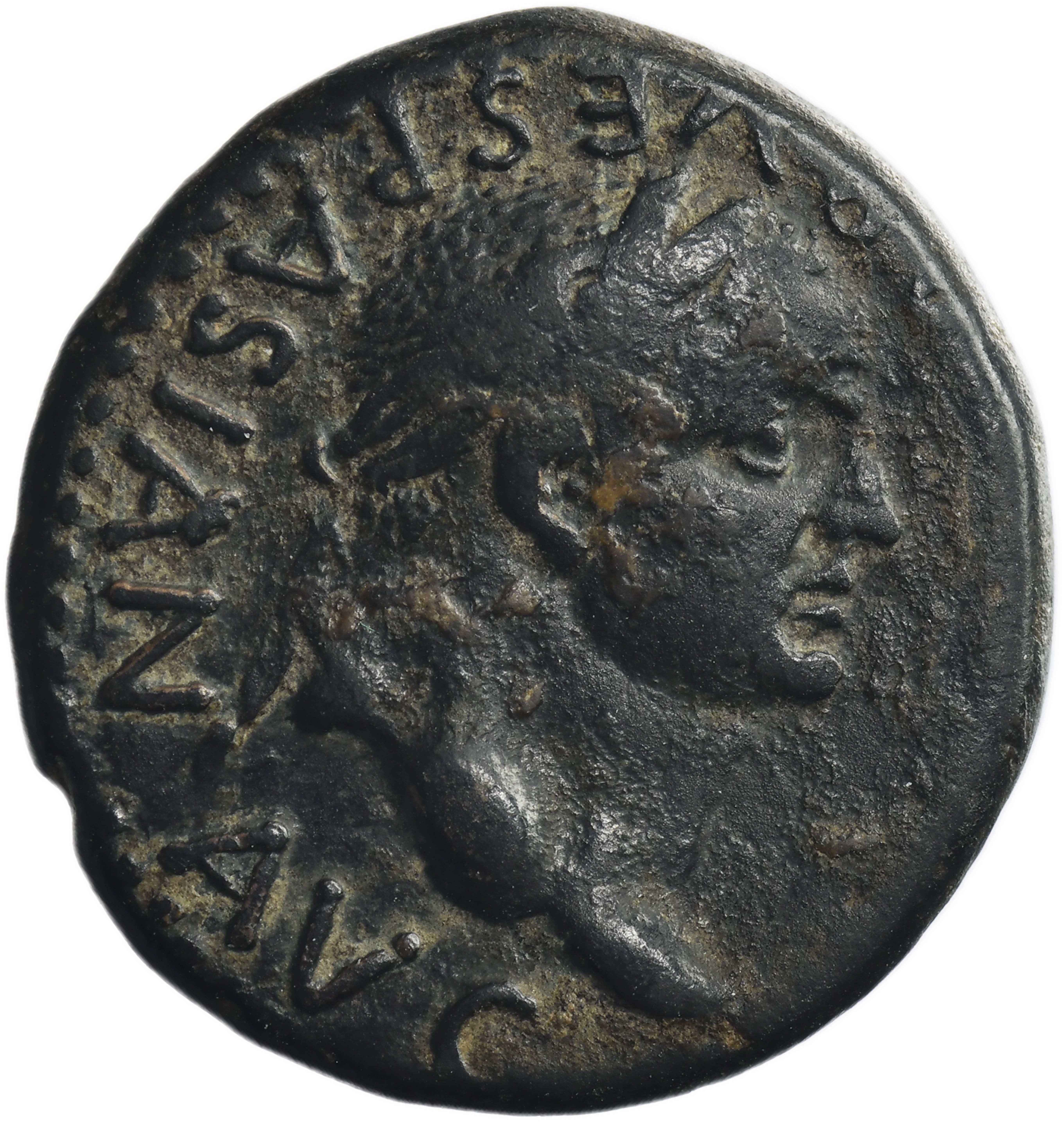
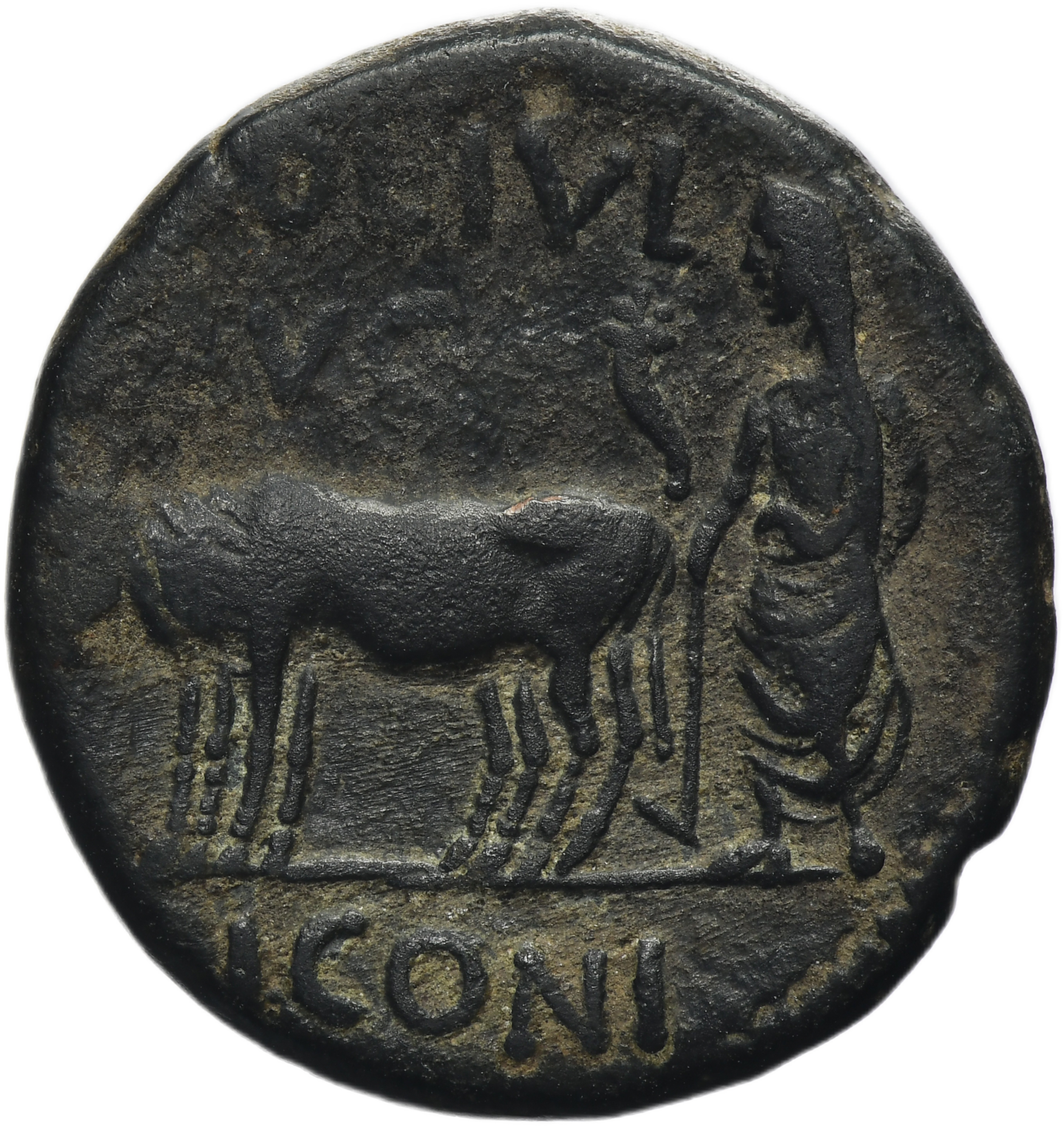


Provincial bronze issue of Vespasian (AD 69–79), struck at Iconium in Lycaonia, belongs to the civic coinage of Asia Minor produced within the framework of the early Roman Empire. Iconium held the status of a Roman colony, a fact directly reflected in the reverse legend and indicative of its organization according to Roman legal and administrative models, as well as its privileged position within the region.
The obverse features a laureate head of the emperor facing right with the Latin legend IMP CAESAR VESPASIAN AVG, identifying Vespasian as imperator and Augustus. The use of Latin, rather than the more common Greek of eastern provincial coinage, is characteristic of colonial cities, where Roman institutional and epigraphic traditions were maintained.
The reverse depicts a priest ploughing to the left, accompanied by the legend COL IVL ICONI, an abbreviation of Colonia Iulia Iconiensium. This scene refers to the ritual of founding a Roman colony through the drawing of the sacred boundary furrow (sulcus primigenius), a ceremony described in ancient sources. The act of ploughing symbolically marked the limits of the new settlement and carried both religious and legal significance.
Such imagery appears in colonial coinage as a direct reference to the foundation or re-foundation of a city under Roman law. In the case of Iconium, the type emphasizes its colonial identity and its integration into Roman state traditions, while simultaneously expressing a localized civic identity within the broader imperial framework.
Roman Provincial
Lycaonia, Iconium,Vespasian (69-79), AE
Obverse: laureate head right
IMP CAESAR VESPASIAN AVG
Reverse: priest ploughing left
COL IVL ICONI
Diameter 23 mm, weight 10.36 g











