


Oil on canvas, size 62 x 42.5 cm
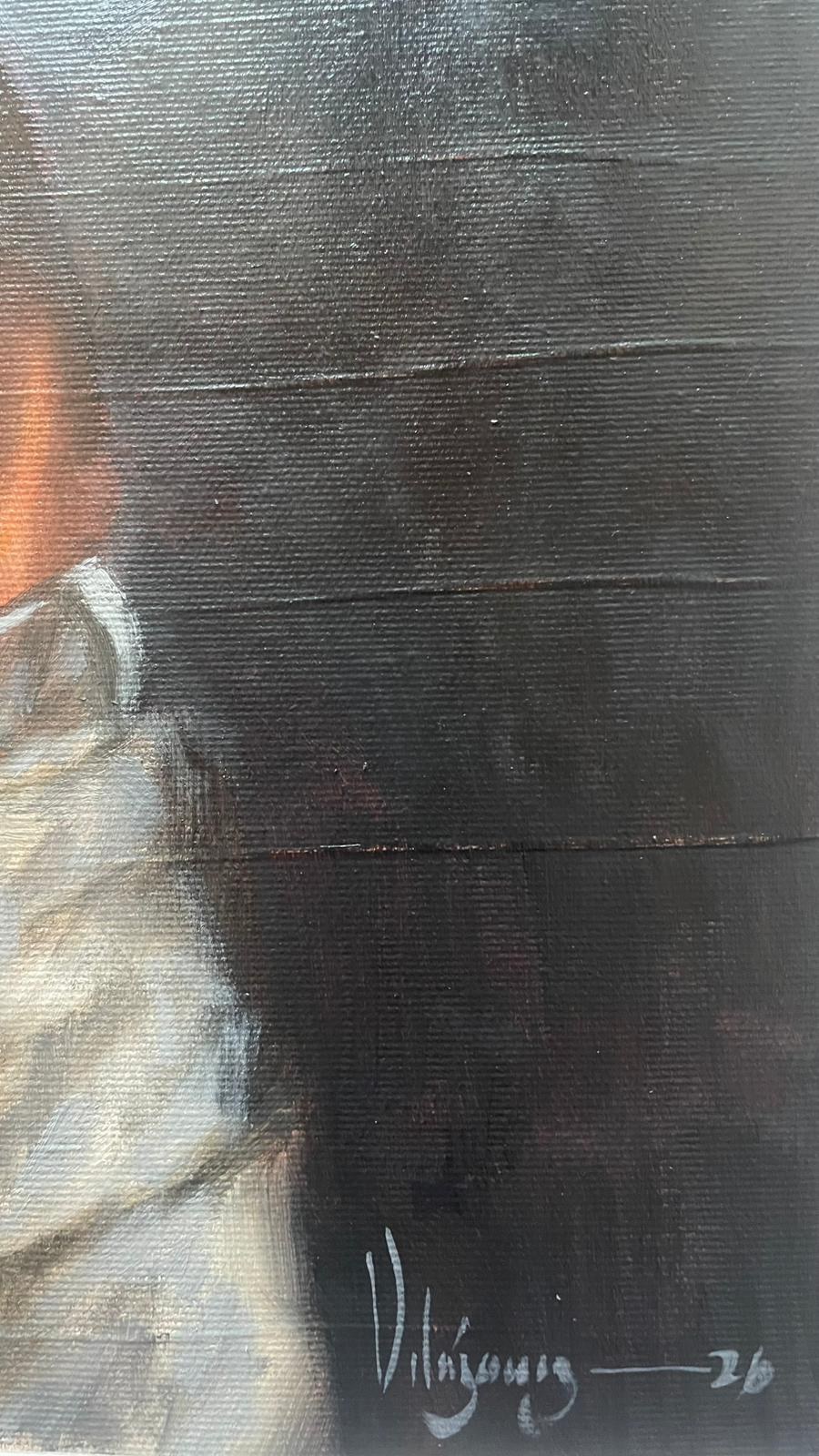
Signed on the back
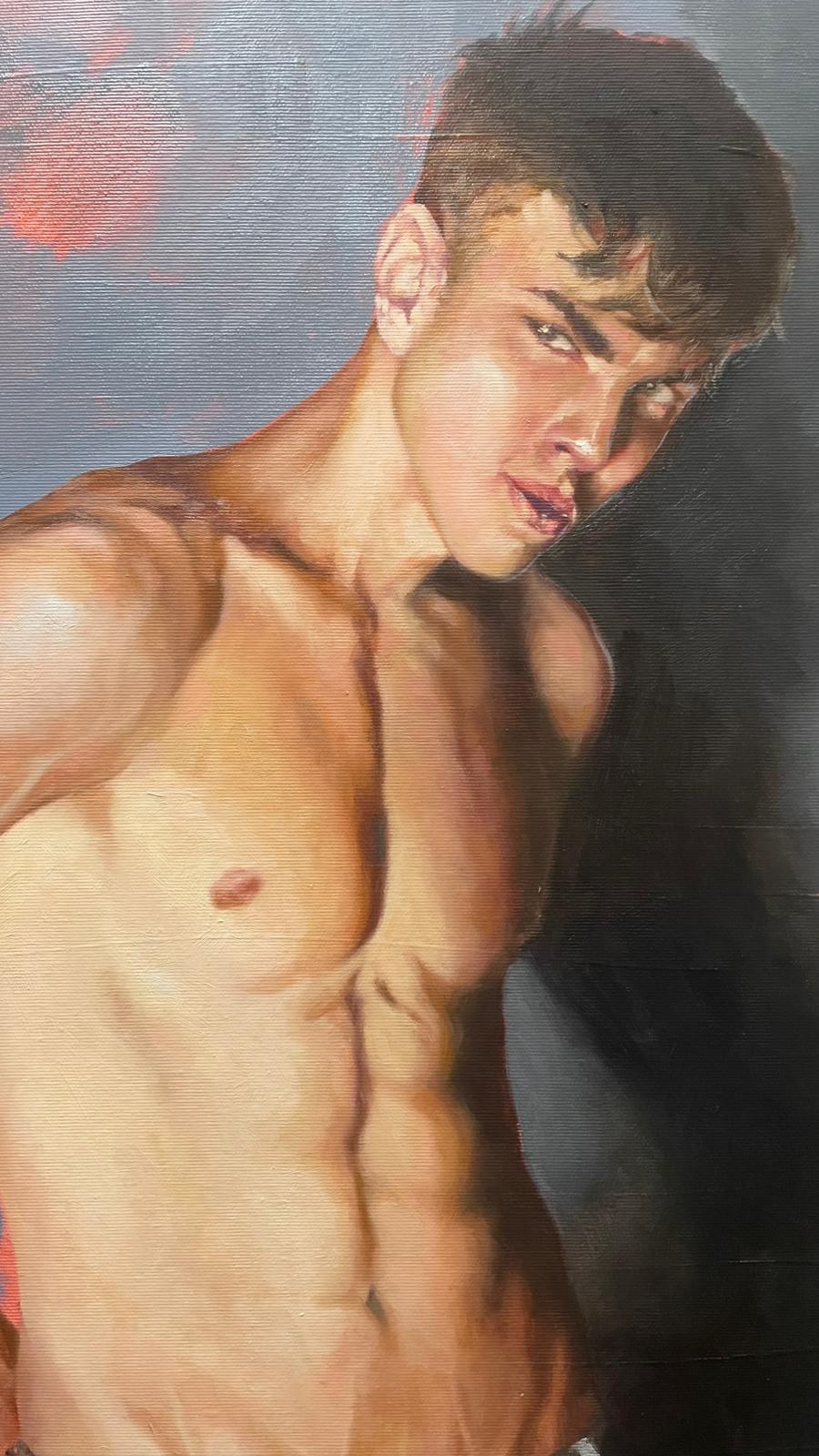
This painting is a contemporary study of the male body, executed in the style of realistic figurative painting. The central figure of the composition is a young man depicted in a decisive, slightly provocative pose. His silhouette fills nearly the entire canvas, giving the work a monumental quality and a strong visual presence.
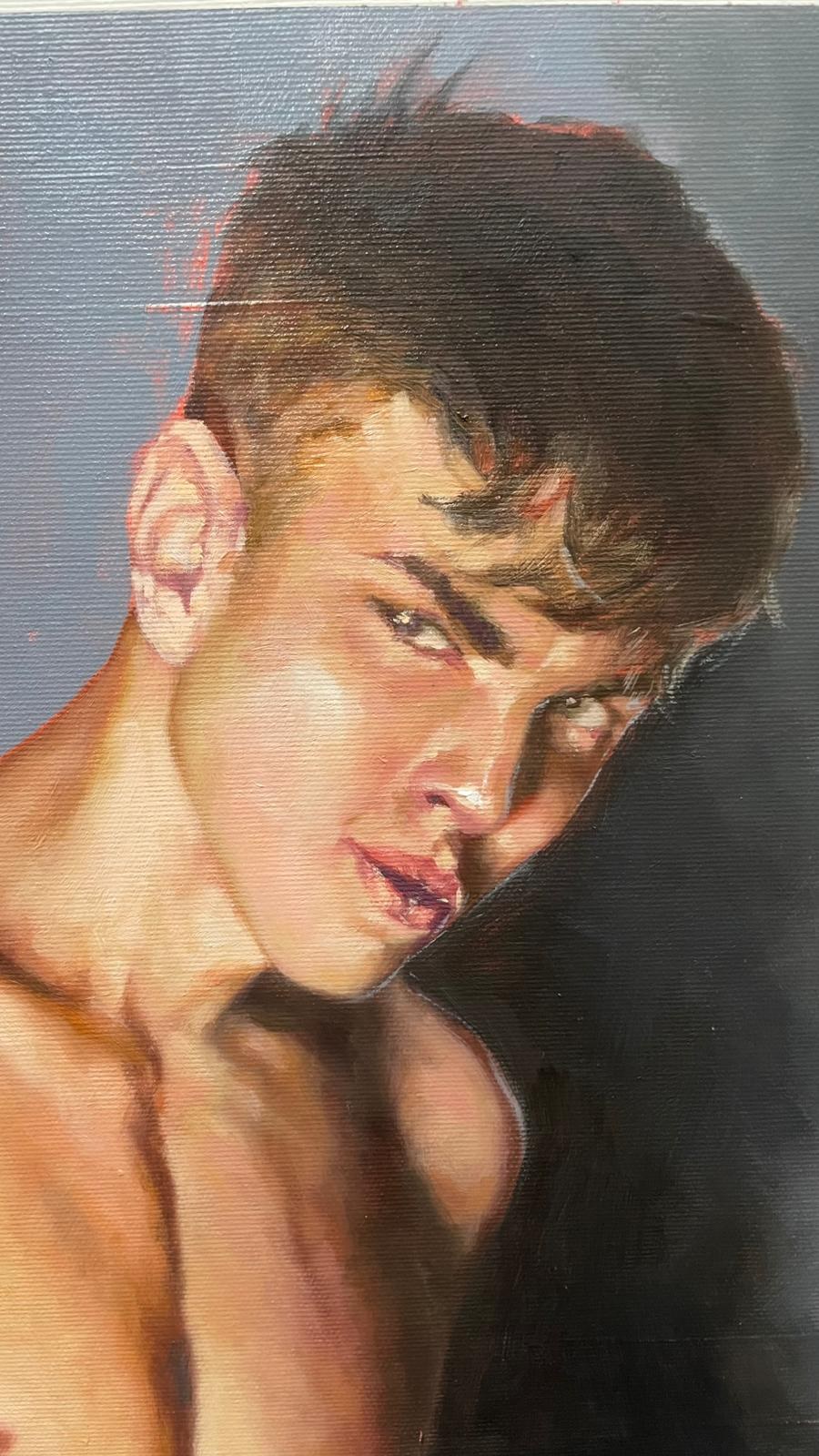
The most important element of the work is the model’s gaze—direct, self-aware, and full of psychological tension. The subtle tilt of his head and the arrangement of his body ensure that the portrait is not merely an academic study of anatomy, but takes on an individual, emotional character. The artist juxtaposes youthful sensitivity with the figure’s distinctly emphasized physicality.
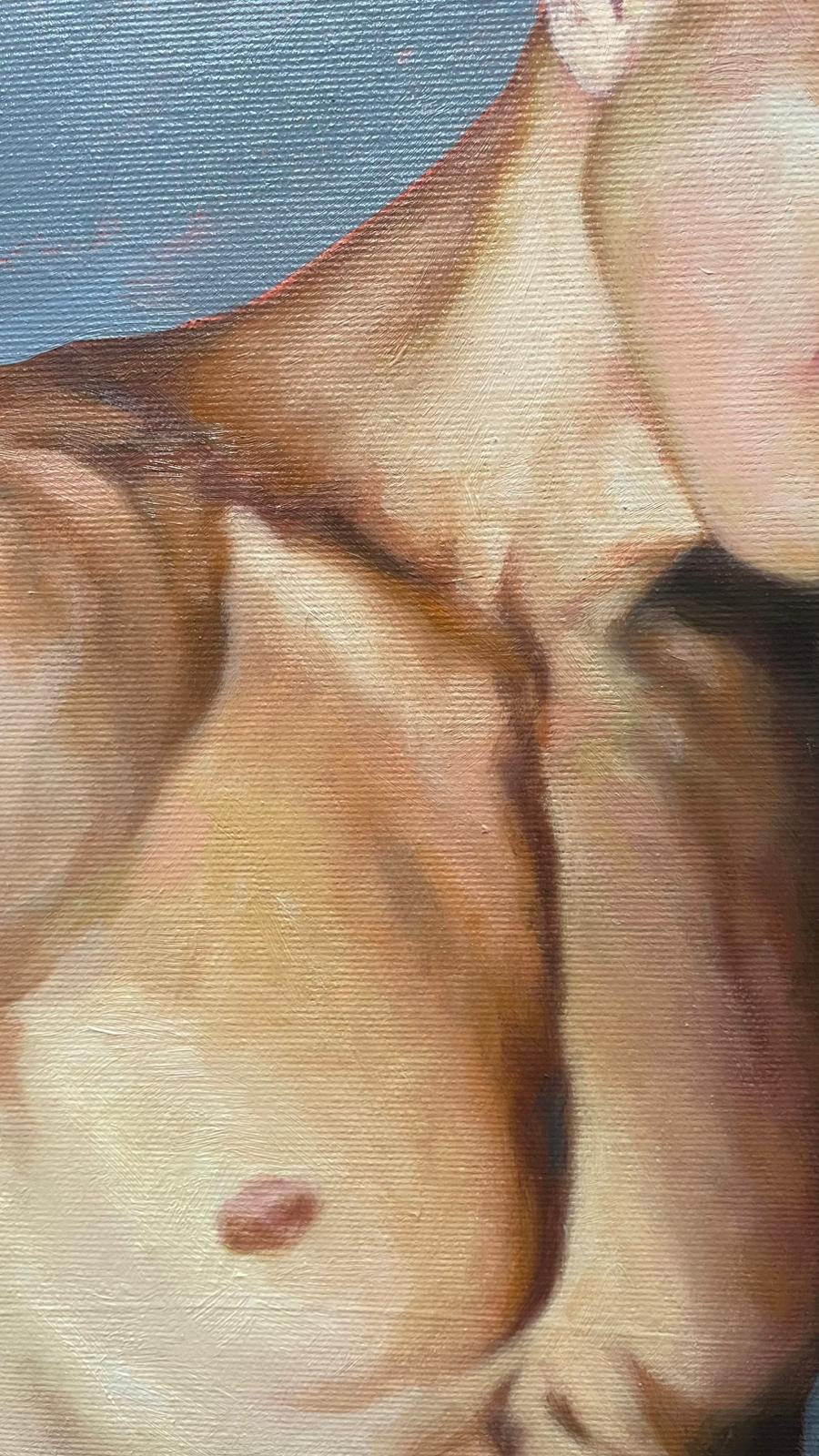
The body’s form is rendered using warm shades of ochre, muted browns, and luminous flesh tones. The light highlights the musculature of the torso, the line of the shoulders, and the sculpturally rendered abdominal area. Deeper shadows emphasize the anatomical structure of the figure and lend it a sense of depth.
The cool, gray-blue tone of the background is broken up by expressive accents of red. On the right side of the composition, a deep black appears, which enhances the contrast and draws the viewer’s attention to the face and the illuminated part of the body. The more loosely rendered sections of the background stand in an interesting contrast to the more precisely rendered figure.
The visible texture of the canvas and, in places, distinct brushstrokes emphasize the work’s painterly character. Particular care was taken with the face, hair, light on the skin, and the subtle tonal transitions that define the model’s anatomy.
“The Power of the Gaze” is an expressive contemporary portrait that combines realism, sensuality, and psychological tension. The work can serve as a powerful, eye-catching element in a modern collection of figurative painting.
The painting is signed and dated in the lower right corner: 2026.
Cristian Mesa Velázquez (born in 1994 in Las Tunas, Cuba) is a contemporary figurative painter who currently lives and works in Valencia, Spain. From 2009 to 2013, he studied at the Academy of Fine Arts in Las Tunas, where he gained experience in painting, drawing, printmaking, sculpture, and art restoration. His classical technical training remains evident in the purity of his lines, his skillful rendering of anatomy, and his fluid use of color and light.
Mesa Velázquez’s work focuses primarily on the human figure—its physicality, emotions, memory, and relationship with the surrounding space. The artist works primarily in oil and acrylic on canvas, combining a realistic foundation with an expressive, at times almost impressionistic, style of painting. He juxtaposes precisely rendered parts of the figures with looser, dynamic brushstrokes, ensuring that the depiction remains clear while staying vibrant and painterly. Compositions related to water hold a special place in his body of work. Submerged figures, body parts, reflections, and the refraction and diffraction of light create a distinct visual language in these works. Water does not merely serve as a background—it becomes an active element of the image, deforming shapes, blurring contours, and altering the way the human figure is perceived. The motif of submersion can be interpreted as a symbol of the transition between the material world and the inner human experience, between reality, memory, and dreams. In these paintings, one can discern both a distant echo of Pre-Raphaelite symbolism concerning water, beauty, and transience, as well as an affinity with contemporary realism that explores the theme of the human body viewed through the surface of a pool or the sea.
Mesa Velázquez does not, however, abandon his own, more expressive sensibility. His colors are saturated, his contrasts sharp, and the visible brushstrokes lend the scenes energy and emotional intensity. The human body is depicted not as a cold subject of study, but as a vessel of memory, sensual experience, and personal history. In addition to his seascapes, the artist creates portraits, nudes, urban scenes, genre compositions, and works dedicated to childhood and memories. In series such as “Recuerdos de Arena,” everyday, seemingly unremarkable events are transformed into images of universal significance. The artist is interested in moments suspended between movement and stillness: the touch of the water’s surface, a fleeting reflection of light, a child’s gesture, or the gaze of the person being portrayed.
Mesa Velázquez has participated in group exhibitions in Cuba, including in Havana, Las Tunas, Camagüey, and Ciego de Ávila. His works have also been presented at international art events in Luxembourg, Paris, Germany, and France, as well as at an exhibition of Cuban art in Houston. The artist’s works are held in private collections in Europe, the Americas, and Asia. They are also represented by international galleries and offered on the global art market. Cristian Mesa Velázquez’s work represents a contemporary fusion of Cuban sensibility to color, the European figurative tradition, and a personal interest in the human figure. His paintings captivate with their striking form, but their true power lies in their atmosphere—in the attempt to capture a fleeting moment in which the body, light, water, and memory become elements of a single narrative.









