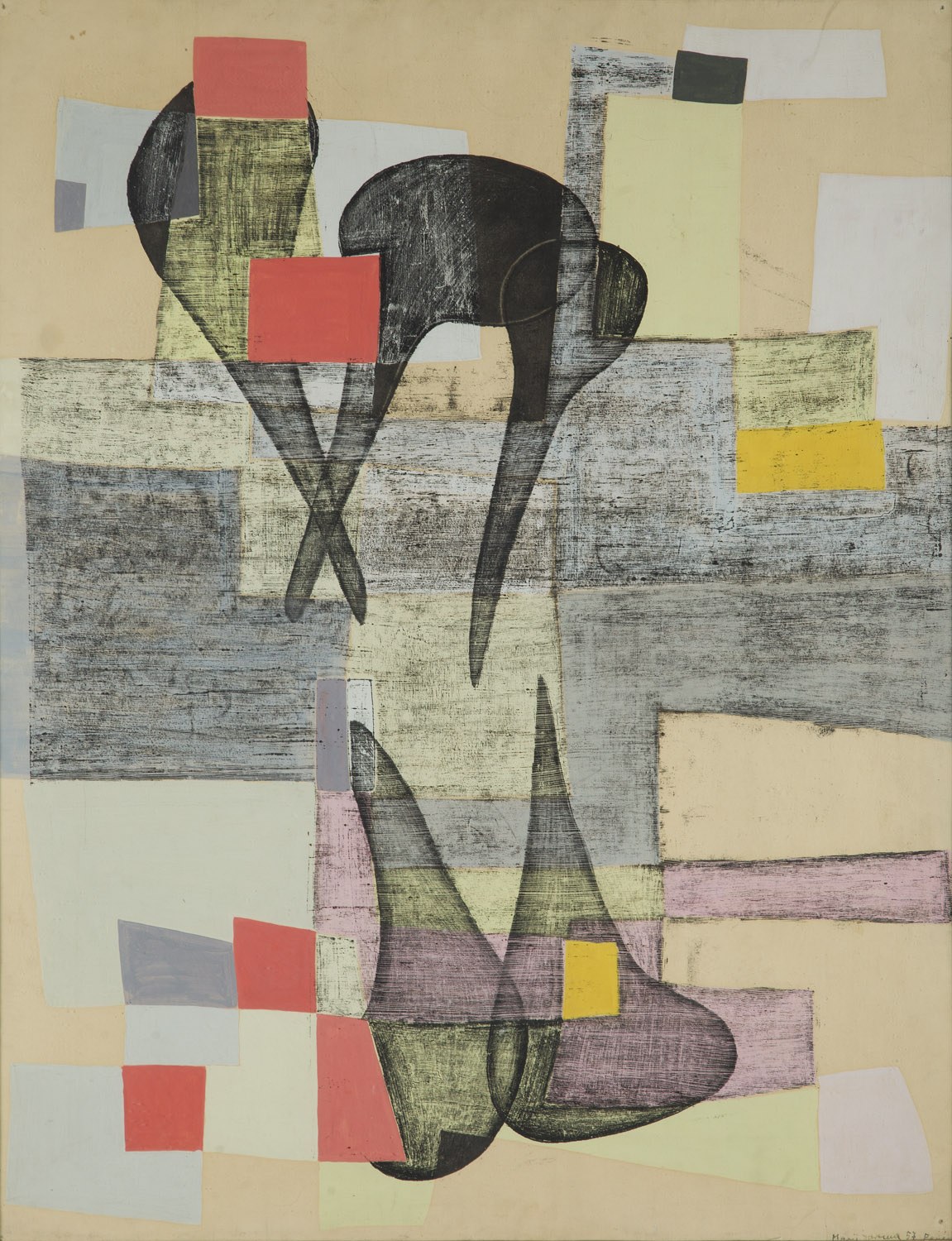


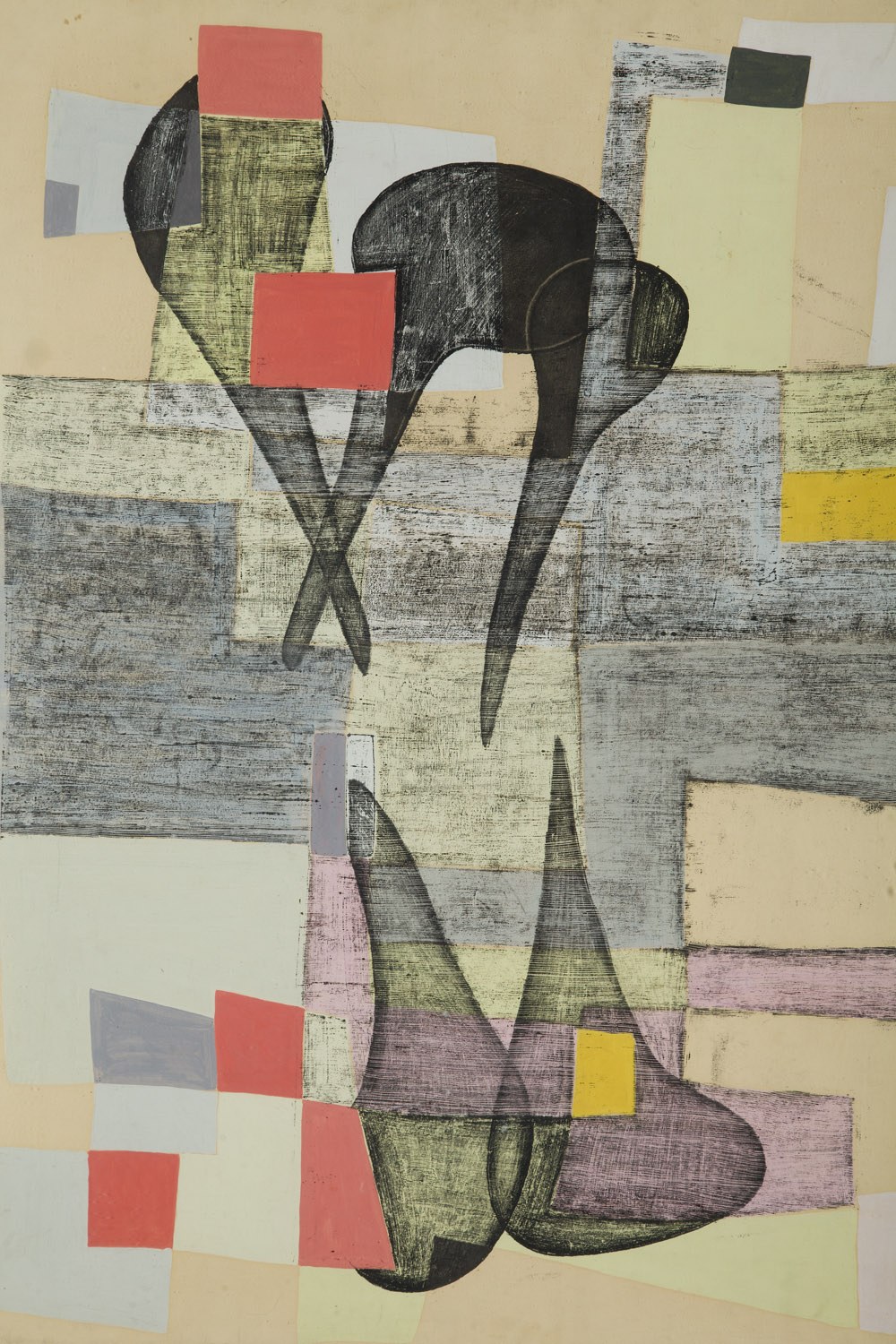
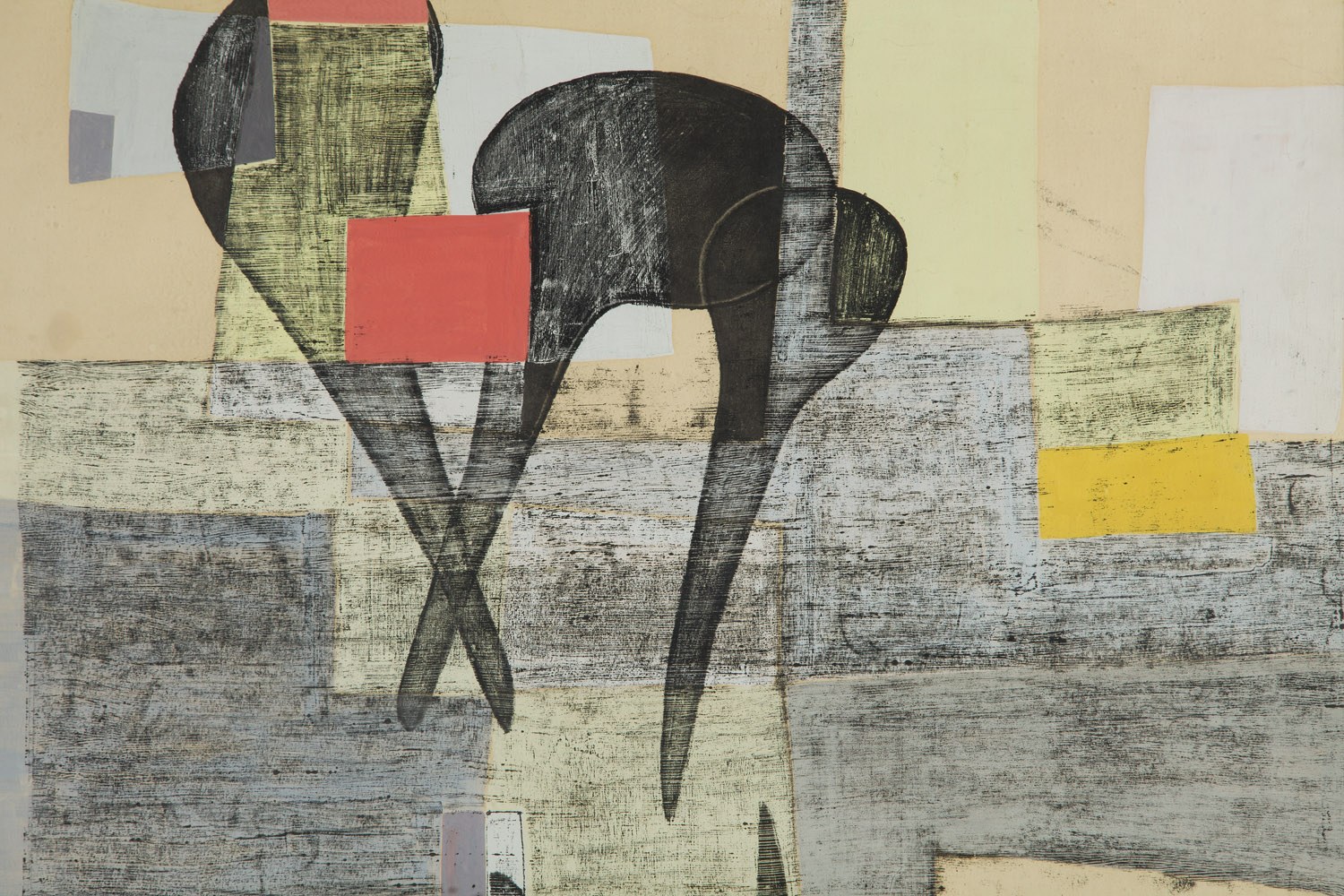
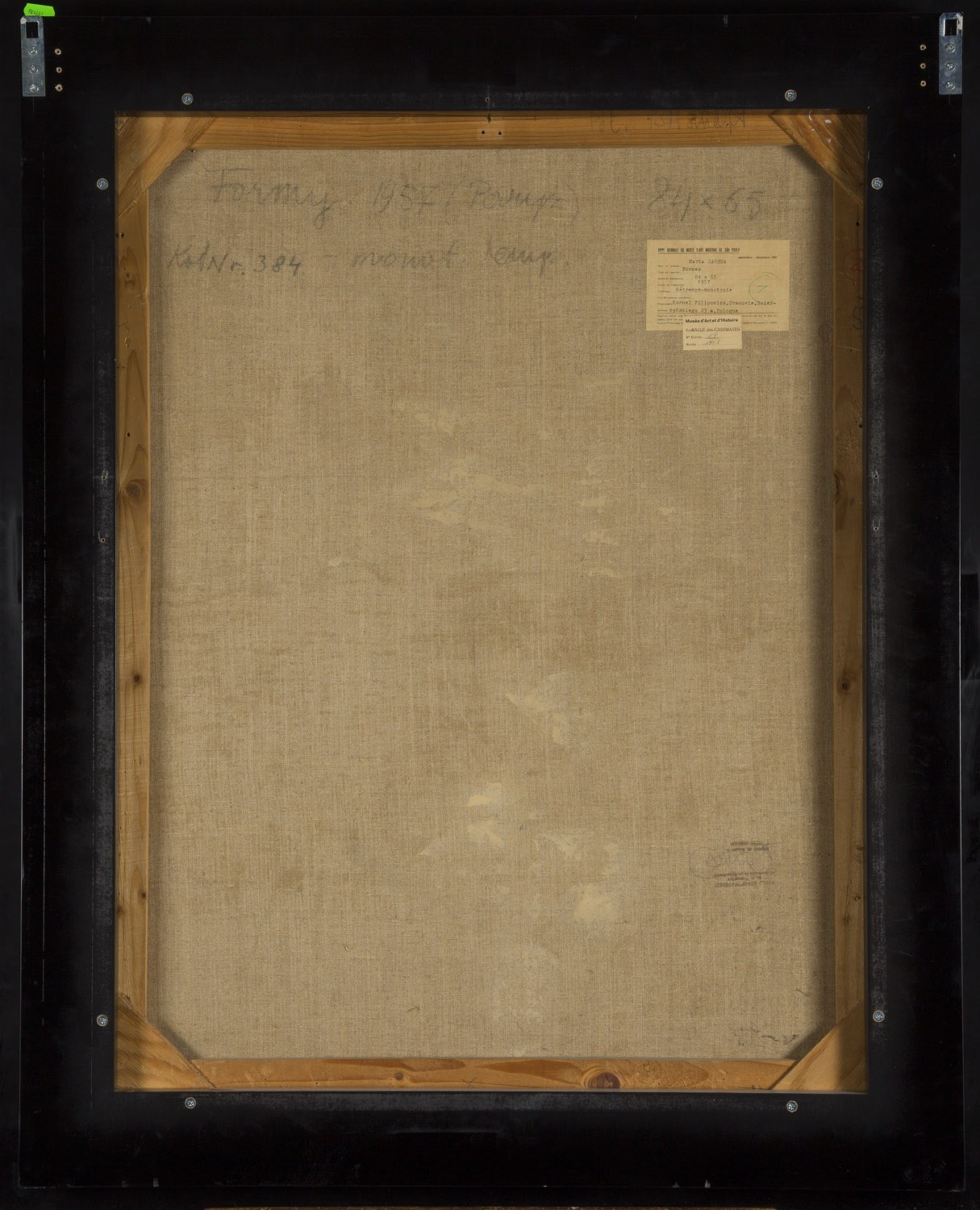
Dimensions: 84 x 65 cm
signed, dated and inscribed p.d.: 'Maria Jarema 57 Paris'
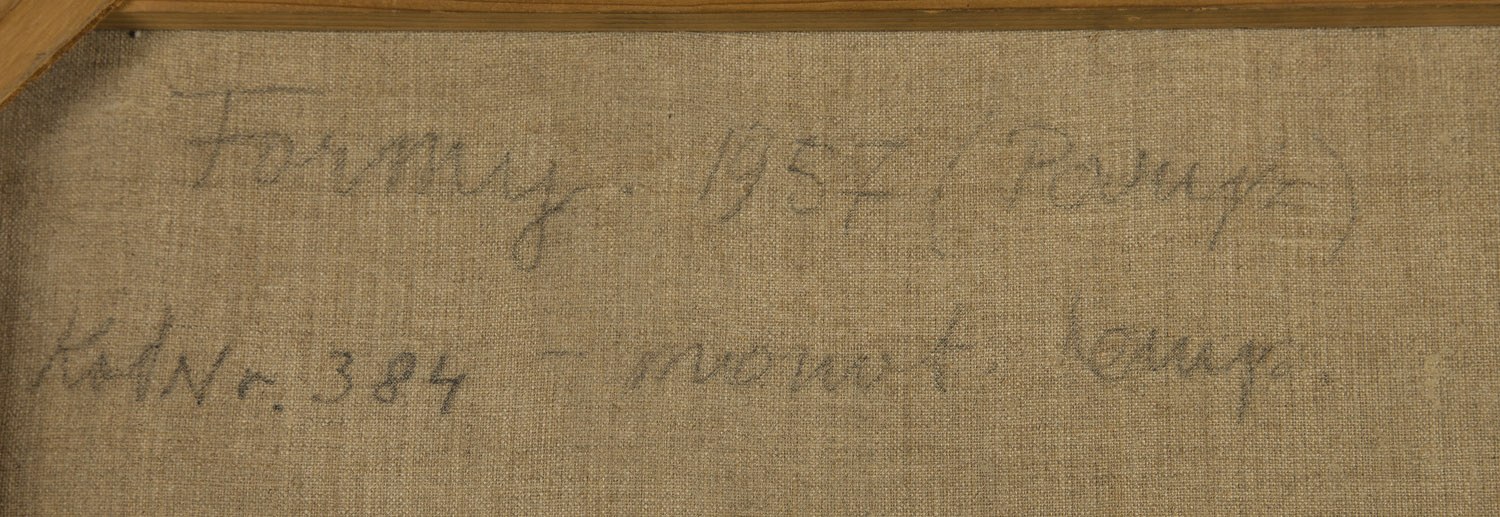
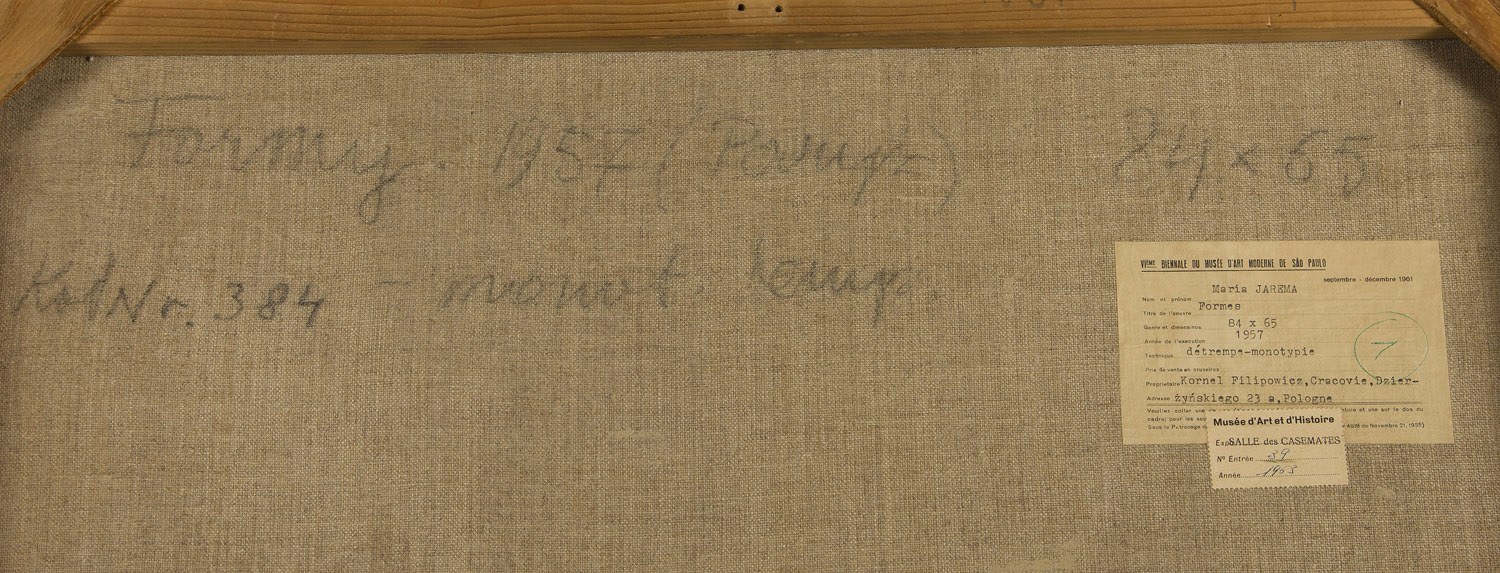
described on the reverse: 'Forms 1957 (Paris) 84 x 65 | Kat Nr. 384 monot. temp.'.
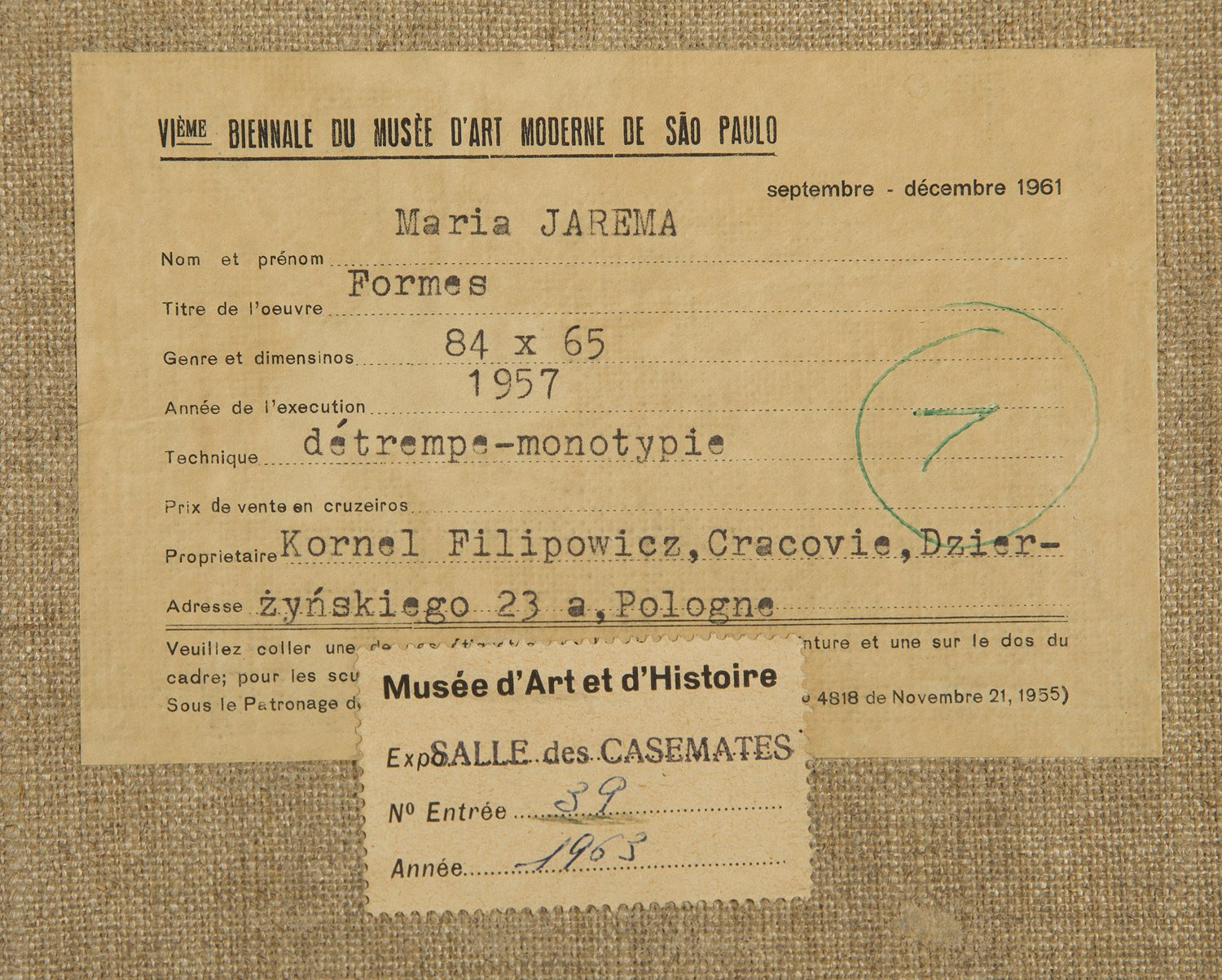
on the reverse two exhibition stickers with the description of the work: 'VIéme Biennale du Musée d'Art Moderne de São Paolo' dated 1961 and: 'Musée d'Art et d'Histoire Salle des Casemates' dated 1963.
Origins
Collection of Kornel Filipowicz
private collection, Poland
Desa Unicum, 2016
private collection, Poland
DESA Unicum, 2018
private collection, Warsaw
Exhibited
"Deux Artistes polonais: Maria Jarema, Maria Spain-Neumann," Musée d'Art et d'Histoire, Salle des Casemates, Geneva, April-May 1963.
VI Bienal de São Paolo, September-December 1961
Literature
Barbara Ilkosz, Maria Jarema 1908-1958, exhibition catalog, Wrocław 1998, p. 197, cat. no. 294
VI Bienale de São Paolo, 1961, catalog, p. 328, cat. no. 2
Biography
Studied in 1929-35 at the Academy of Fine Arts in Cracow in the studio of X. Dunikowski. While still a student, she became associated with the Cracow Group, which brought together avant-garde artists with radical artistic and social views. She participated in exhibitions of the Group and ZZPAP, presenting sculptures at first, and only from 1938 paintings. At the same time, she worked as a stage designer and actress with the "Crico" theater, founded by her brother, Jozef Jarema, and with Adam Polewka's puppet theater. In 1937 she went to Paris for several months of study. In the post-war period, she took an active part in the political and artistic life of the Cracow art community. She exhibited extensively at home and abroad (including at the XXIX Venice Biennale), participated in scenography and sculpture competitions, and collaborated as before with the theater, this time Tadeusz Kantor's "Cricot 2." The 1950s were also the apogee of the development of her painting work. It was then that she created the monotype series Heads, Expressions, Rhythms, Filters and Penetrations. The artist created her own original world of forms endowed with great expressive power enhanced by the composition punishing them to intermingle in moving, changing arrangements.