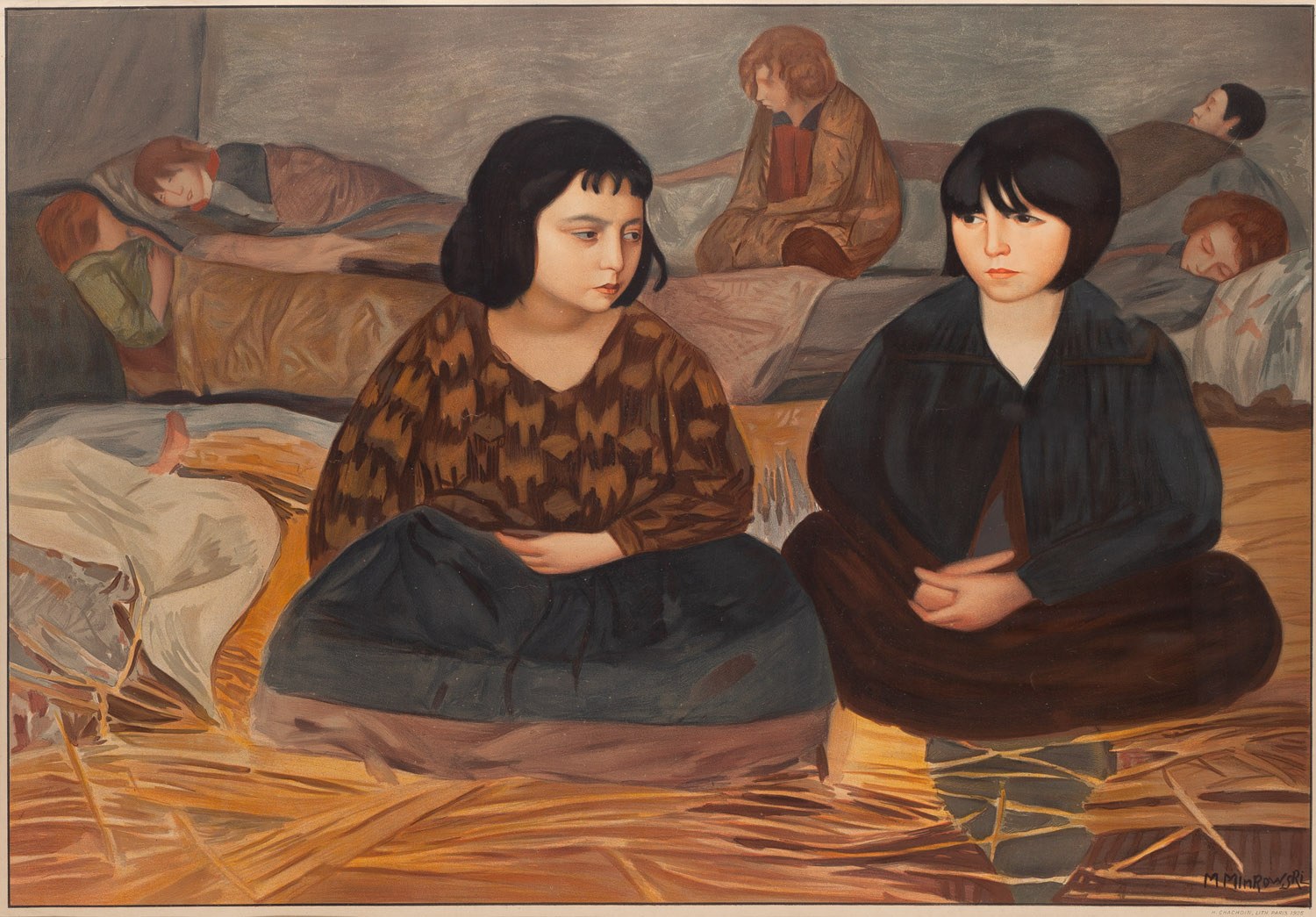
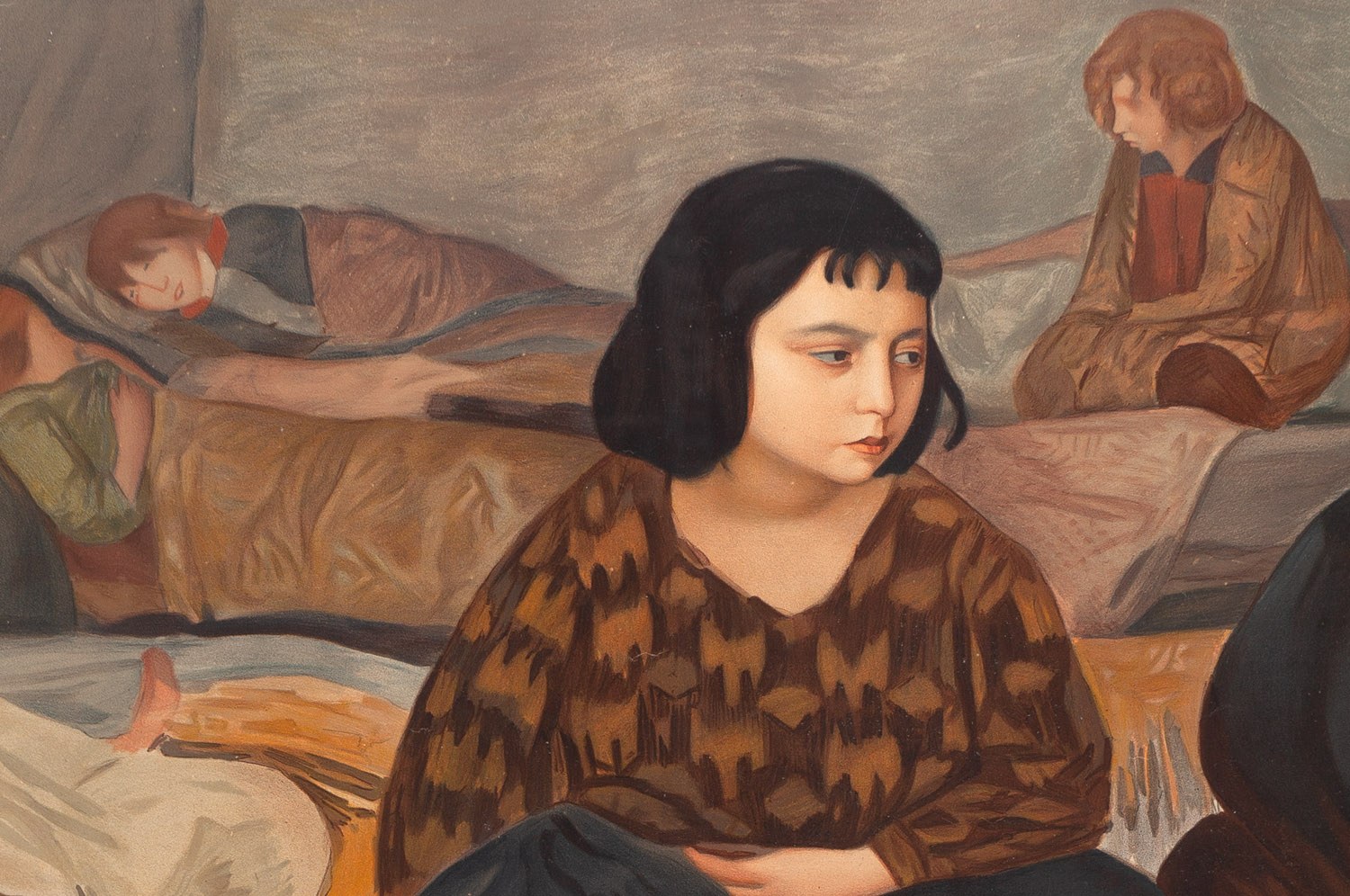
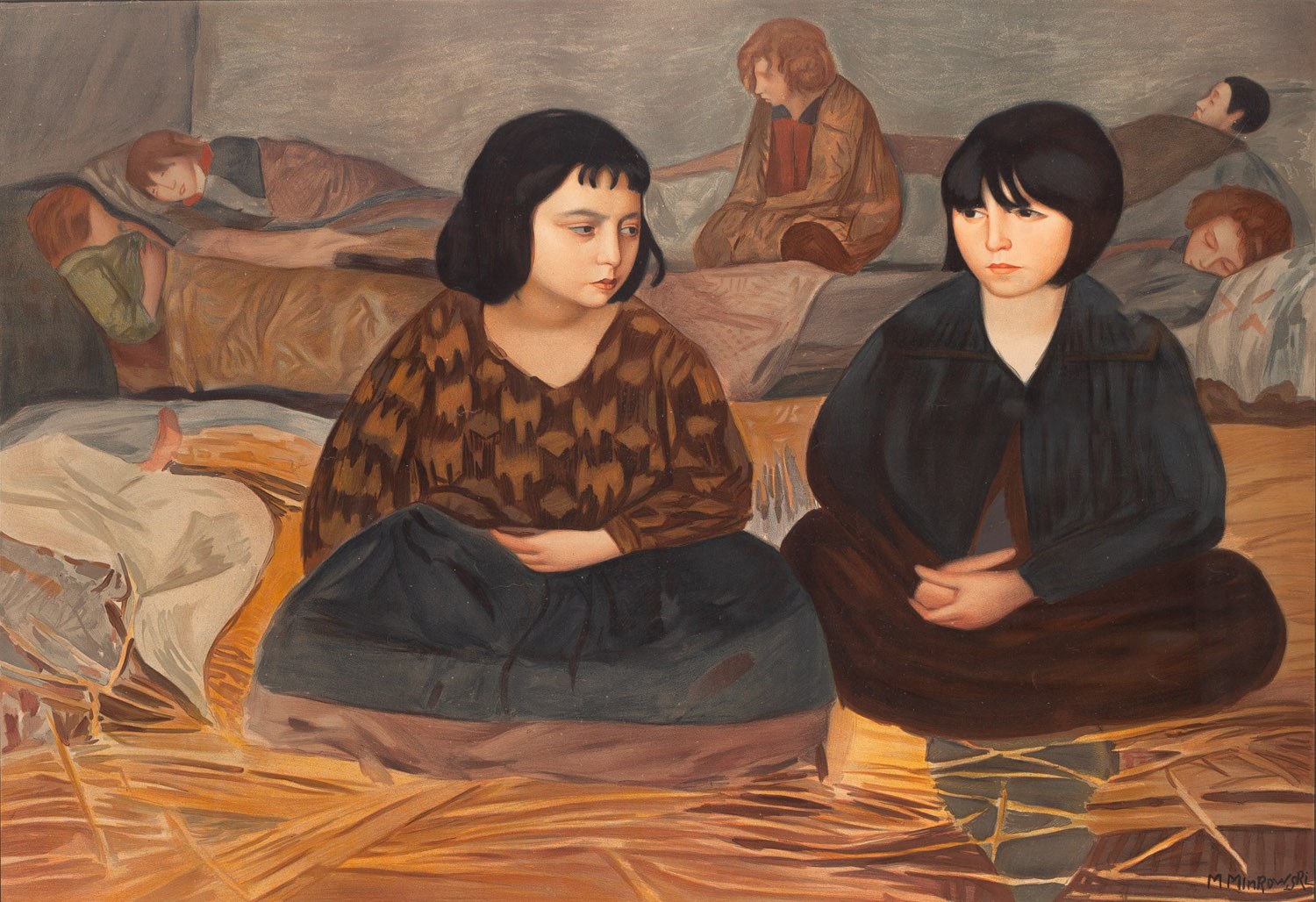
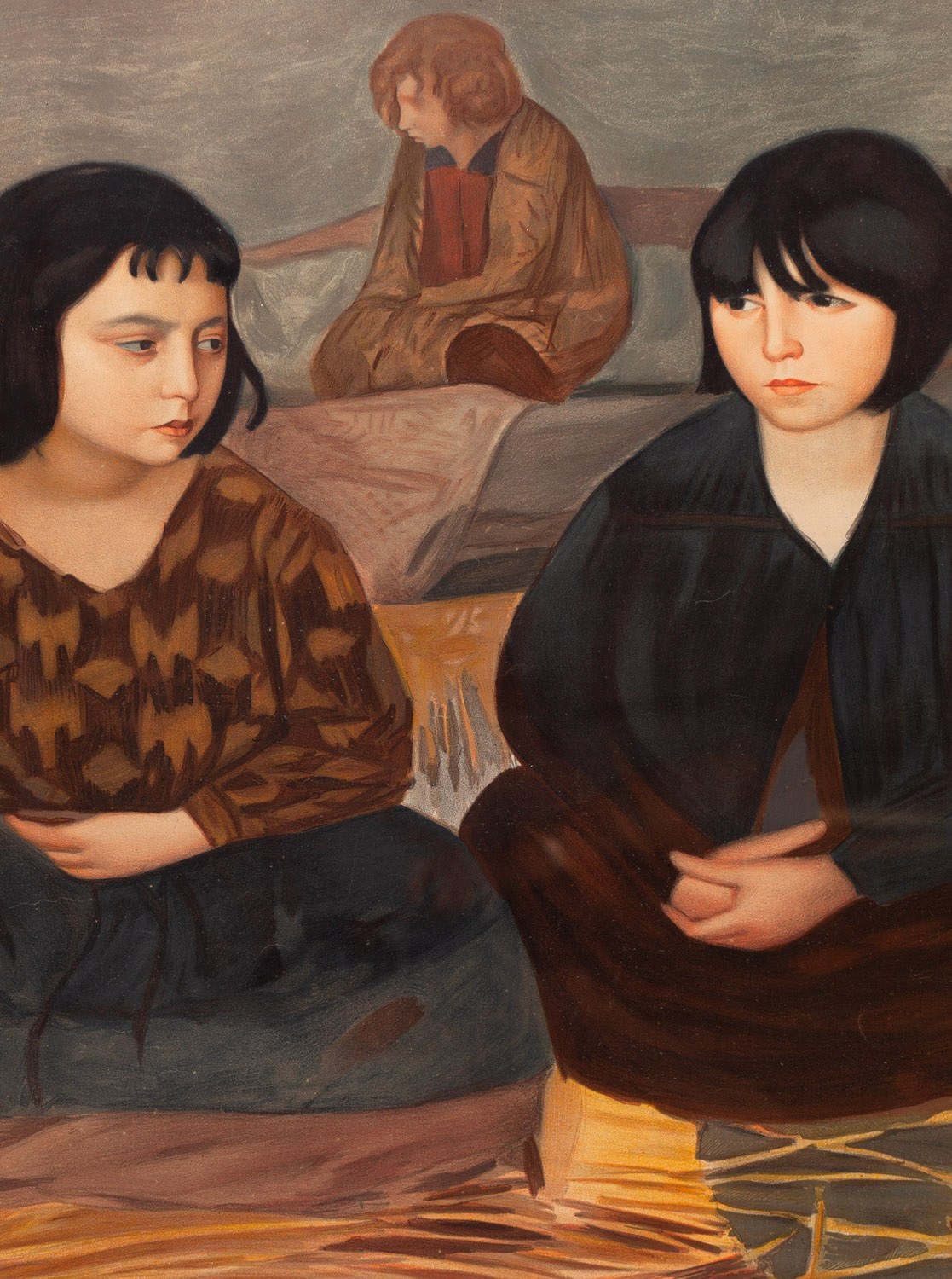
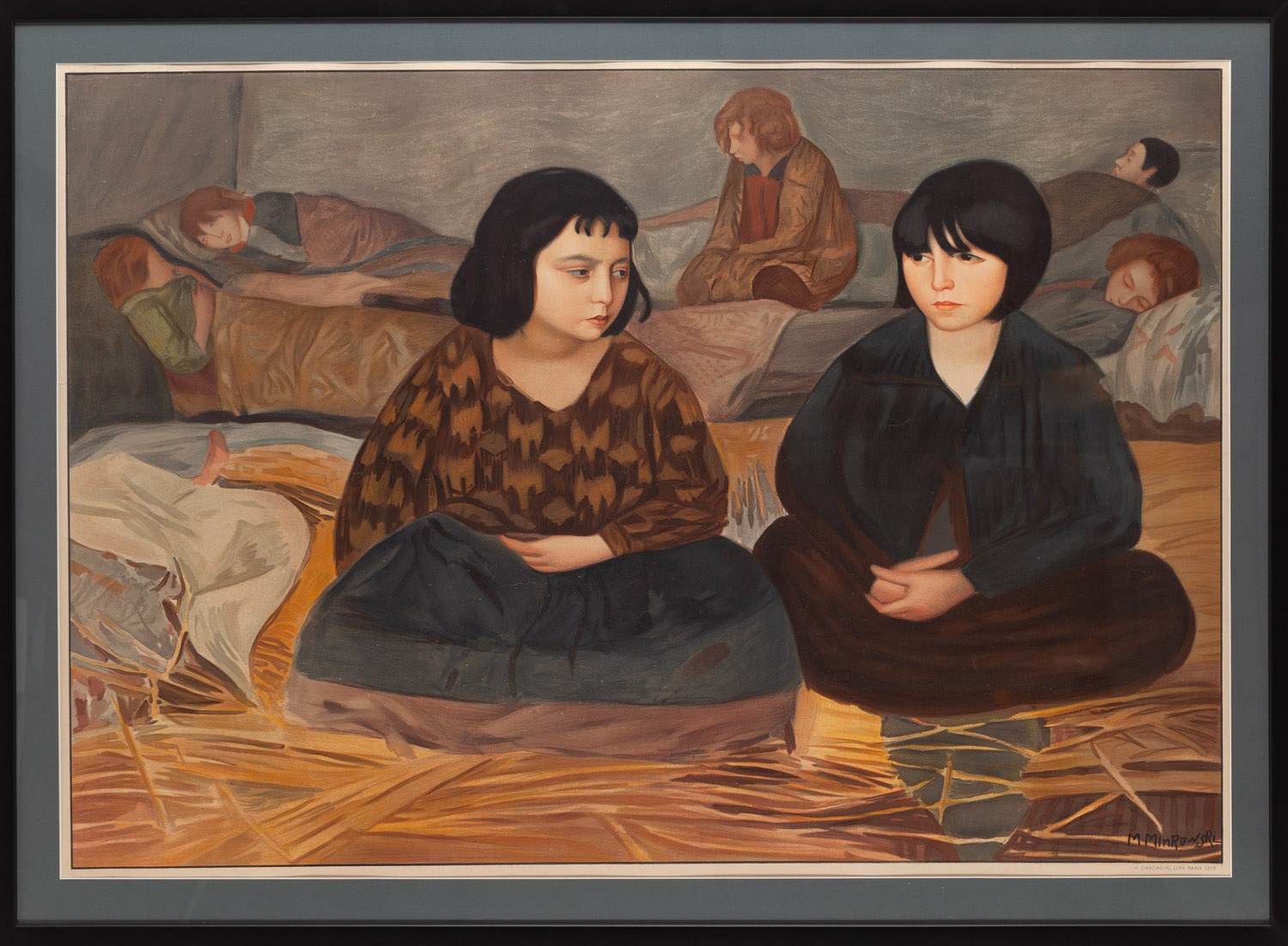

Dimensions: 66.5 x 97 cm (plate imprint)
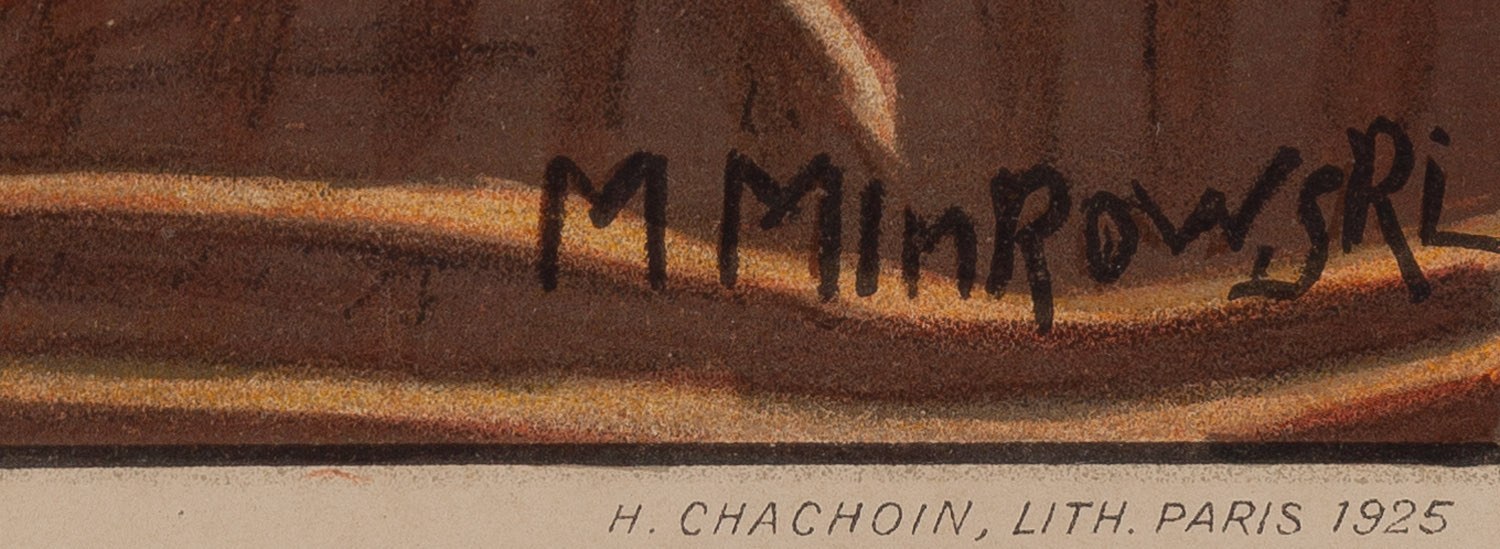
Signed on stone p.d.: 'Maurycy Mianowski', below: 'H. CHACHOIN, LITH. Paris 1925',
Condition
Framed work
Biography
Painter, born in Warsaw in 1881 to a wealthy Jewish family. As a result of an accident in childhood, he became deaf and dumb. From an early age he was interested in art and painting. Around 1888 he was committed to an institute for the deaf and dumb, and at the same time attended a drawing school. In 1901-1905 he studied at the Academy of Fine Arts in Cracow with Jozef Mehoffer, Jan Stanislawski and Leon Wyczolkowski, receiving awards for his works. He graduated with a gold medal. He can be counted among one of the more colorful figures of Krakow's bohemian scene at the turn of the century. In 1905 he traveled to Odesa to see with his own eyes the aftermath of the pogroms, he later painted a number of canvases reflecting these shocking events, including "Victims of the pogrom", "Homeless", "Waiting for the train". After his studies, he returned to Warsaw and then traveled around Europe, including Vienna, Berlin, Dresden and Munich. Around 1908 he settled permanently in Paris, however, he often came to Poland, including plein-air paintings in Kazimierz Dolny, Kraśnik and Światyń. In 1930 he traveled to Buenos Aires to hold an exhibition of his works there. His earliest works were exhibited at Warsaw's Zachęta Gallery, including the aforementioned canvases related to the Jewish pogroms. He also exhibited in London, Berlin, Paris, Königsberg and St. Petersburg. His works were also included in showrooms in Antwerp, Brussels, Düsseldorf, The Hague, Rotterdam and Vilnius. He gained popularity in Jewish circles: he participated in an exhibition of Jewish artists in Warsaw in 1921, and in 1923 the Warsaw religious community arranged a solo exhibition for him. In 1928, his individual exhibition at the Jewish Society for the Promotion of Visual Arts was moved to Lodz. In addition, individual exhibitions of Minkowski's works were organized in 1922 in Warsaw, Vilnius and Lodz. In Buenos Aires, a posthumous exhibition of Minkowski's works was held at the Müller Gallery, organized by the Argentine Hebrew Association. The deaf artist's work focused on Jewish themes from almost the very beginning. From his early compositions dealing with themes of pogroms, to his studies of Jewish types, mainly Jewish poor and women, to his interest in Jewish mysticism. References to Hasidism and its rituals can easily be found in many paintings: "Farewell to the Sabbath" or "Forgiveness" (purchased in 1911 for the Jerusalem Museum), as well as a fascination with Jewish folklore. What is striking about these works is the hieratic nature of the figures and the pedantry in presenting details. Initially, Minkowski's painting was realistic in nature, but it was filled with lyricism, and during the French period there were some changes: the importance of handling light increased, there was a tendency to deformation, an interest in color and solids. He painted figural compositions, landscapes and portraits.