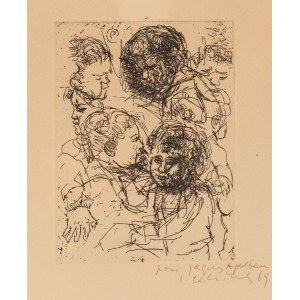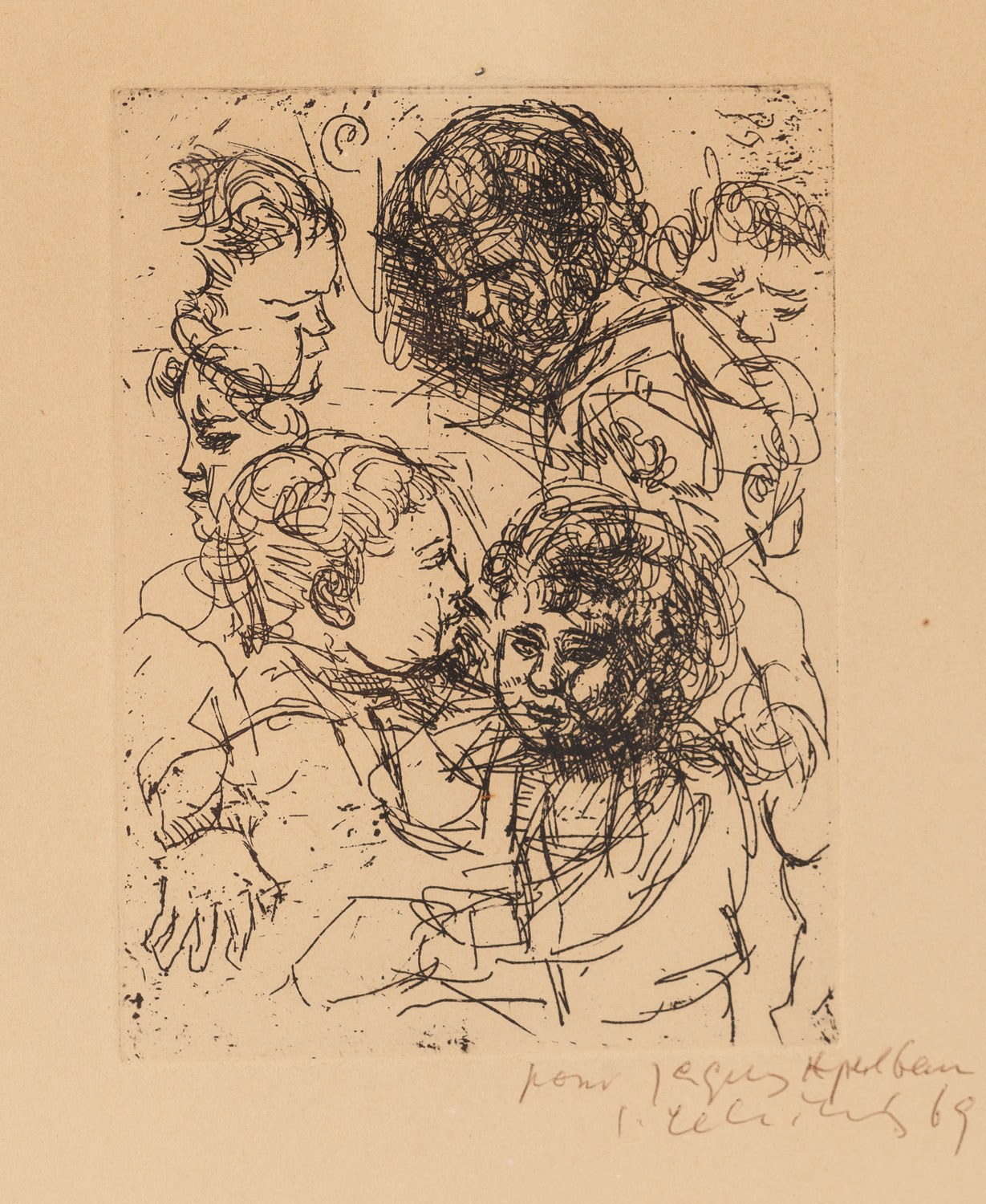
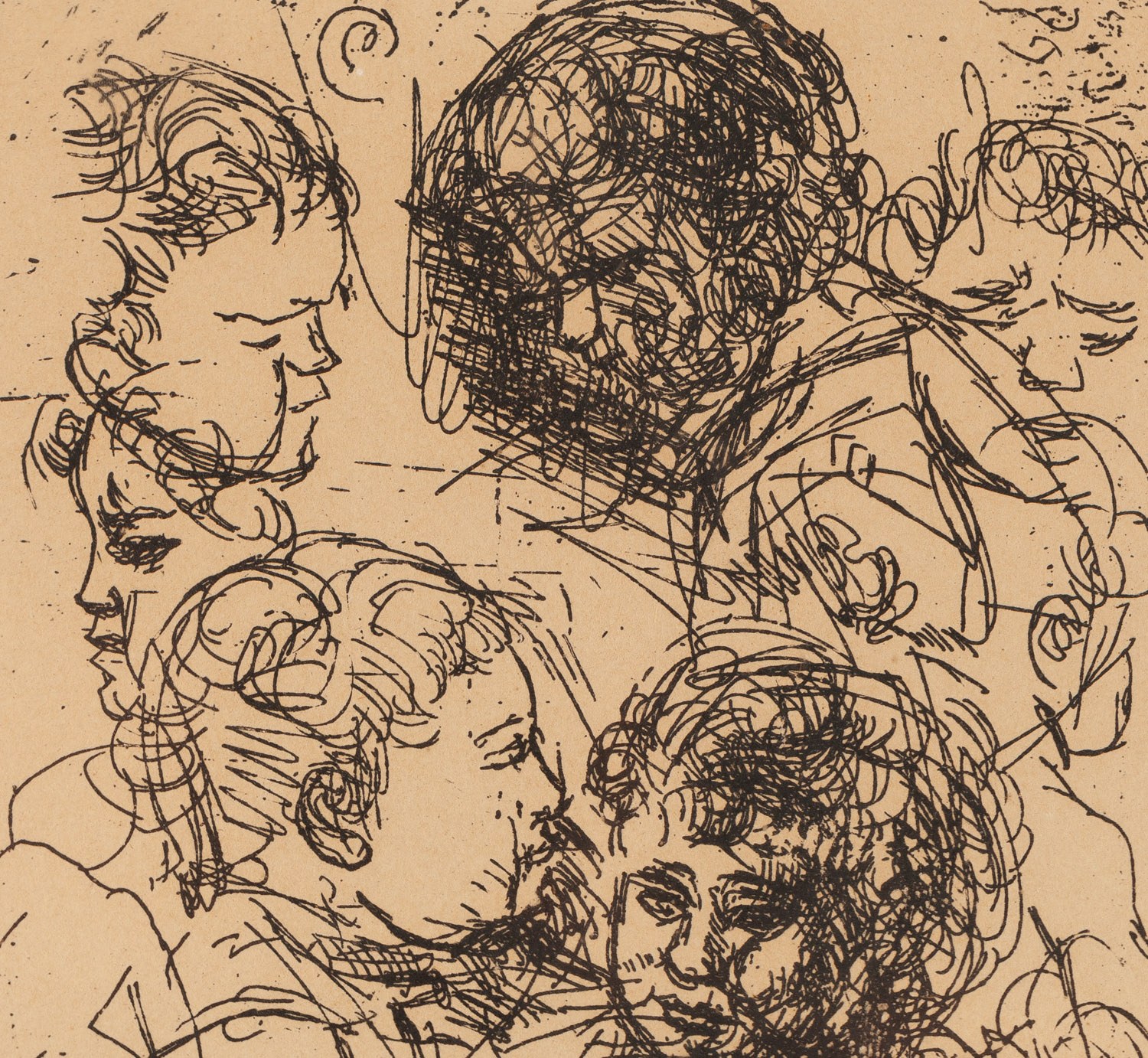
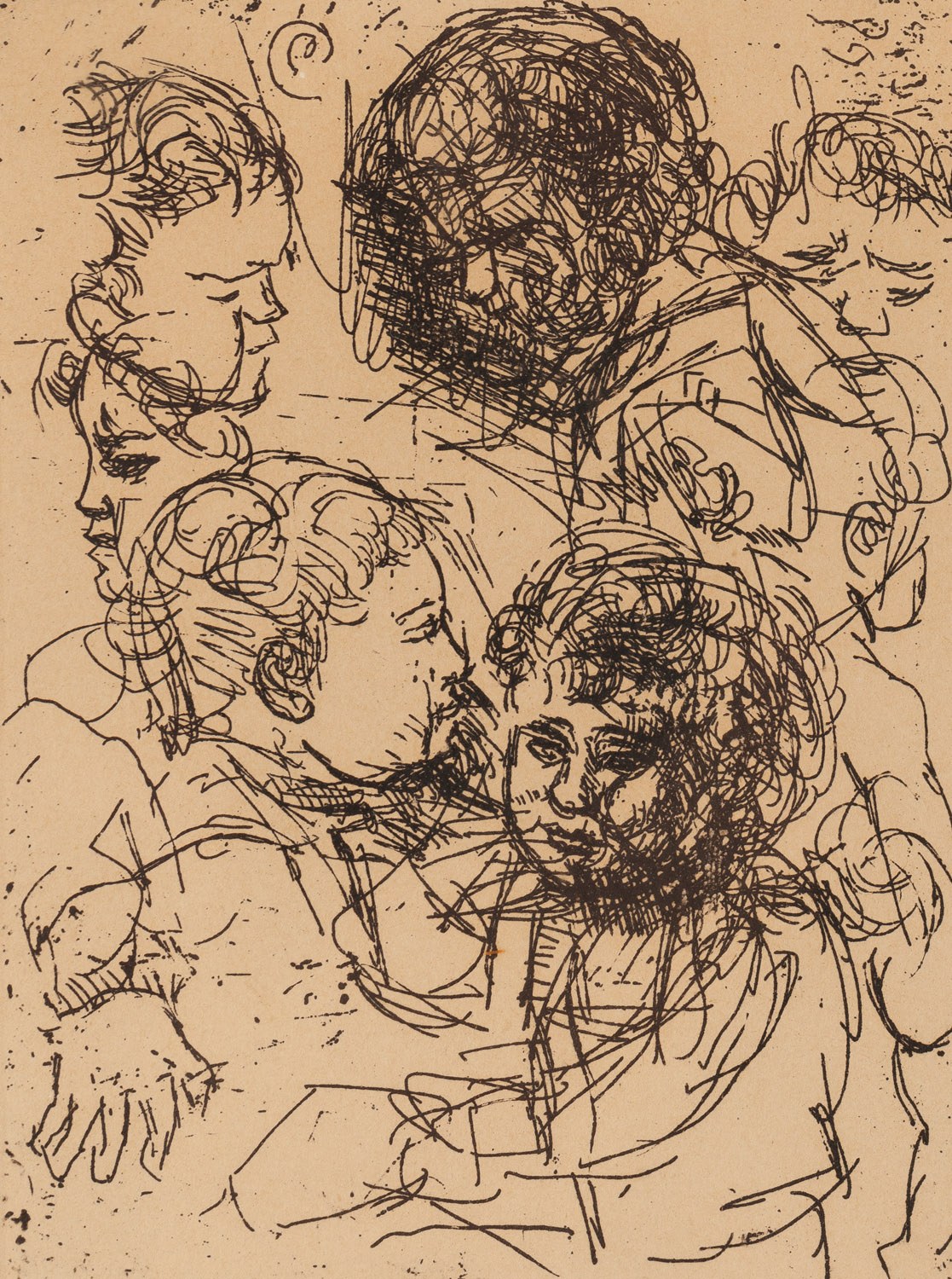
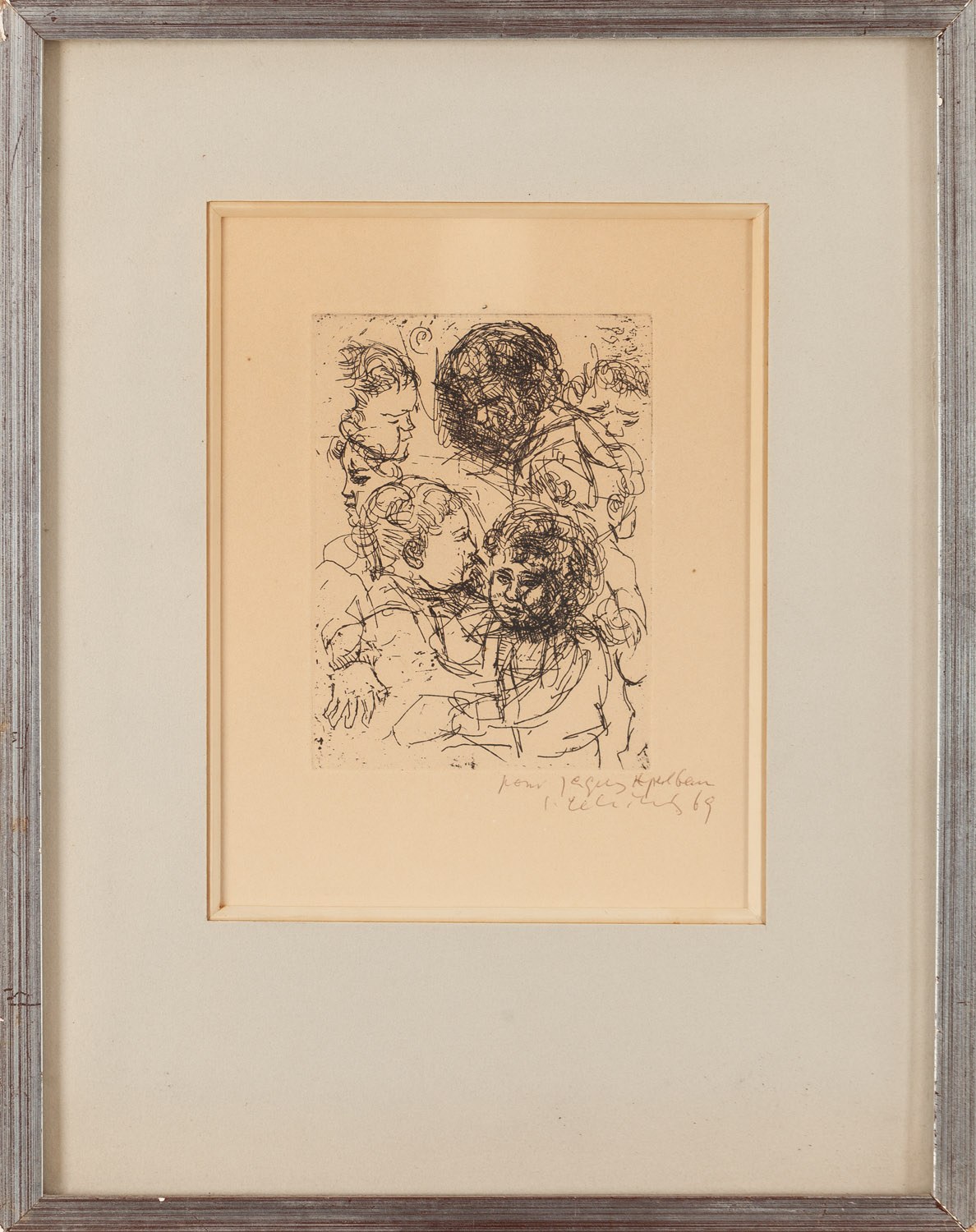
Dimensions: 18 x 13.5 cm
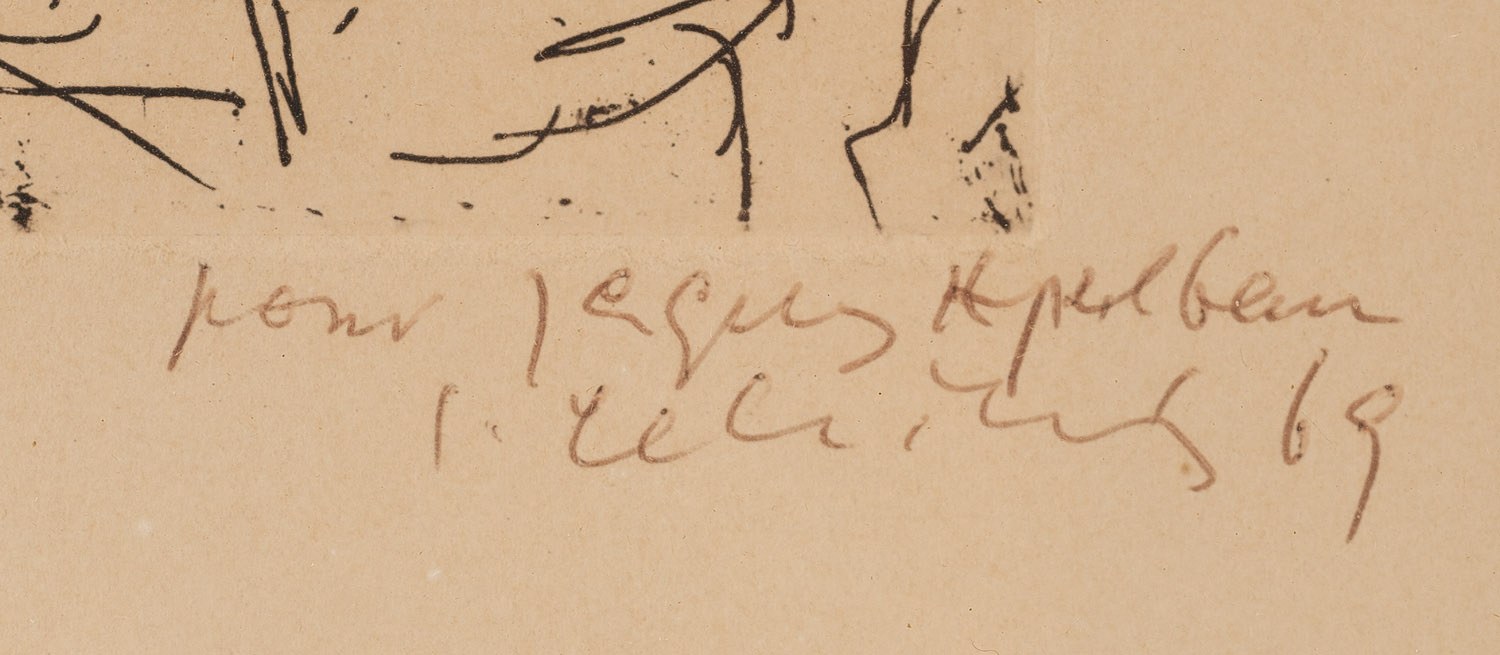
signed and inscribed lower right: 'pour Jacques Appelbaum | I. Celinkier 69'
Biography
He was born in Warsaw in 1923 into a poor Jewish family. From 1934 to 1938, he was a resident of the Orphanage in Warsaw run by Janusz Korczak. At the outbreak of the war, he fled with his mother and sister to Białystok. In 1941, he and his family were sent to the Białystok ghetto, where he worked in a carpentry shop and in the copyists’ studio of the German industrialist Oscar Steffen. After the liquidation of the ghetto, he was sent to a prison in Łomża, from where, after a few months, he was deported to the camp in Sztutowo (Stutthof), later transferred to Birkenau (Auschwitz II), then to the Auschwitz III satellite camp, where he was assigned to Siemens Painting Unit 78. Following the Nazis’ evacuation of the Auschwitz-Birkenau and Buna camps, he was transported on a death transport to Mauthausen, from where, due to overcrowding at the camp, he was transferred to Sachsenhausen and then to Flossenbürg. During the final transport from Flossenbürg to Dachau, he was wounded in the leg when Allied aircraft strafed the train, and at the end of April he was found by American soldiers among the dying and the dead. On his way back to Poland, he was detained at the Czech border, accused of treason, and imprisoned in a Soviet camp in Sumperk, Moravia, from which he escaped to Prague two days before he was to be sent to a labor camp. In December 1945, he returned to Białystok, where he worked on erecting graves on the site of the former ghetto. From 1946 to 1951, he studied at the Academy of Applied Arts in Prague, in the Studio of Monumental Painting, under the guidance of the distinguished Czech artist, painter, and sculptor Emil Filla. In 1952, he returned to Warsaw and collaborated with the magazines *Nowa Kultura*, *Przegląd Kulturalny*, and *Przegląd Artystyczny*. In 1955, he took an active part in the preparations for the National Exhibition of Young Artists, organized at the Arsenal in Warsaw on the occasion of the 5th World Festival of Youth and Students under the slogan “Against War—Against Fascism.” There, he exhibited an oil painting titled *Ghetto*, for which he received an award.In 1957, he received a one-month scholarship from the Minister of Culture and Art to study in Paris, where he decided to settle permanently. He traveled to Israel several times for both short and long stays, where he painted landscapes from the Jerusalem area. In Israel, he held several solo exhibitions. In 1967, he was honored by André Malraux with the title of Chevalier des Arts et des Lettres. His art was primarily devoted to his experiences and memories of the ghetto and concentration camps. He painted poignant, monumental works on the theme of the Holocaust. Beginning in 1969, he created prints—etchings and aquatints—in which he depicted the reality of the ghetto. He also painted portraits of women, landscapes, and still lifes. He organized numerous solo exhibitions in France, Israel, Czechoslovakia, Norway, and Switzerland. His works are held in collections in France, Norway, Israel, and Poland.