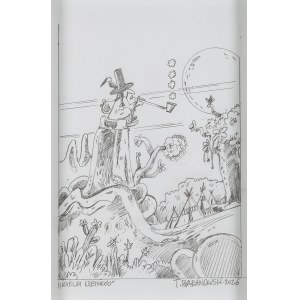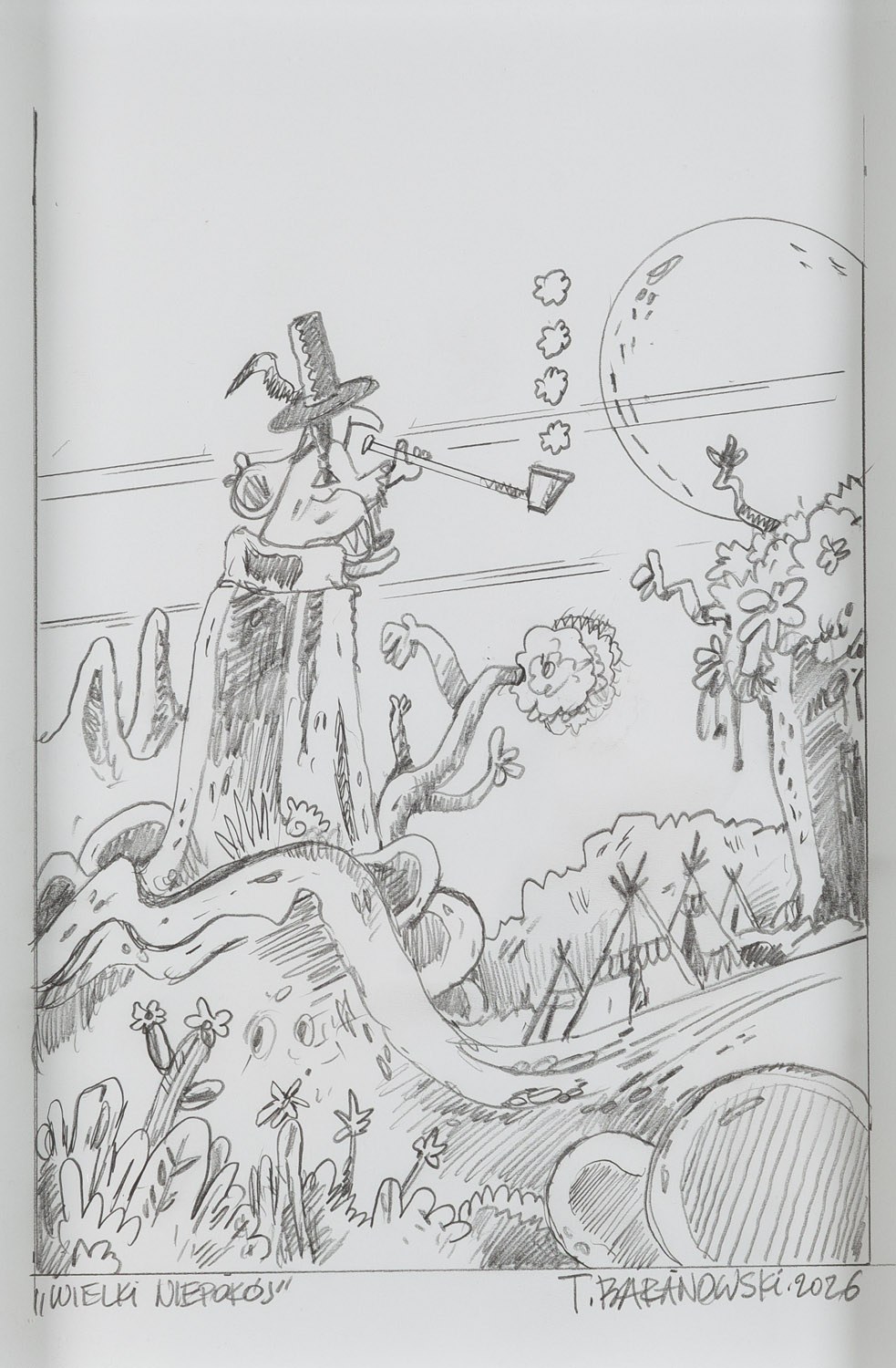
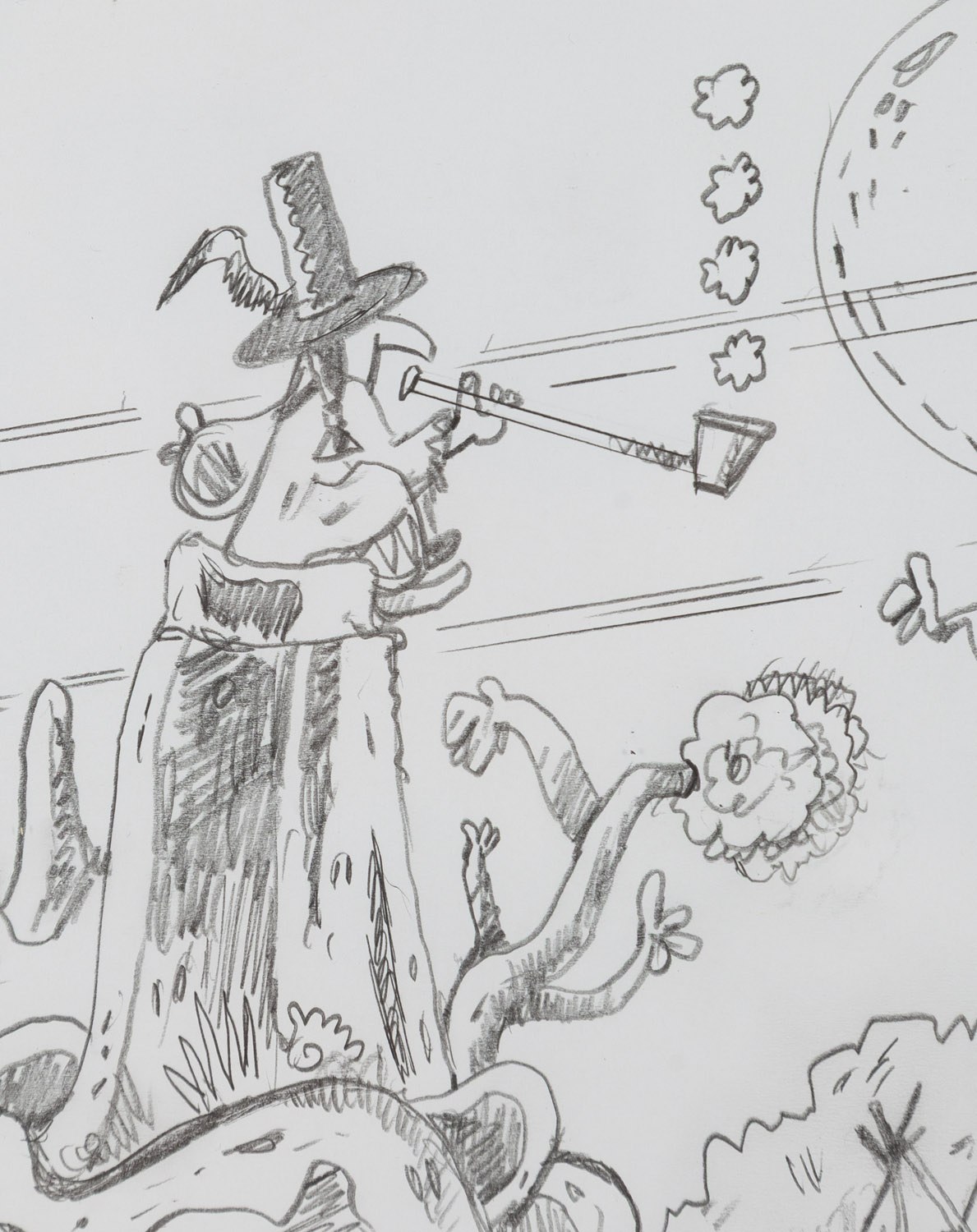
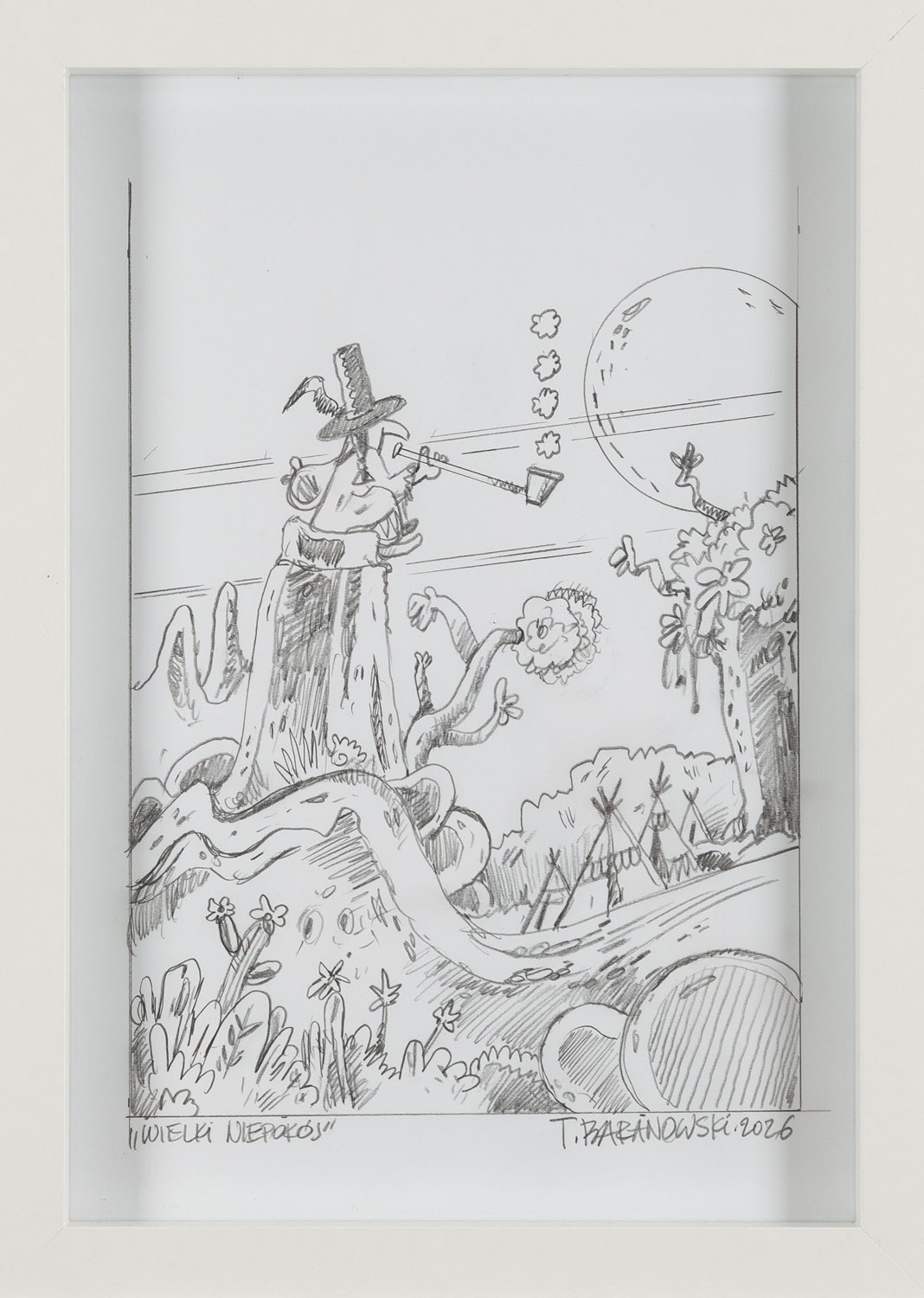
Dimensions: 29 x 20 cm (inside the frame)
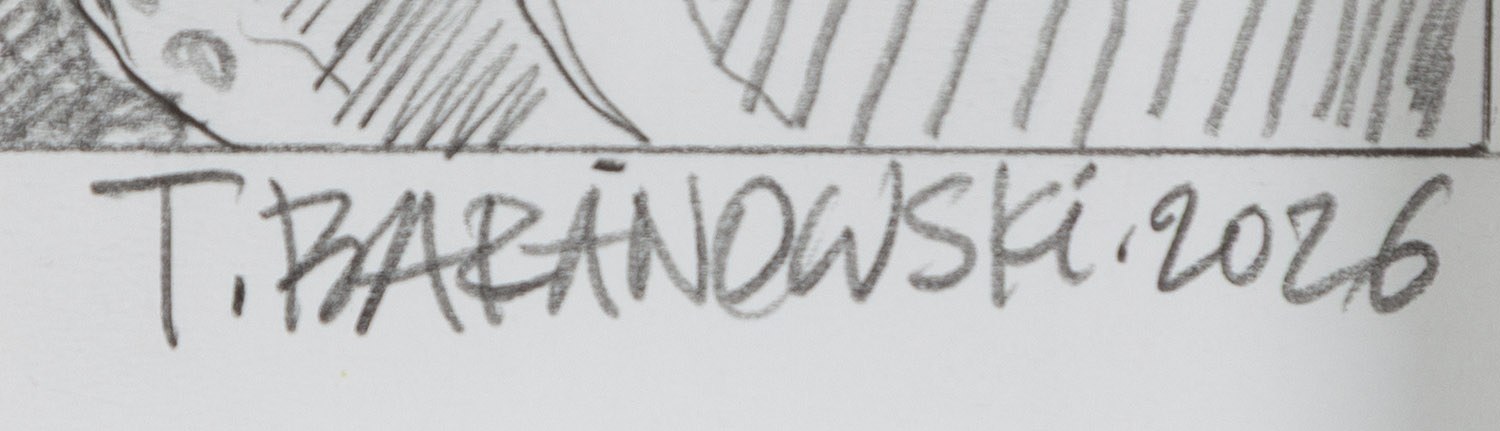
signed and dated lower right: 'T.BARANOWSKI 2026', inscribed lower left: '"GREAT ANXIETY"'
Biography
Painter, illustrator, designer, and comic book artist. From 1962 to 1969, he studied at the Faculty of Graphic Arts and Painting at the Academy of Fine Arts in Warsaw, attending the studio of Prof. Artur Nacht-Samborski, and later in the studio of Prof. Aleksander Kobzdej—he graduated with honors. From the early 1970s, he collaborated as an illustrator with the magazine *Przyjaciółka*, and from 1974 he was also associated with *Świat Młodych*, where he designed a new layout and where his first comic strip appeared. From that time on, numerous comics by the artist were published in newspapers, and beginning in 1980, they were released in collections by the Youth Publishing Agency. Baranowski created a group of well-known characters such as Orient Men, Bąbelek and Kudłaczek, Professor Nerwosolek, Entomologia Motylkowska, Praktyczny Pan, Szlurp, and Burp, who reappeared over the years in comic series such as *Where Does Soda Water Come From?* (1976), *Przepraszamy, remanent* (1976), *Orient Men* (1978), and *Antresolka Profesorka Nerwosolka* (1980, 1981, 1983). A series of animated films was also created based on the characters of Professor Nerwosolek and the Diplodocus. In 1984, at the invitation of Grzegorz Rosiński, he temporarily moved to Belgium, where he collaborated on creating panels for the *Thorgal* series with the publisher Les Éditions du Lombard and the magazine *Tintin*, as well as creating comics based on scripts by Jean Dufaux and illustrations for a poetry collection by Jacques Brel. Over the years, Baranowski worked as an illustrator for numerous magazines—including *Razem*, *Ja*, *Ty*, *My*, *Juppi*, and *Juppik*—and in 2005 he announced his “retirement from comics” by publishing a farewell album titled *Tffffuj!* What a Lousy Comic Book!. The author was awarded the Bronze Cross of Merit (1976), the Silver Medal “Gloria Artis—For Merit to Culture” (2007), the Special Award of the Minister of Culture and National Heritage (2009), and the “Golden Cup”—the Janusz Christa Award (2024).