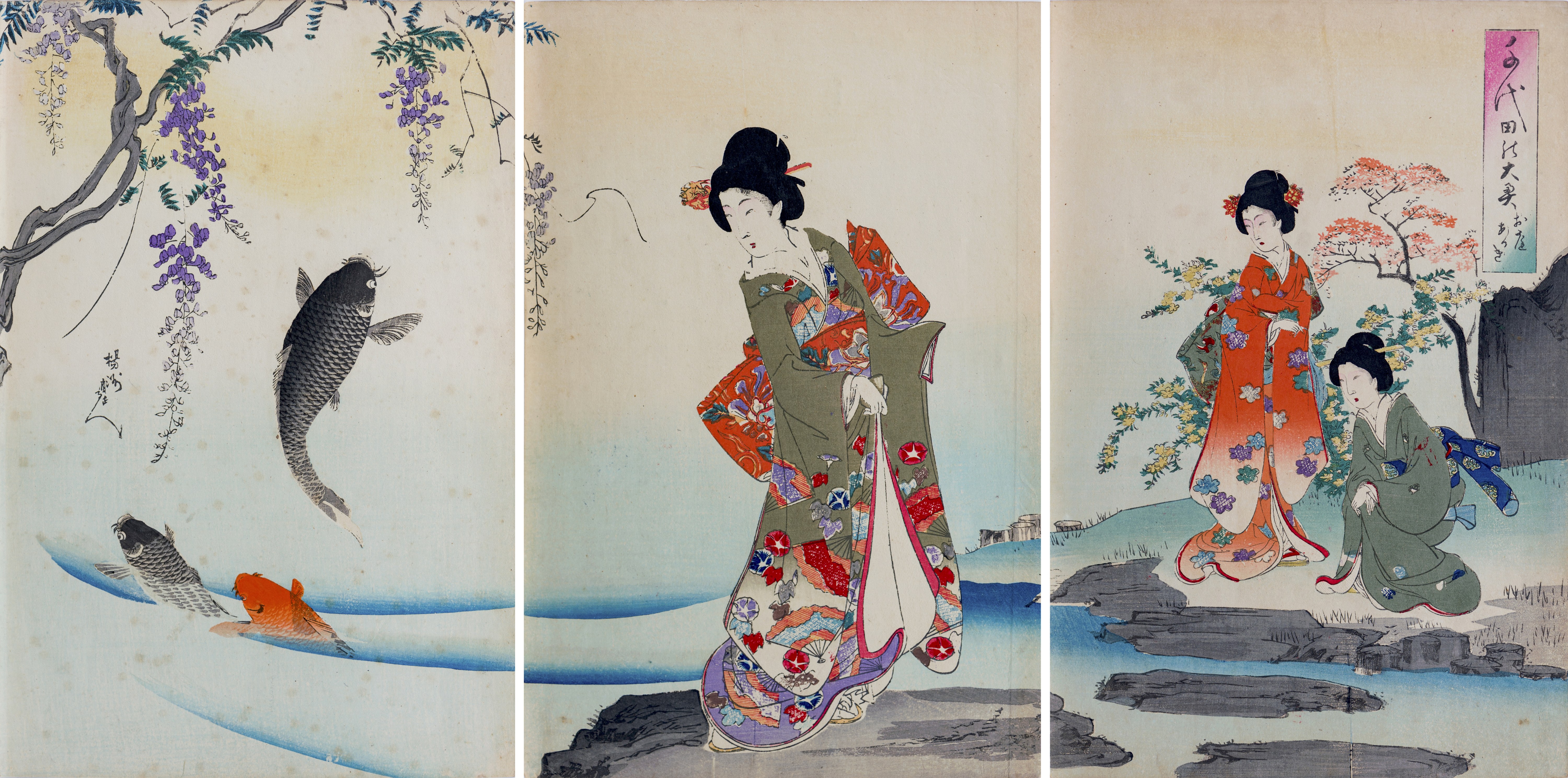
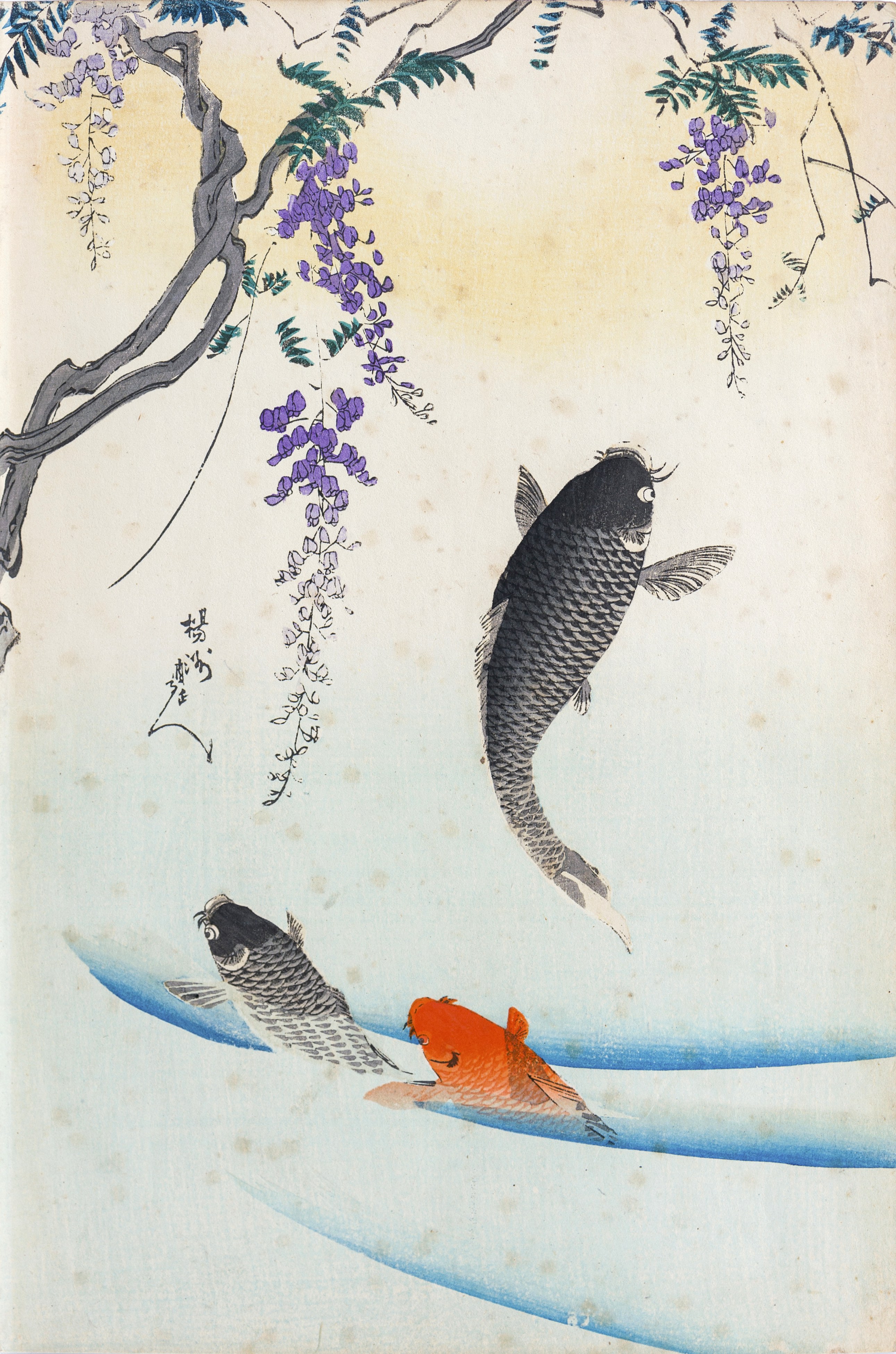
Color woodcut, ink, duplicated paper, triptych, 35x69 cm (35.5x23 cm x 3), artist's signature
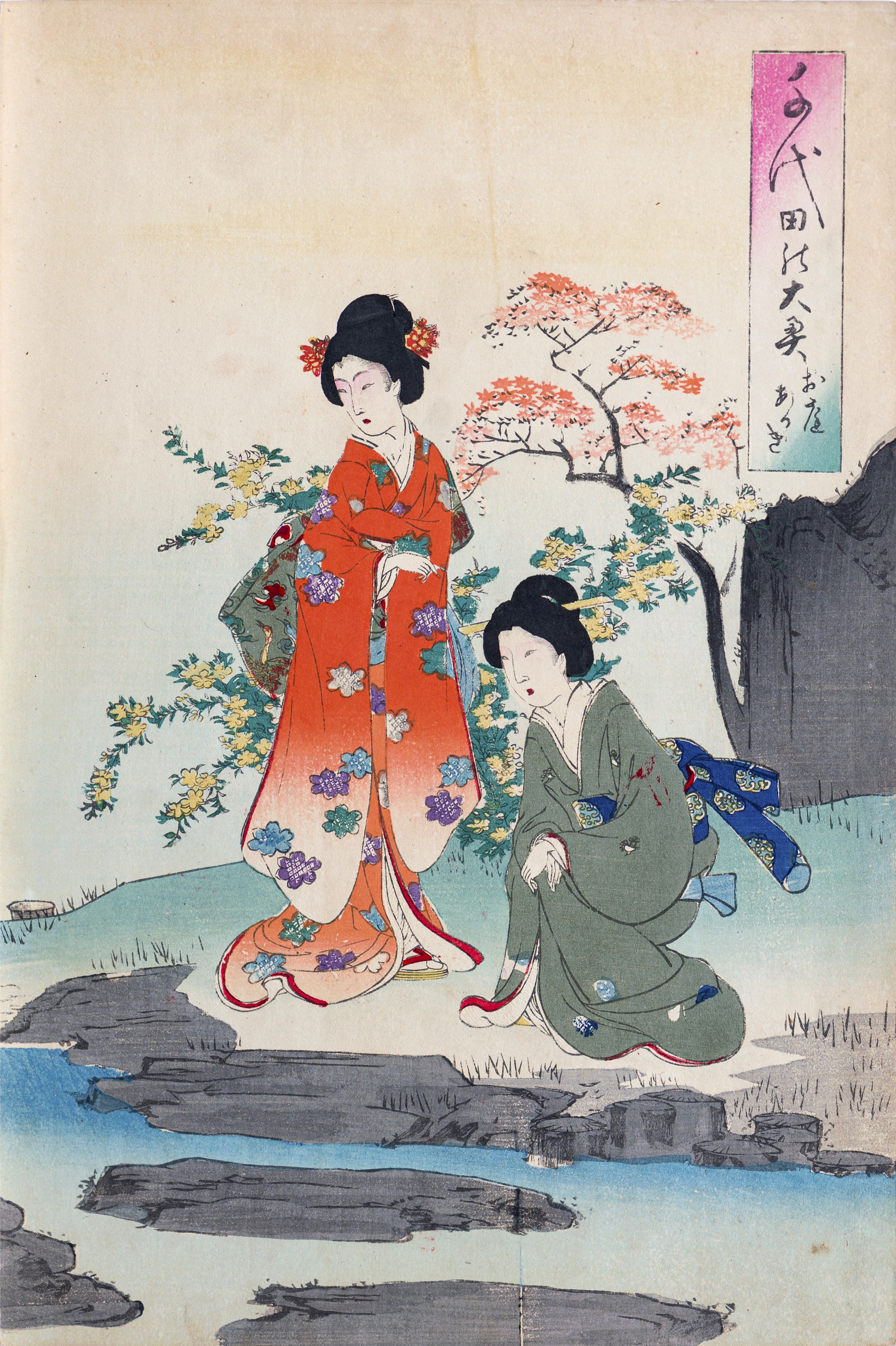
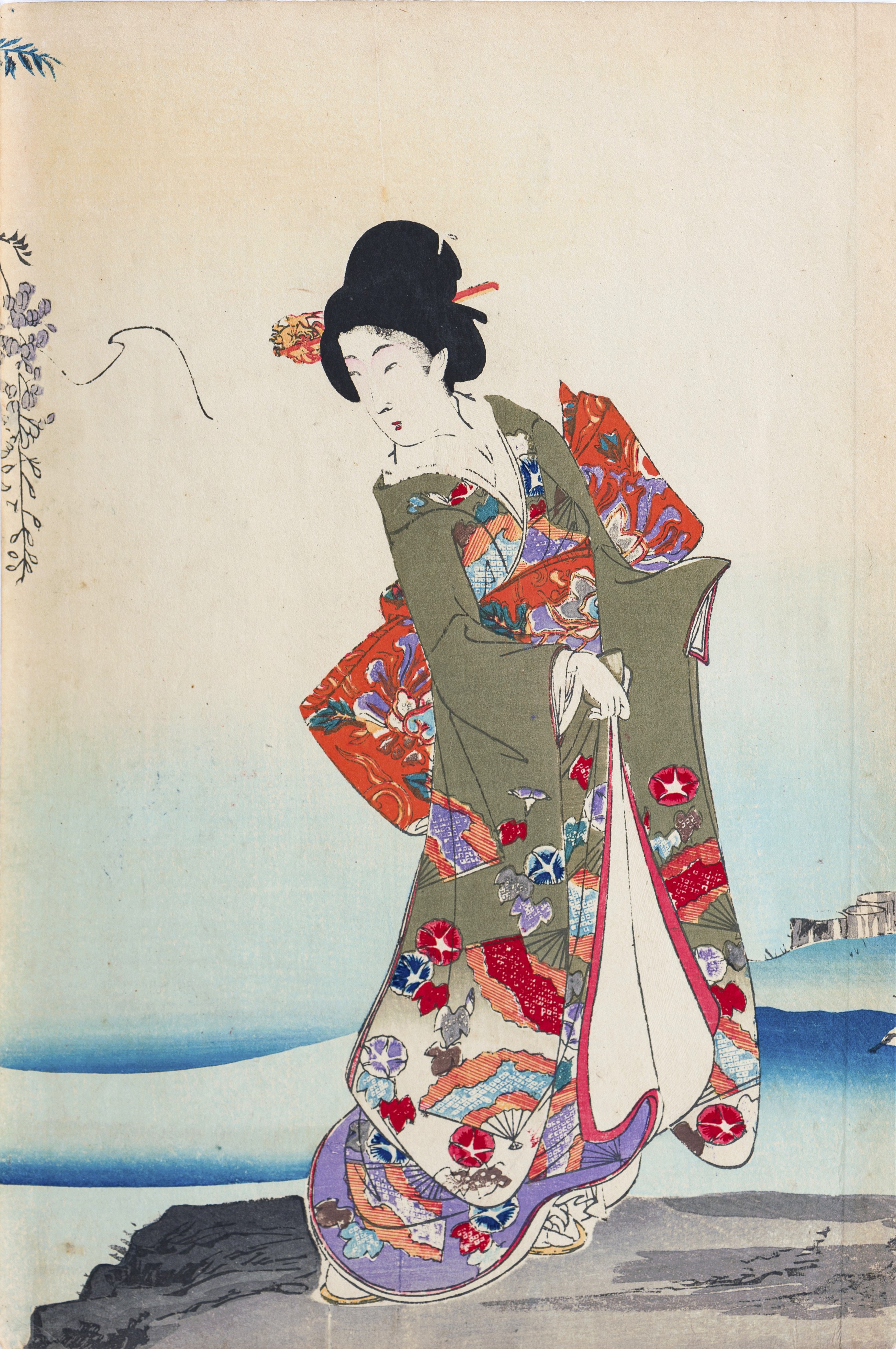
One of Chikanobu's most romantic triptychs. It depicts upper-class women walking in a garden and enjoying a spring day. One of the women walks along the stones in the pond and glances over her shoulder at a large koi carp leaping out of the water. Two other carp swim in the gently shaded water below. Above them, a glycine tree blooms with purple flowers. The woman is wearing a kimono with a pattern of fans and powdery flowers, and the white lining of the outfit is delicately embossed in an intricate pattern. The entire scene is observed by two beauties standing on the bank of a pond.
First published in 1894-1897, Chikanobu's "Inside Chiyoda Palace" series depicts the life of women in Edo Castle before the Meiji Restoration, when it was home to the shogun and his court. Edo Castle was also known as Chiyoda Castle, and the entire series includes 40 triptychs. The Inner Palace area was home to the shogun's wife and unmarried daughters, his male heir, and many ladies of the court and servants. These woodcuts illustrate seasonal activities both inside and outside the women's private quarters, as well as various ceremonies, rituals and entertainments. The beauties are elegantly dressed during their daily lives, with exquisite care and detail of lavish kimonos and obi belt fabrics. Many of the designs incorporate luxurious printing techniques such as burnishing, embossing, mica or metallic pigments. The series beautifully captures the world of upper-class women in mid-19th century Japan.
Chikanobu Toyohara (also known as Chikanobu Yoshu) was born in Niigata Prefecture as Naoyoshi Hashimoto. He began his life as the son of a samurai in the service of the Sakakibara clan. During the Meiji Restoration, he joined the shogitai, an elite brigade of samurai in direct support of the waning Tokugawa shogunate, and fought bravely at the Battle of Ueno in 1868.Although he was captured in the battle, he emerged unscathed. After the fall of the shogunate, Chikanobu focused on his artistic career. Although trained from an early age in painting of the Kano school, Chikanobu turned his attention to ukiyo-e around 1852.He began his career as a printmaker under the tutelage of Utagawa school masters Kuniyoshi, Kunisada and Kunichika. Like many of his contemporaries, he worked as both a newspaper illustrator and printmaker. By 1871 he had become a leading and most influential designer. He created images of kabuki actors, beautiful women in colorful kimonos, battle scenes and historical scenes. In the 1870s. Chikanobu captured the rapid modernization of Meiji Japan through kaika-e, or "enlightenment paintings." Adapting to current events and public tastes, he created designs for the Satsuma rebellion of 1877, the unfortunate uprising against the Meiji government, and the Imo incident in Korea in 1882.Chikanobu reflected the changing world not only through subject matter, but also through technique. Using the purples and reds of imported aniline dyes, he achieved an element of subtlety and sophistication rarely seen in the Meiji era. In the 1880s, a wave of national nostalgia for Japan's past sparked designs exploring traditional Japanese culture, values and heroes. Through an exploration of female beauty, Chikanobu Toyohara embodied moments from Japanese history through fashion, manners and customs.