


Dimensions: 1 cm x 2 cm
Green glass with intaglio, metal setting
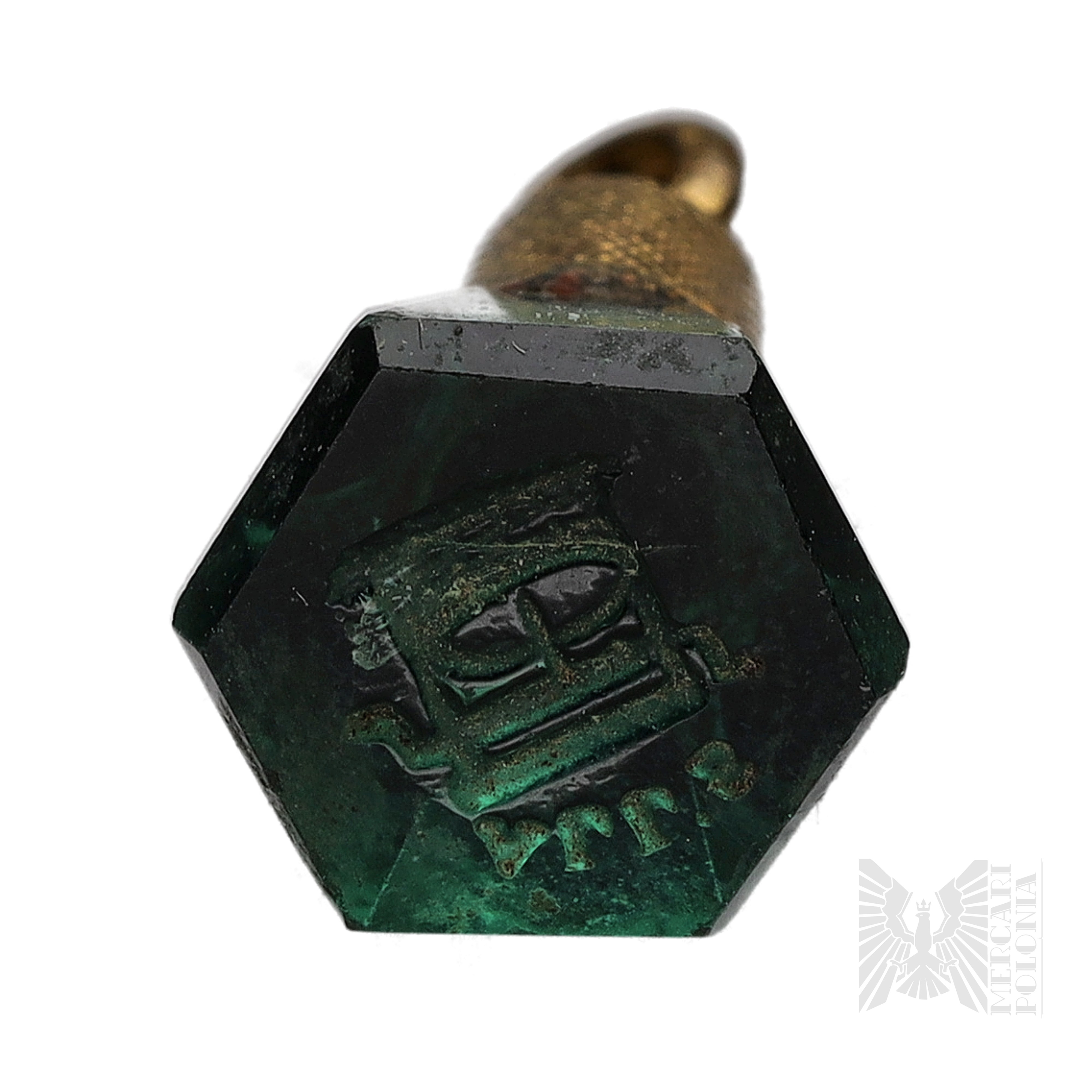
The object takes the form of a small seal-pendant. The lower part is made of deep-colored, green, translucent glass. The glass body has a faceted shape, resembling a short polygonal cone or a prism tapering toward the top. The side surfaces are smooth and polished.
The bottom surface serves as the seal impression. It is hexagonal or polygonal and features a concave engraved motif. The photograph shows a decorative mark resembling a monogram, emblem, or stylized coat of arms. The engraving is deep and reversed, in accordance with the seal’s function for imprinting in lacquer.
The upper part of the object is set in a metal frame. The handle takes the form of a short sleeve with a textured, pebbled surface, ending in a round loop for hanging. The entire piece is small, handy, and designed to be worn on a watch strap or chain as a pendant.
Condition as shown in the photos
This item belongs to a group of personal seals worn on a pocket watch or a chain. In the 18th and 19th centuries, such seals served both practical and representational functions. They were used to seal correspondence with wax, confirm the owner’s identity, and signal social status. Such seal stamps, attached to medallions, were worn near the pocket or on the belt and used similarly to signet rings.
In the 19th century, seals made of semi-precious stones—such as agate, carnelian, chalcedony, and bloodstone—as well as dyed glass, were popular. Numerous similar items can be found on the collectors’ market: glass or stone intaglios set in metal, gilded, or silver-plated mountings, intended to be worn as pendants on a fob. Contemporary auction and collector’s catalogs describe similar items as “Victorian glass intaglio fob seal,” “wax seal fob,” “watch fob seal,” or “intaglio seal pendant.”











最近瀏覽過的
登錄以查看拍品列表
收藏
登錄以查看拍品列表