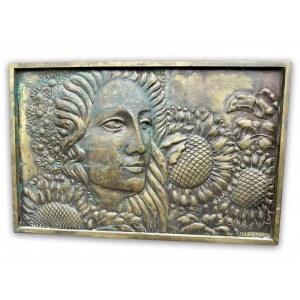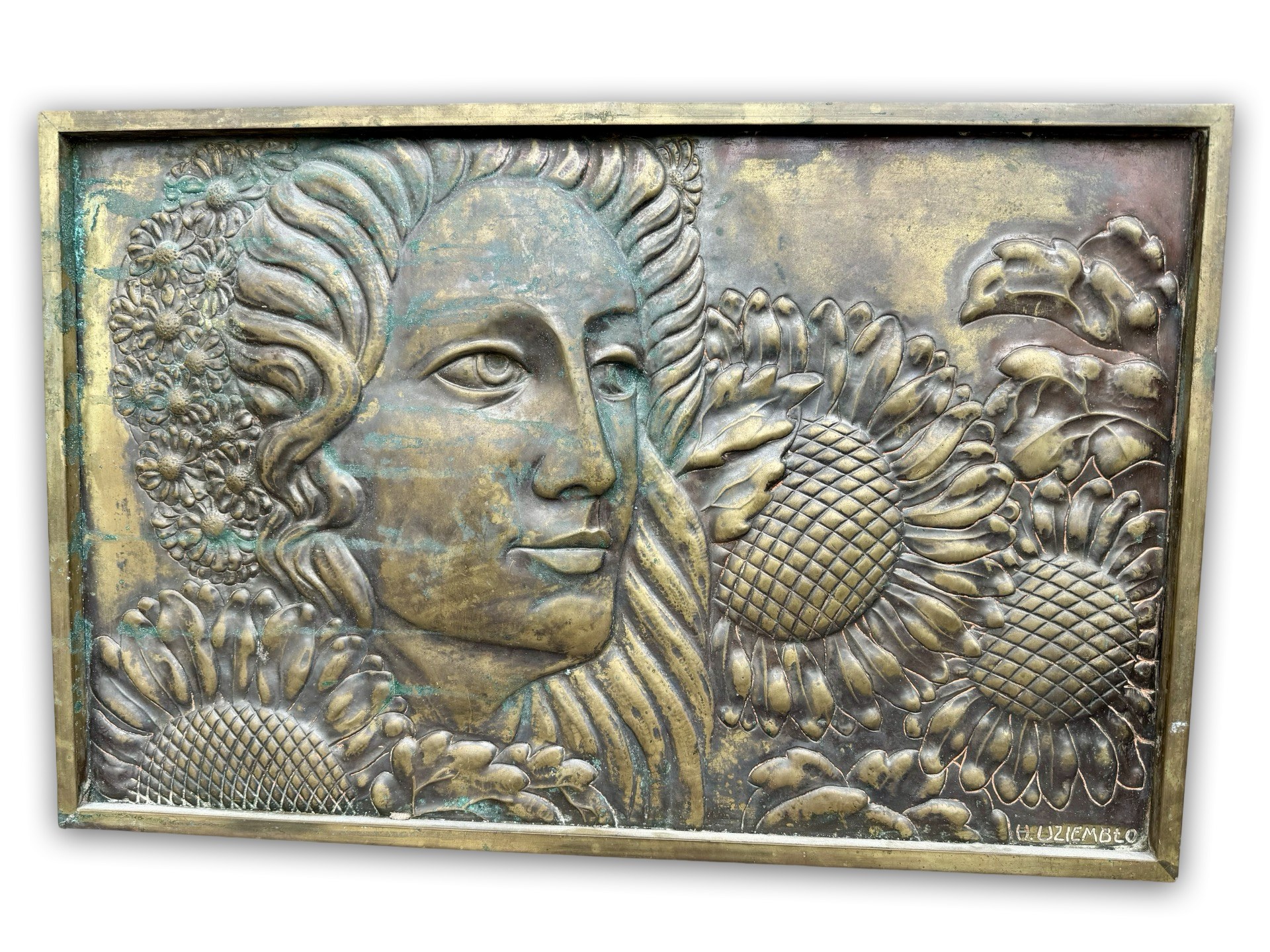
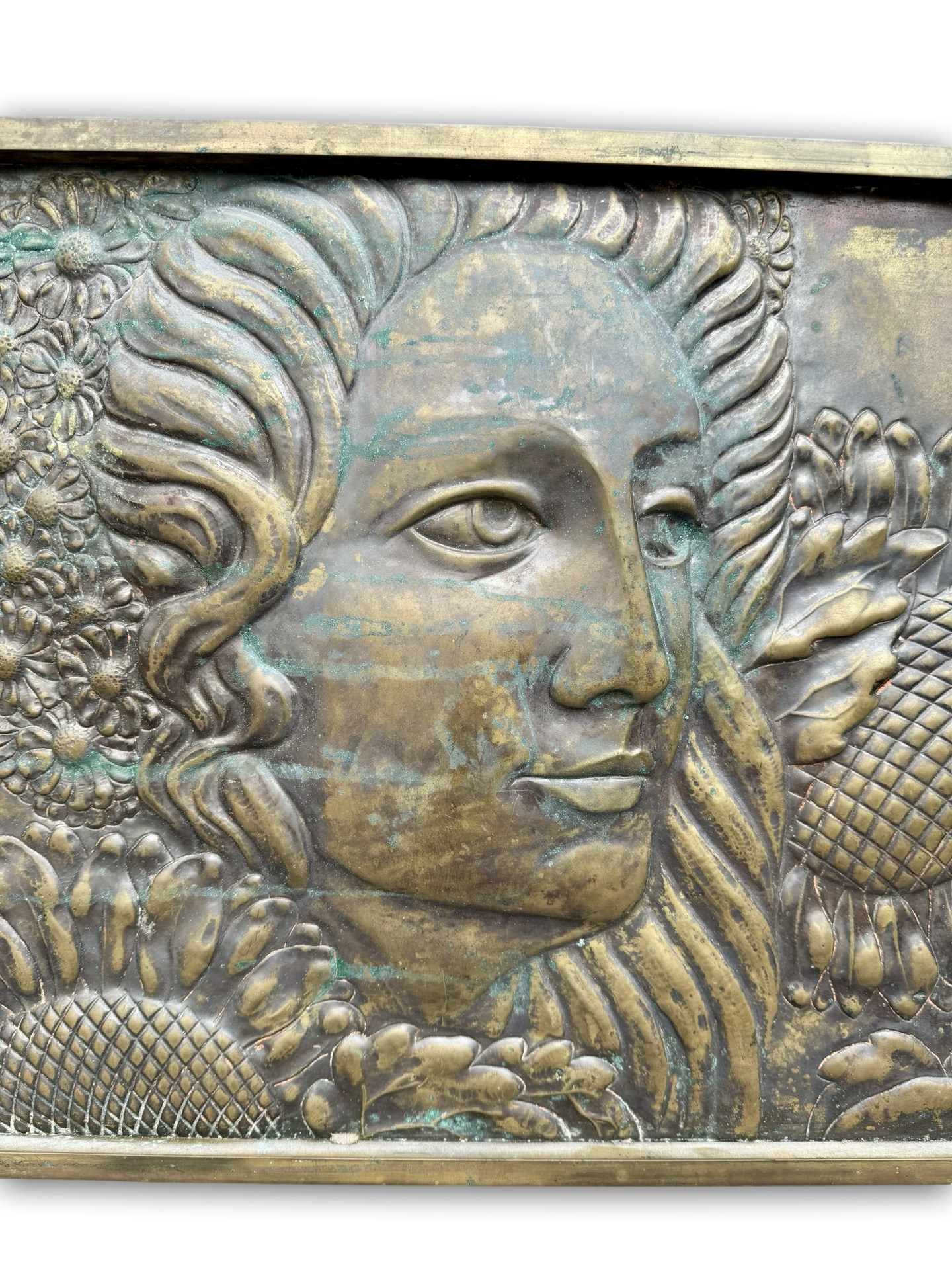
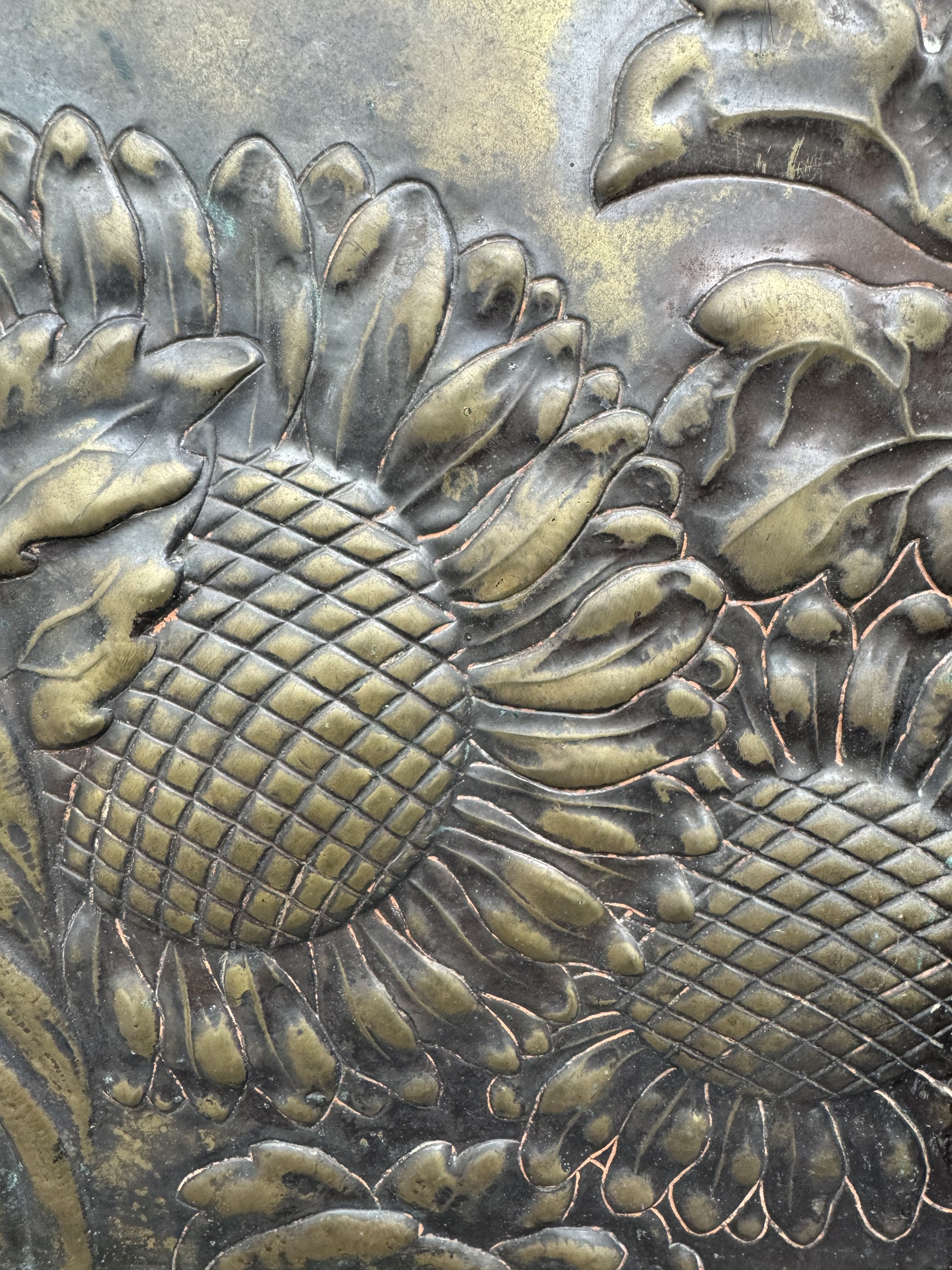
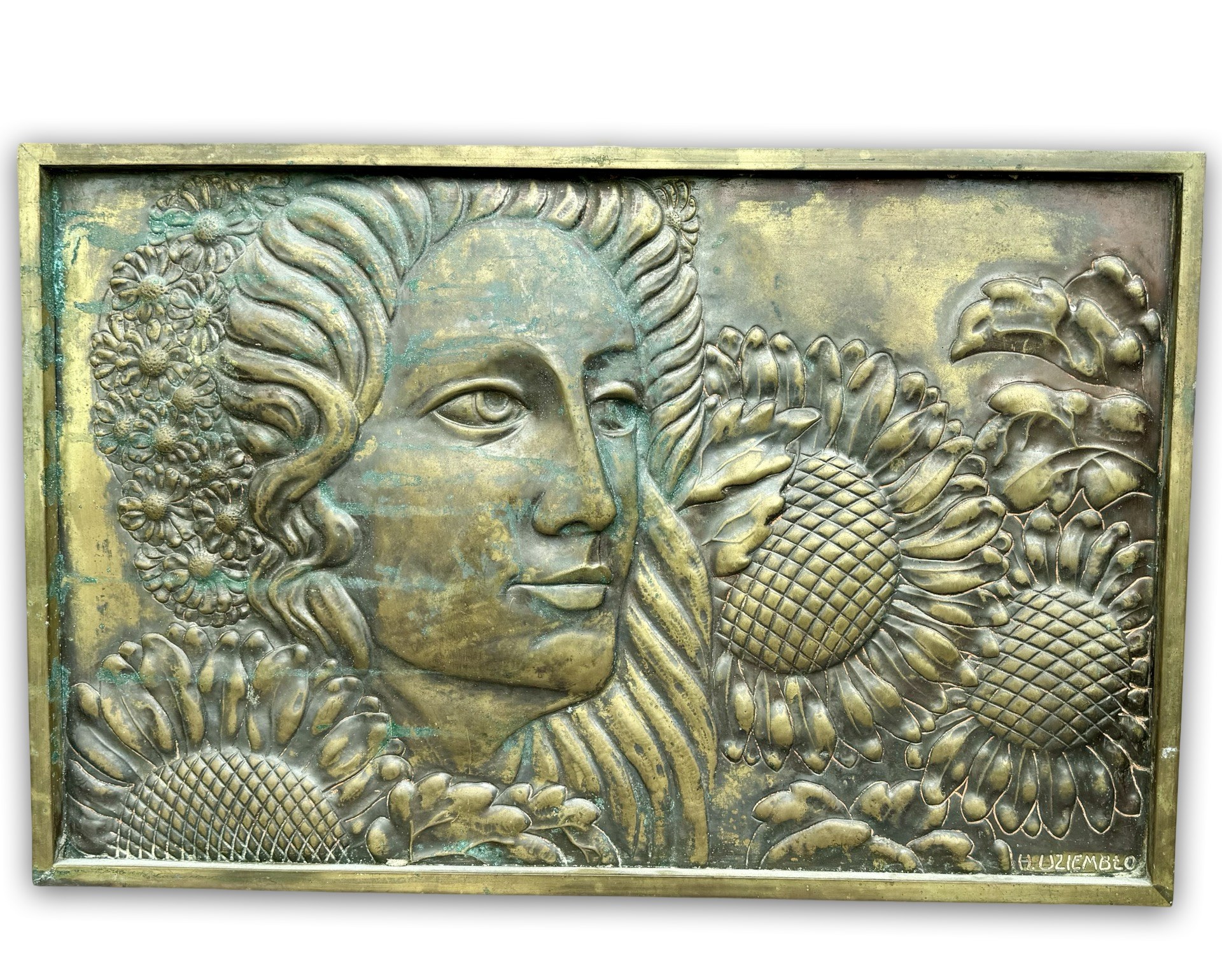
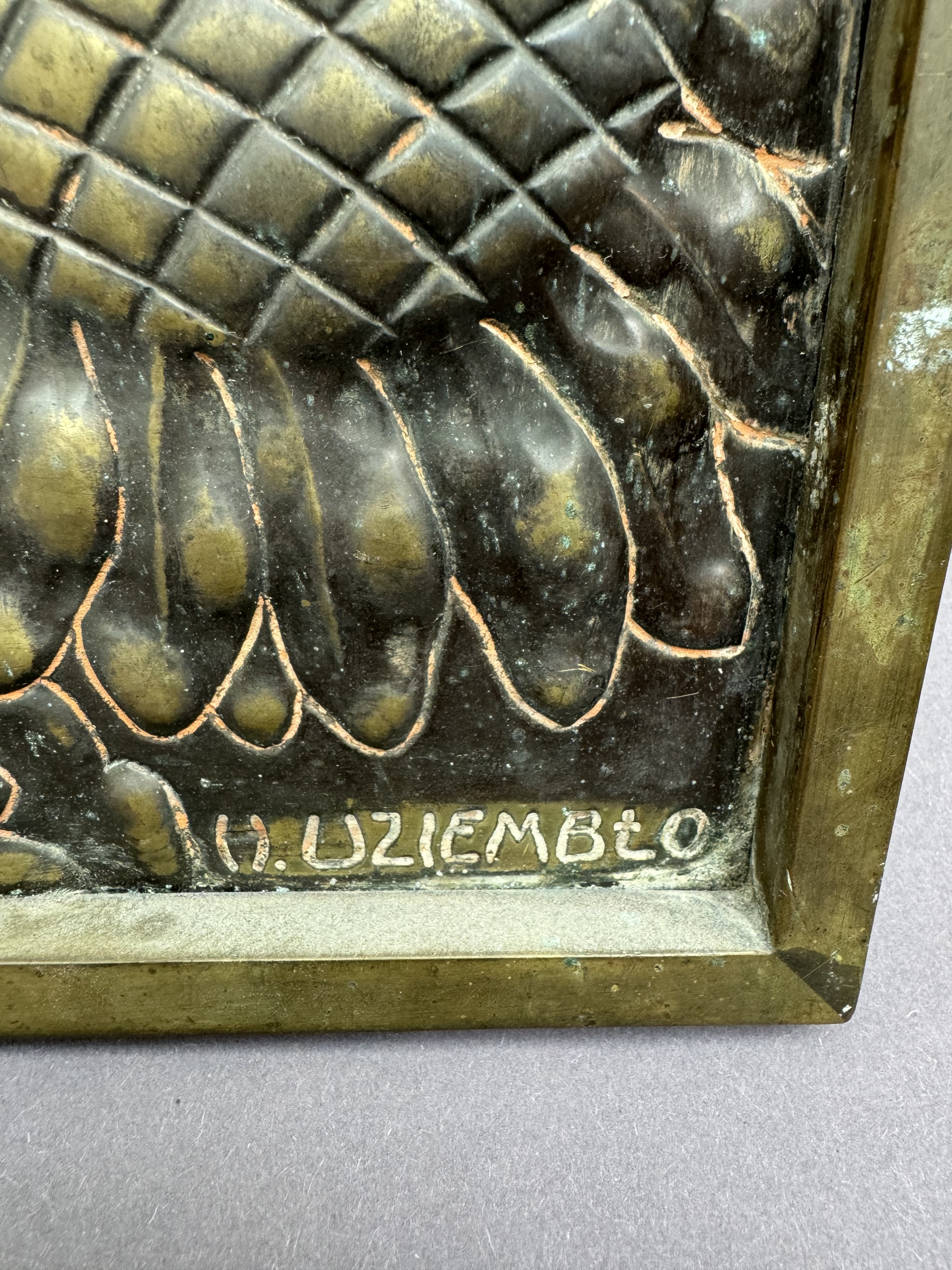
Henryk Uziembło - Allegory of the Summer - Relief from the period of Young Poland with elements of Symbolism and Art Nouveau. Brass sheet. Executed by Józef Sperling. Early 20th century.
Signed with the name of the author of the composition. Large and impressive item. Also auctioned is the second relief from the series.
Dimensions:
Width: 56 cm
Height: 36.5 cm
From Wikipedia:
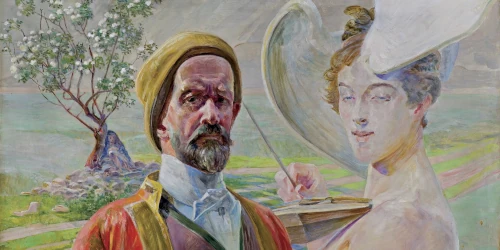
Henryk Uziembło coat of arms Sulima (born February 27, 1879 in Krz, died August 3, 1949 in Krakow) - Polish painter, graphic artist and designer.
From 1893 to 1897 he studied at the Artistic Industry Department of the Higher Industrial School in Cracow, then from 1897 to 1902 at the Kunstgewerbeschule des Osterreichisches Museum für Kunst und Industrie in Vienna under K. Karger. He later returned to study (1902-1903) at the Cracow Academy of Fine Arts in the studio of T. Axentowicz and S. Wyspianski. In 1903-1904 he stayed for further studies in Paris at the Académie Julian, studying under E. Grasset, L. Simon and R. Prinet. He also trained in interior design in London (1904-1905), then traveled to Italy, where he visited Rome and Florence. In 1906 he organized an exhibition of his works in Vienna, which was very successful. After returning to Cracow, he worked for the metal industry designing lamps, candlesticks and dishes. As the artistic manager of S. Zeleński's stained glass factory, he took care of the high technical and artistic level of the works. In 1908 he took part in a group exhibition of works at the Cracow Palace of Art. In 1904-1908 he worked with Włodzimierz Tetmajer on the polychrome in the parish church in Sosnowiec. He designed a stained glass window for the building of the Mortgage Credit Bank (now the Chamber of Crafts) on St. Anna Street (1908) and a stained glass window depicting Irena Solska for the Michalik's Den (1910). He was one of the co-founders of the Polish Applied Art Society (1901).
He was one of the creators and promoters of the so-called swojski style in Polish ornamentation, characterized by the use of native folk designs. From 1922 until the outbreak of World War II, he worked at the State School of Decorative Arts and Artistic Industry in Cracow. He continued to design furniture, textiles, mosaics (facade of the Industrial and Technical Museum) and book graphics.
On August 3, 1949 he went to the Słowacki Theater for a performance, during which he fainted. Despite prompt assistance, he died the same day in the hospital. He rests in the Rakowicki cemetery.
After the Wojciech Weiss Museum Foundation:
Jozef Sperling (1884-1949) creator and entrepreneur who focused the artistic community of Young Poland around such projects as the design of the Michalik's Den, the Noworolski Café, the Dłuski Sanatorium, and the interior furnishings at the 1912 Architecture and Interiors in a Garden Setting exhibition in Krakow. Thanks to his extensive international contacts, Sperling cooperated, with the Viennese community, combining the experience of Josef Hoffmann and the Vienna Workshops with the activities of Polish artists, centered around Polish Applied Art. His house at 12 Slawkowska Street is now the home of Zofia Weiss Galle. He created on his own or made objects on commission. His commission store at 7 Szczepańska St. in Cracow was a reference point for modern and tasteful interior design.
Very good condition -. Requires cleaning from tarnish. Complete and without dents.
The purchase comes with a Via Gallery item certificate.
Very good condition.
Via Gallery's item certificate accompanies the purchase.