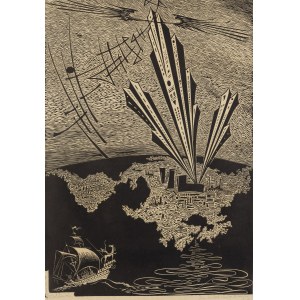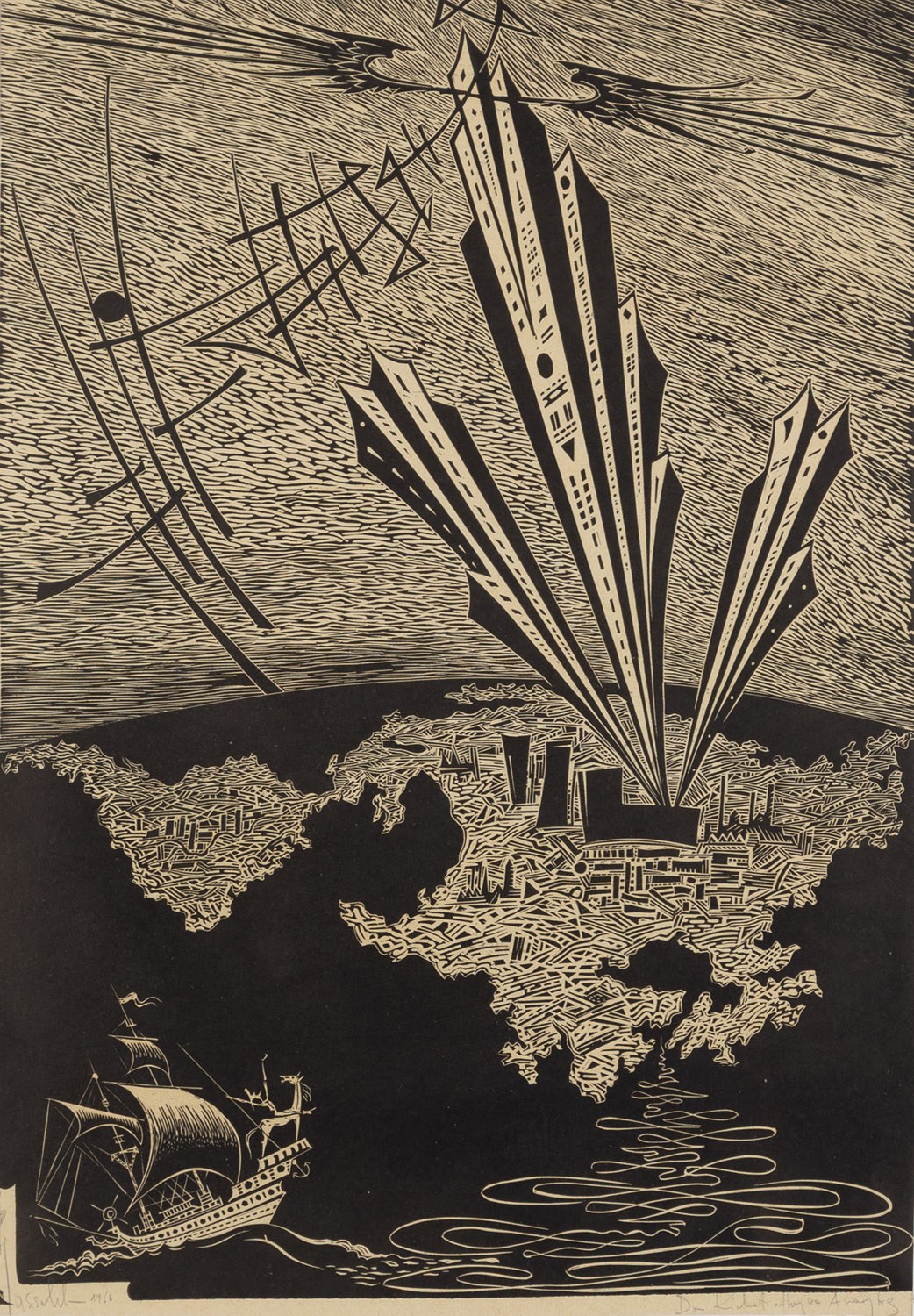
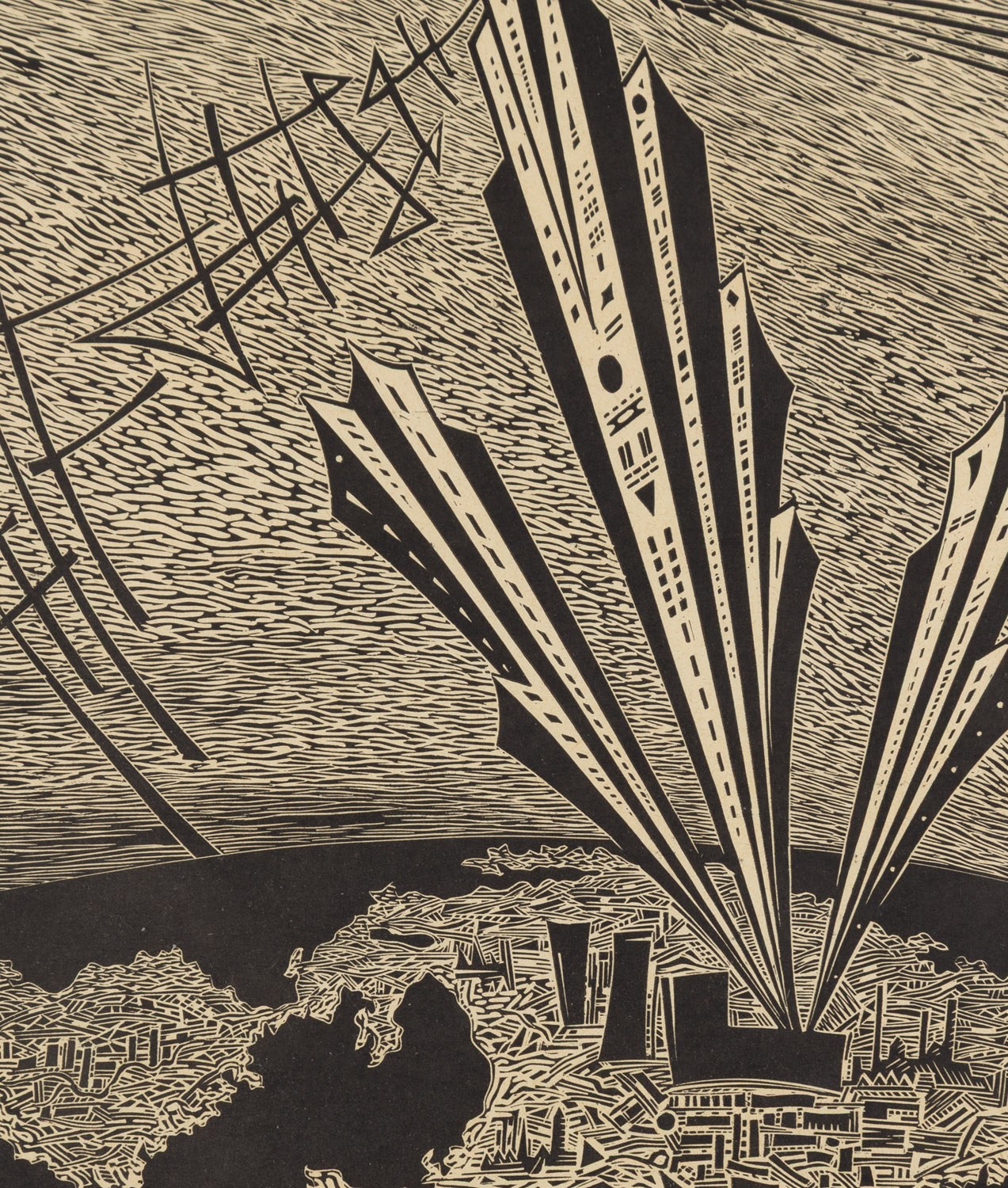
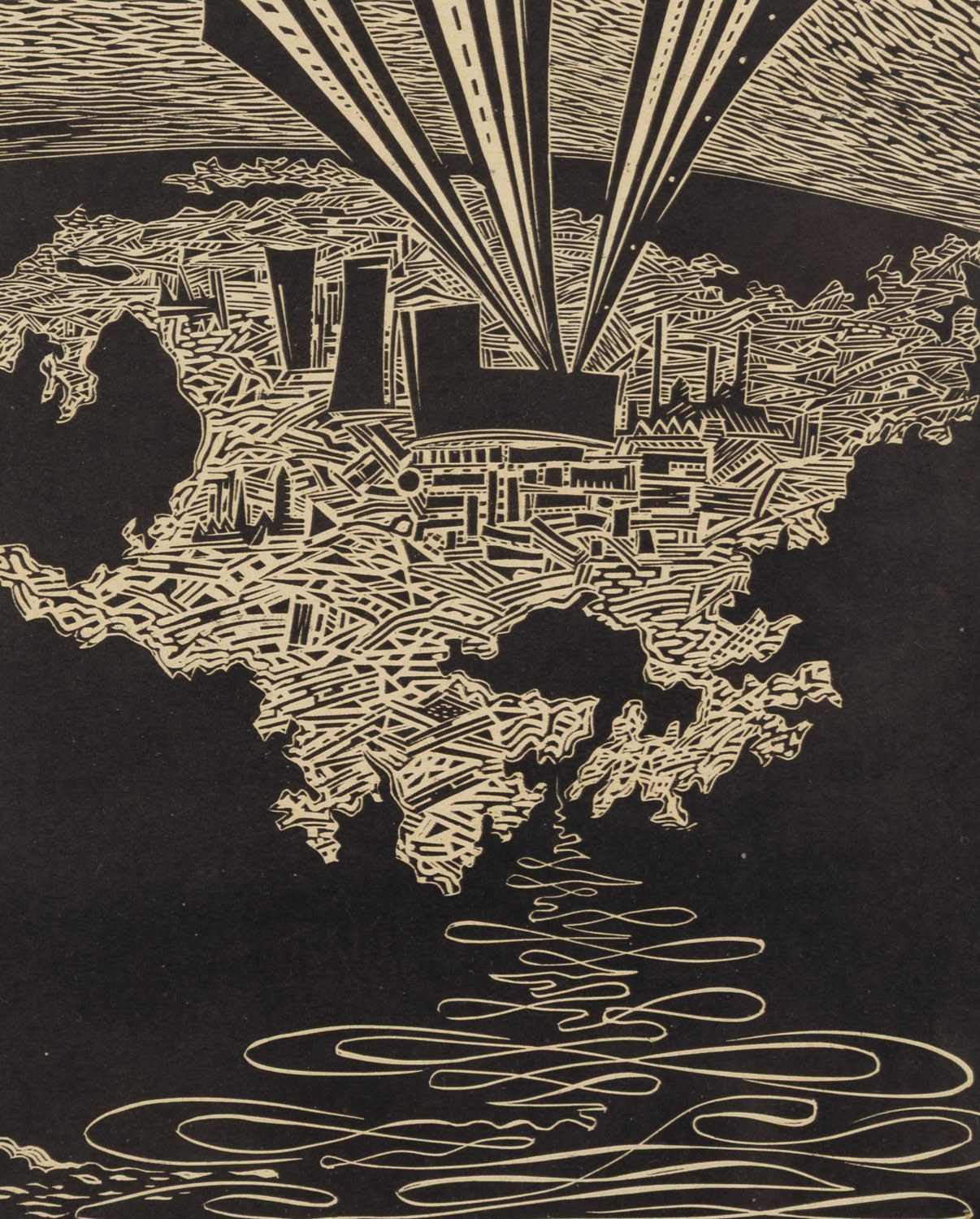

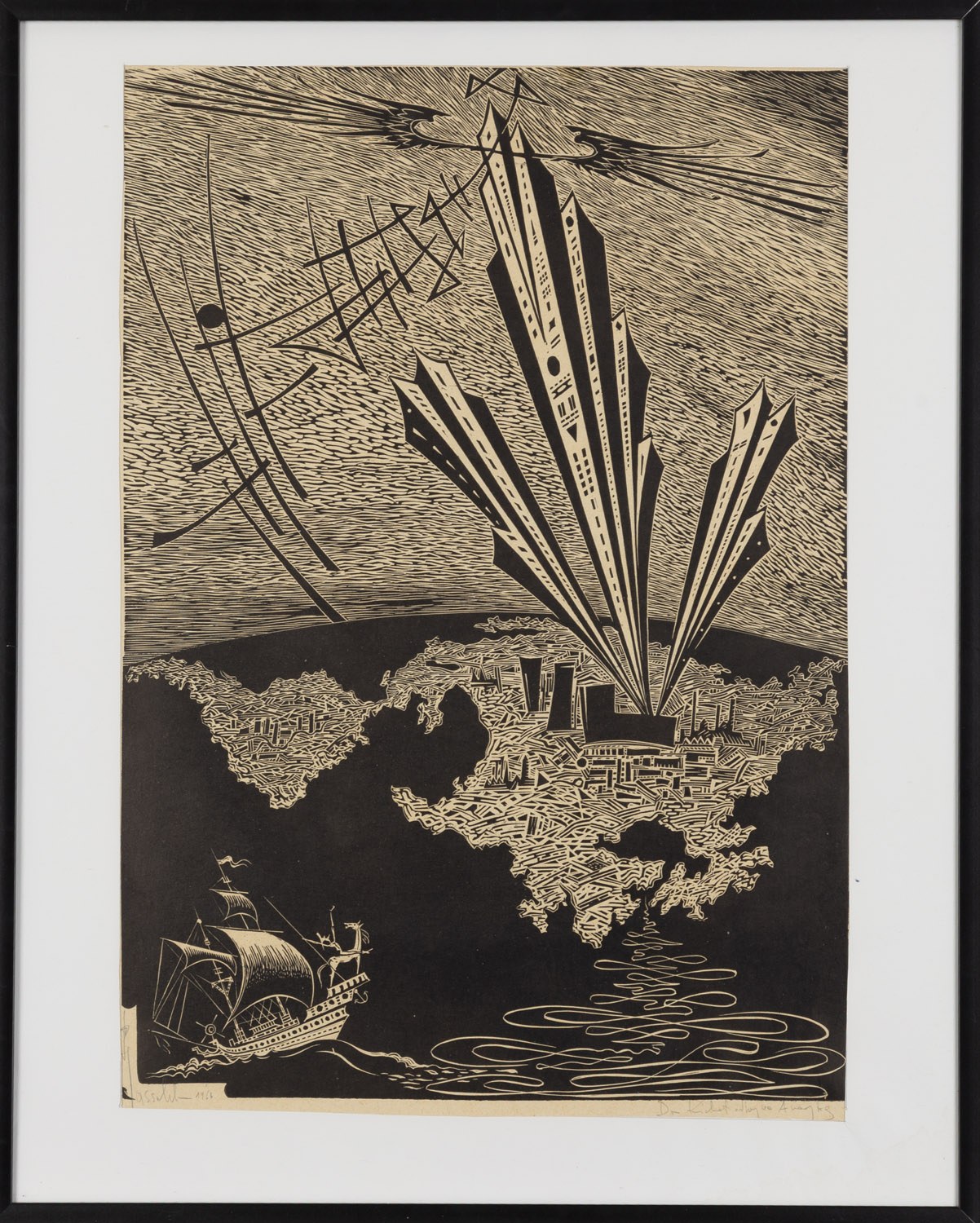
Dimensions: 42 x 30 cm
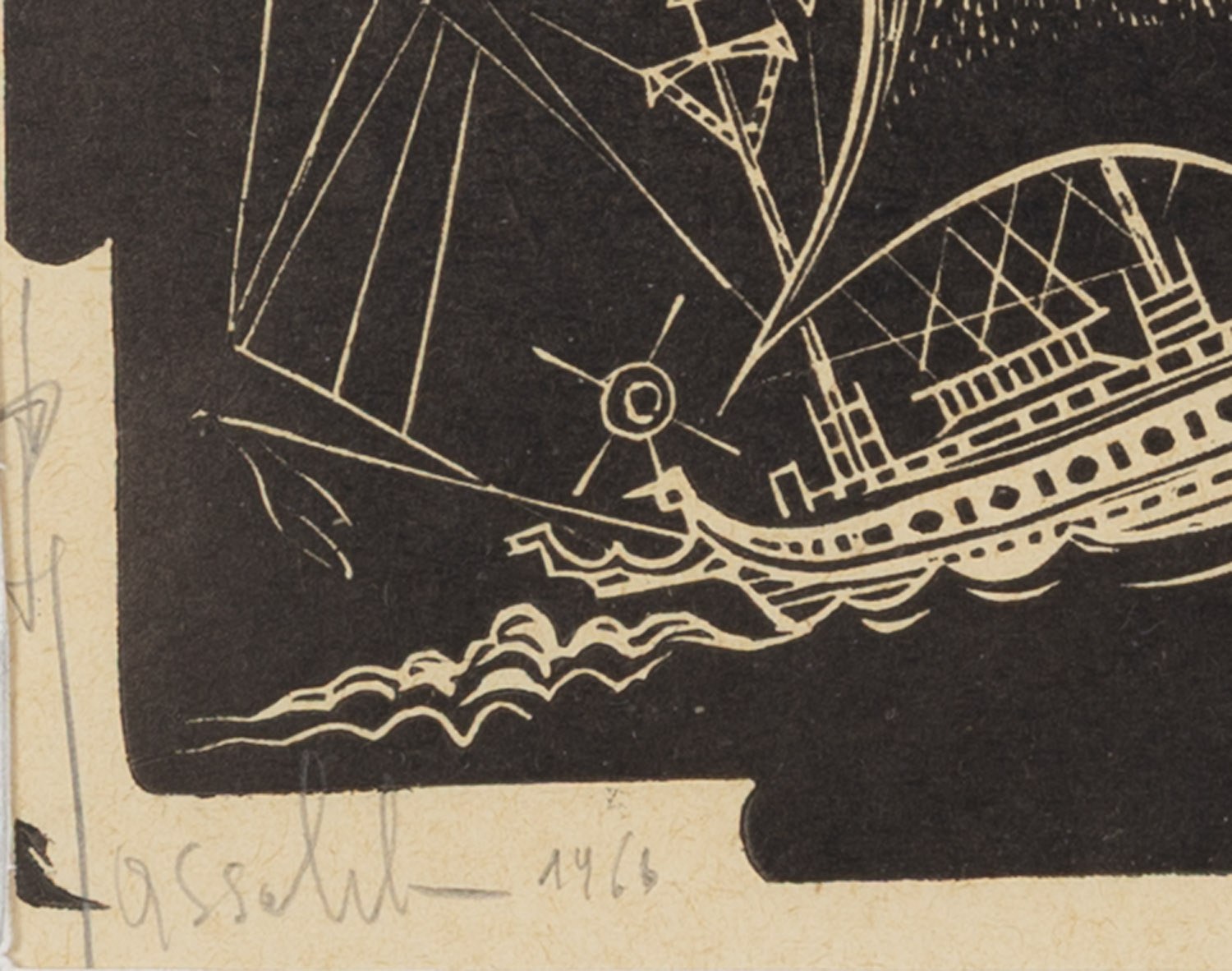
signed in pencil on the left: 'SRassalski 1963', inscribed on the right: 'Don Quixote Discovers America'
Provenance
from the artist’s estate
Biography
He studied in Lublin and earned his degree from the Academy of Fine Arts in Warsaw. Beginning in 1932, he practiced woodcut, initially under the strong influence of Tadeusz Kulisiewicz and folk art. Over time, he developed symbolic and literary themes in his work. His works are characterized by a minimalist style and disciplined composition. Early in his artistic career, he was associated with Lublin, where, from 1928 to 1933, he studied at the Free Academy of Painting and Drawing, directed by Janina Miłosiowa. It was then that he became interested in woodcut. He created his first prints in 1932, and a year later, at his own expense, he published a portfolio of woodcuts titled “Lublin.” He was one of the founders of the “Krąg” art group active in that city. Around 1936, he moved permanently to Warsaw. Initially, he worked as a reporter and journalist. It was then that he met Jerzy Hulewicz, whose influence is particularly evident in two woodcuts titled “Prayer,” dating from 1942 and 1947. During the war, he wrote a study dedicated to Hulewicz, which, unfortunately, was never published. During the occupation, Stefan Rassalski, whose pseudonym was “Ster,” worked in a secret photographic laboratory located on the grounds of the Warsaw University of Technology. During the Warsaw Uprising, Rassalski was one of the Home Army’s photojournalists, operating in the southern part of Śródmieście. He took several hundred photographs at that time depicting the insurgents’ battles and Warsaw in flames. After the war, he was a member of the Capital Reconstruction Office, where he headed the photography studio. On several thousand negatives, he captured the war damage and the daily life of the residents of a completely ruined Warsaw. His photographs, which are primarily documentary in nature, are not without artistic value. Rassalski also created photomontages comparing the appearance of well-known Warsaw buildings after the war’s destruction with their earlier forms. In the pages of *Stolica*, where he served as editorial secretary, he published numerous articles on urban planning and the city’s reconstruction projects. He also contributed to *Nowiny Literackie*, *Warszawa*, and *Tygodnik Kulturalny*.