


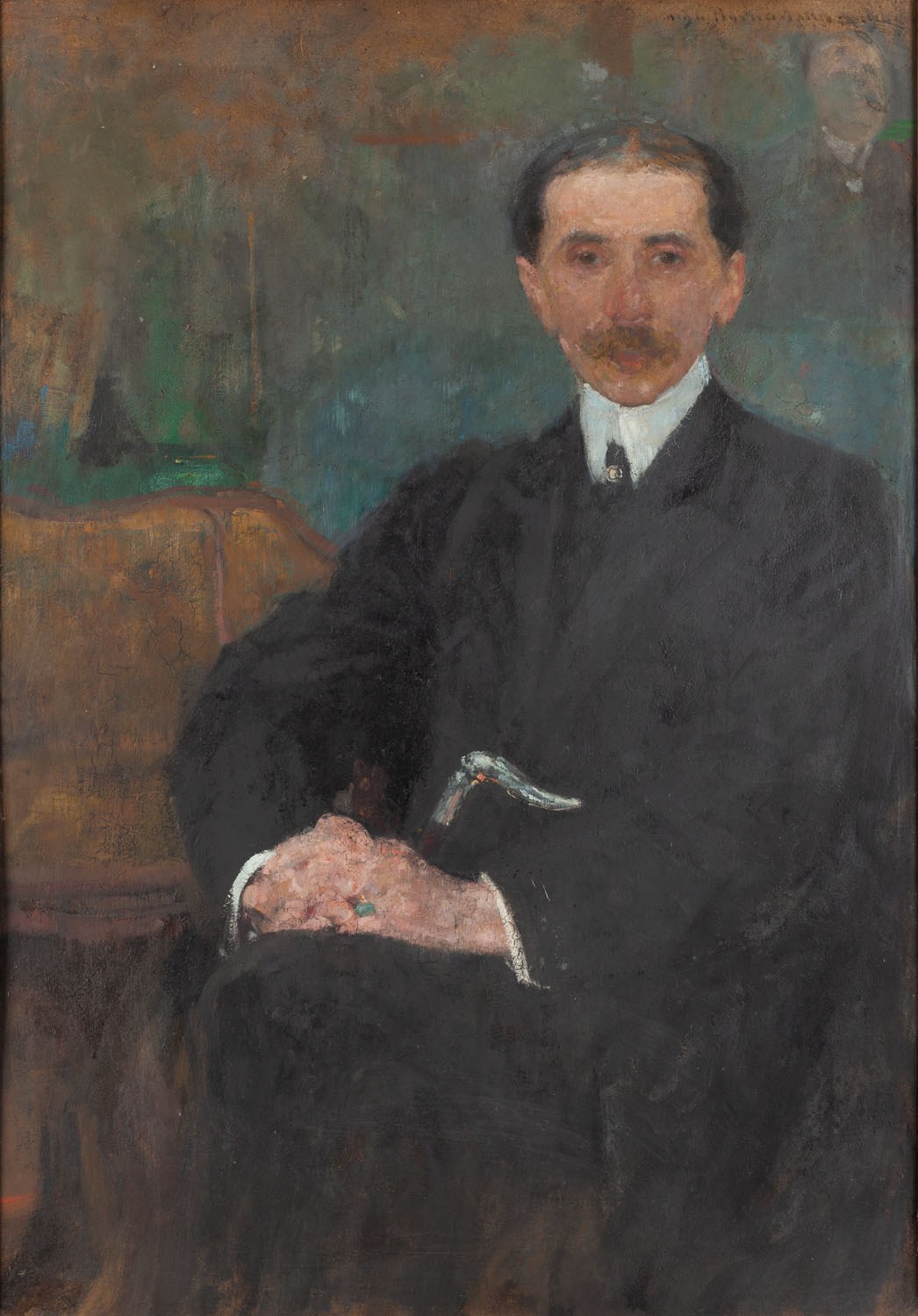

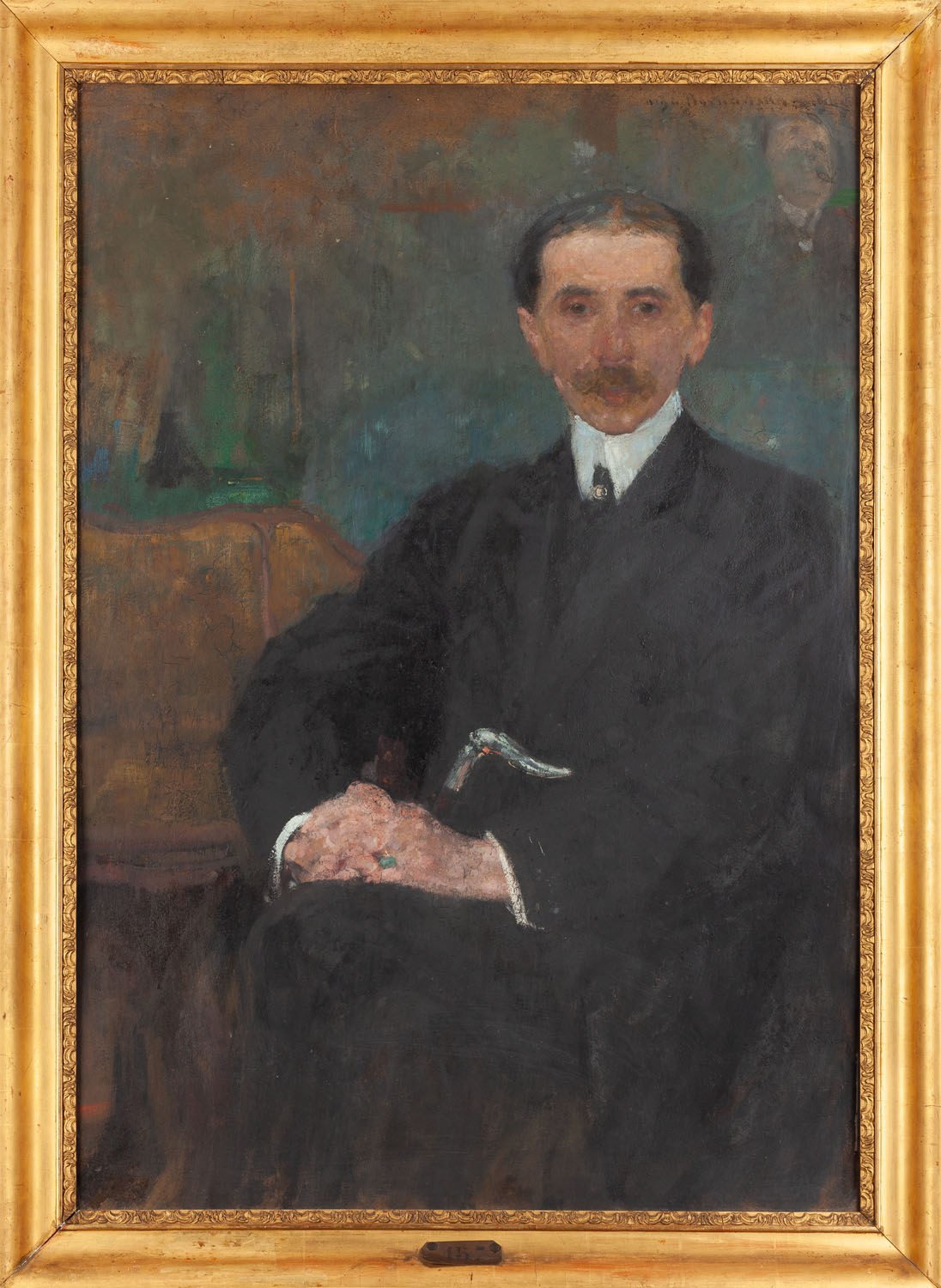
Dimensions: 98 x 68 cm
Signed and dated lower right: 'Olga Boznańska 1909'
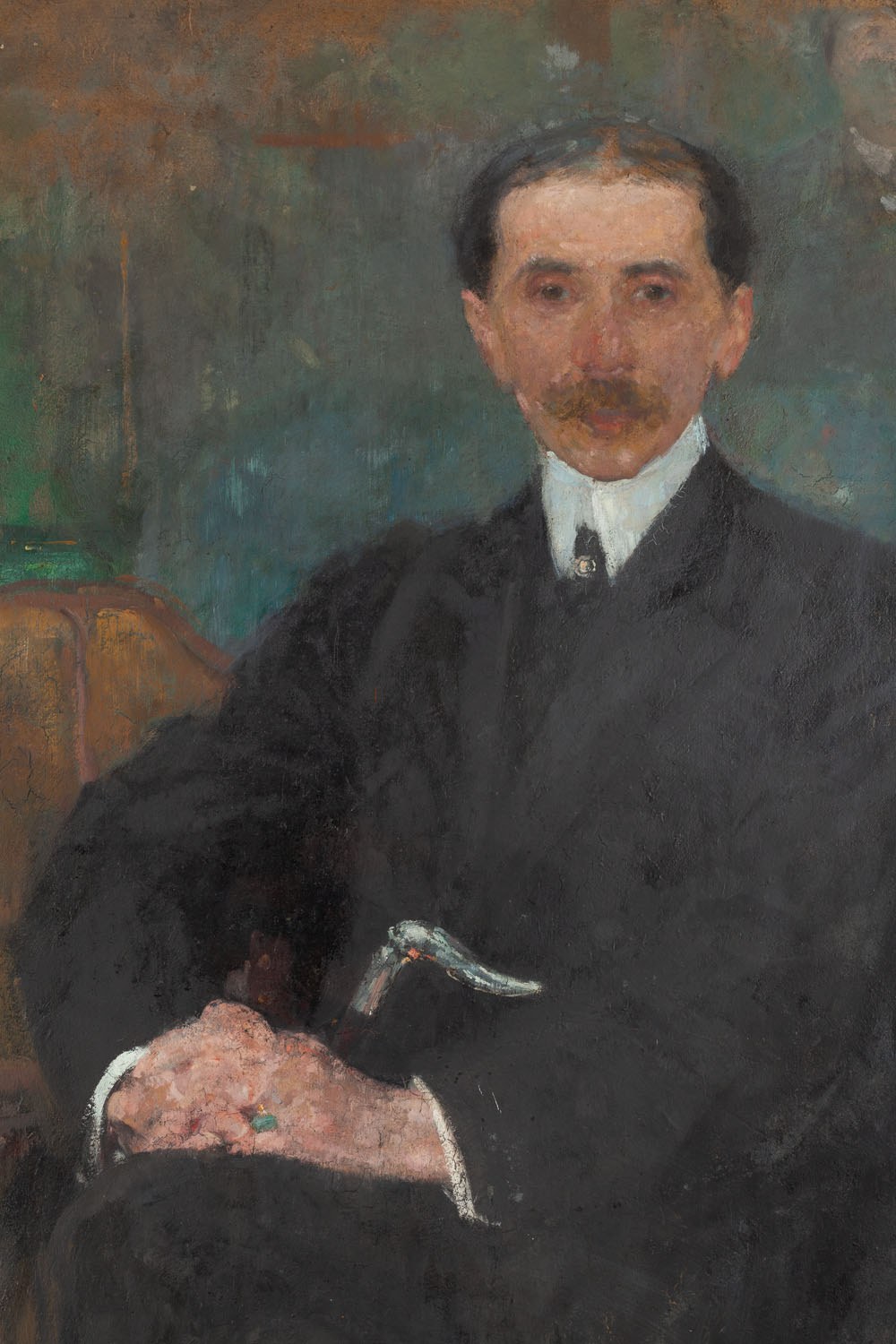
Historical titles: "Portrait of the Parisian Banker Eugeniusz Gondon," "Portrait of Maurice Barres"
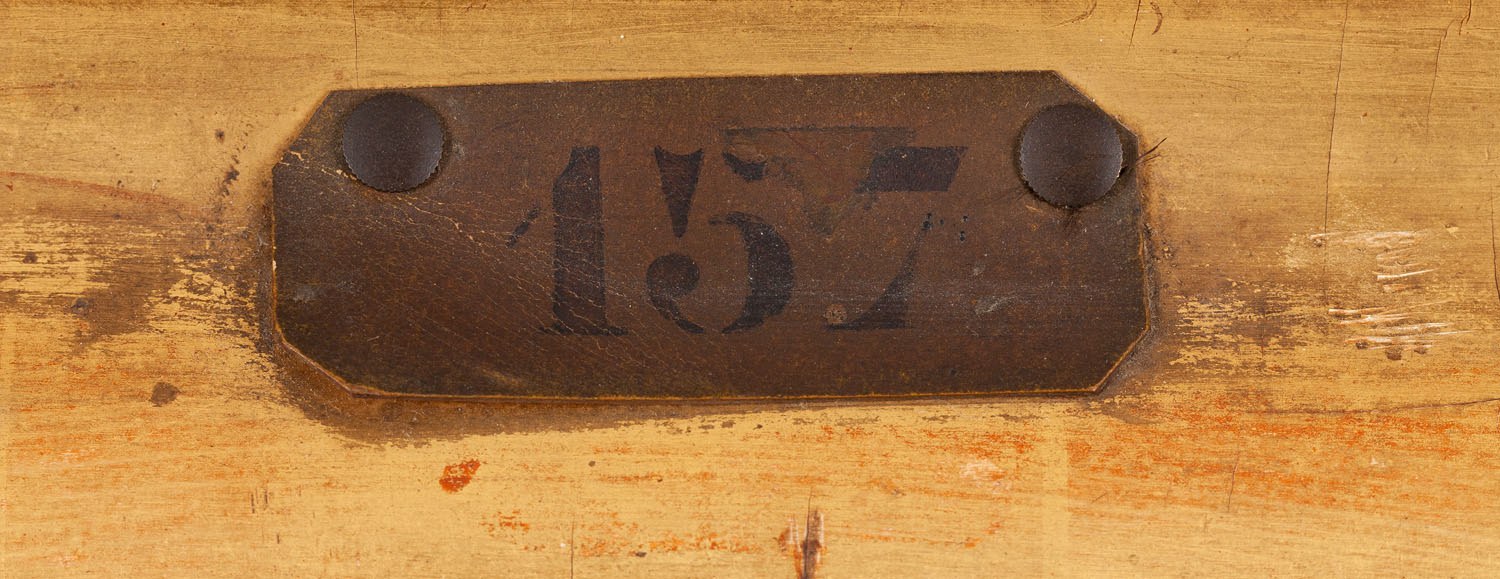
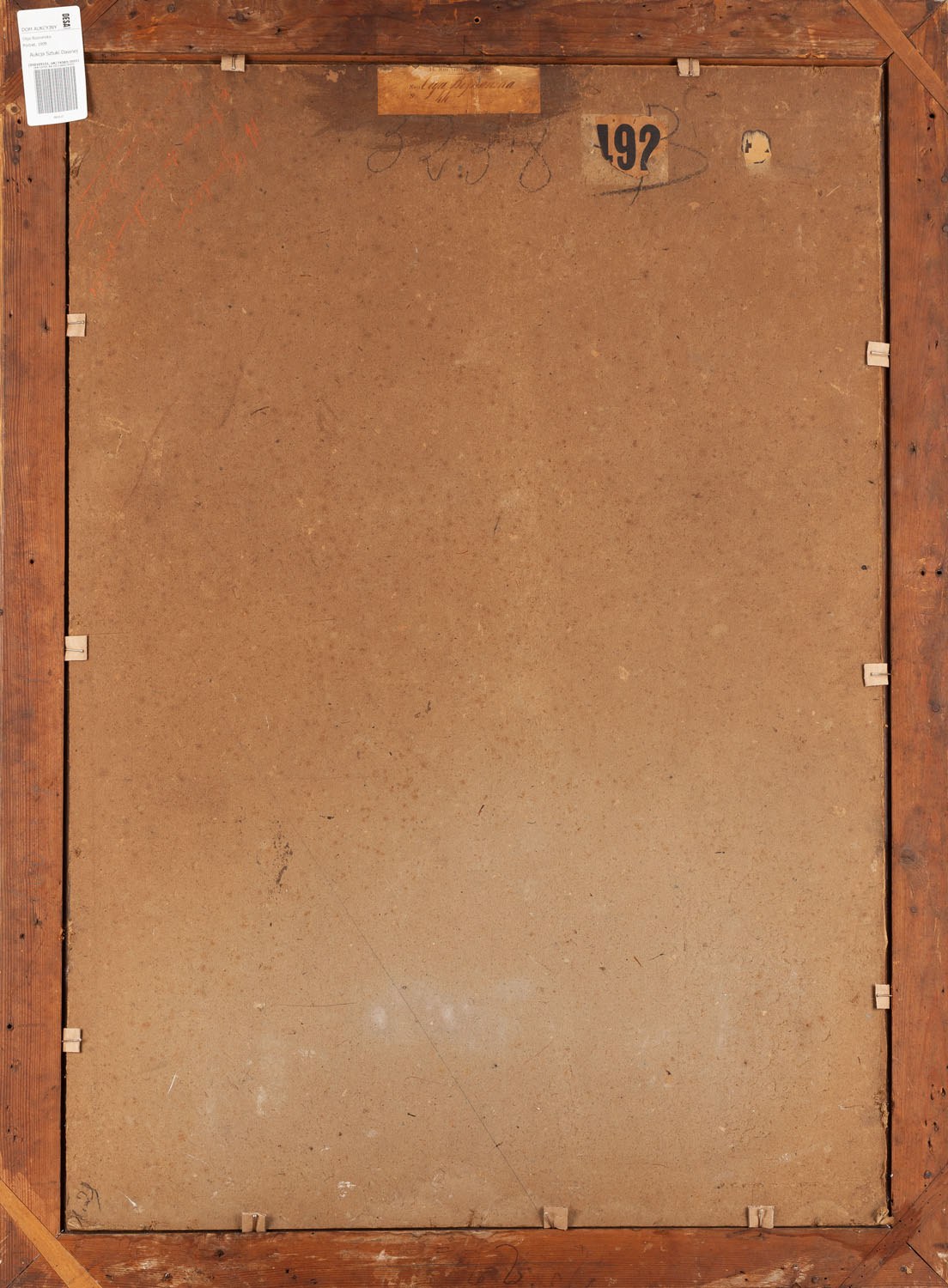
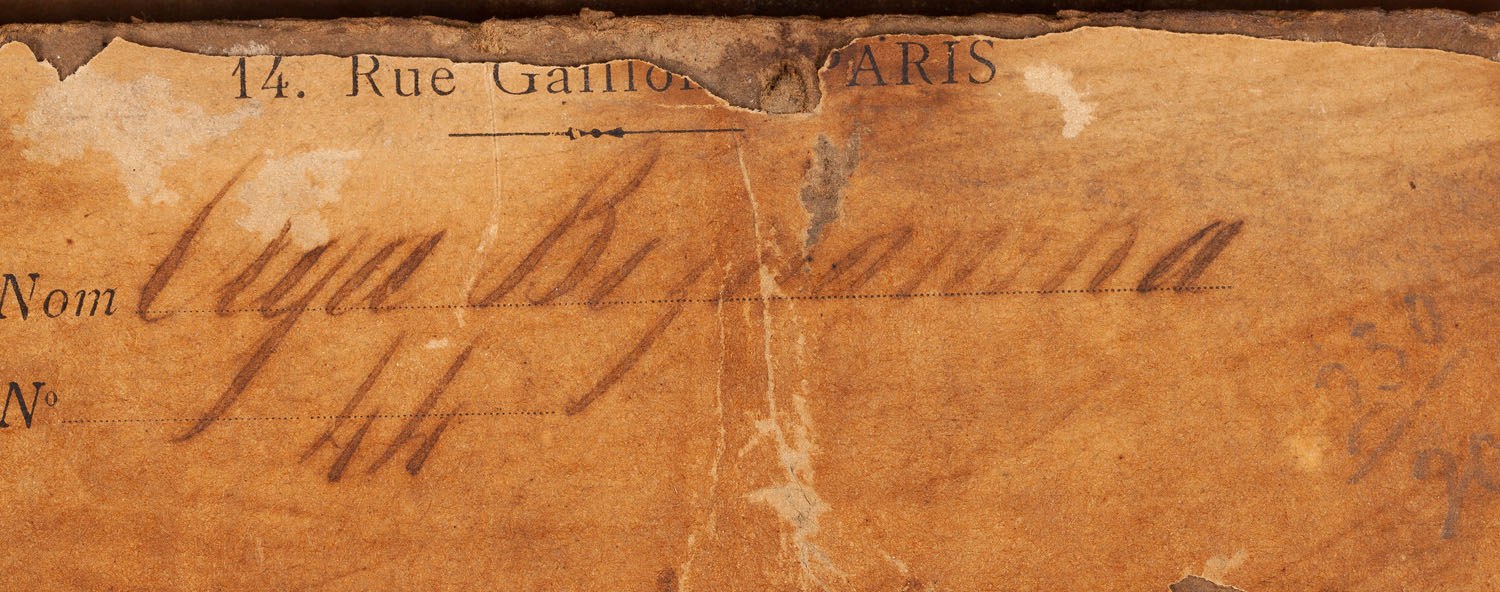
On the reverse, a paper exhibition label with the printed inscription: '14. Rue Gambettea PARIS' handwritten in pen: 'Olga Boznańska' and the number '44', a paper label with the number: '492' and in crayon: '3238 B'; in red crayon: 'M Gondon | 67 Rue du Cherche-Midi | (...)’
Condition
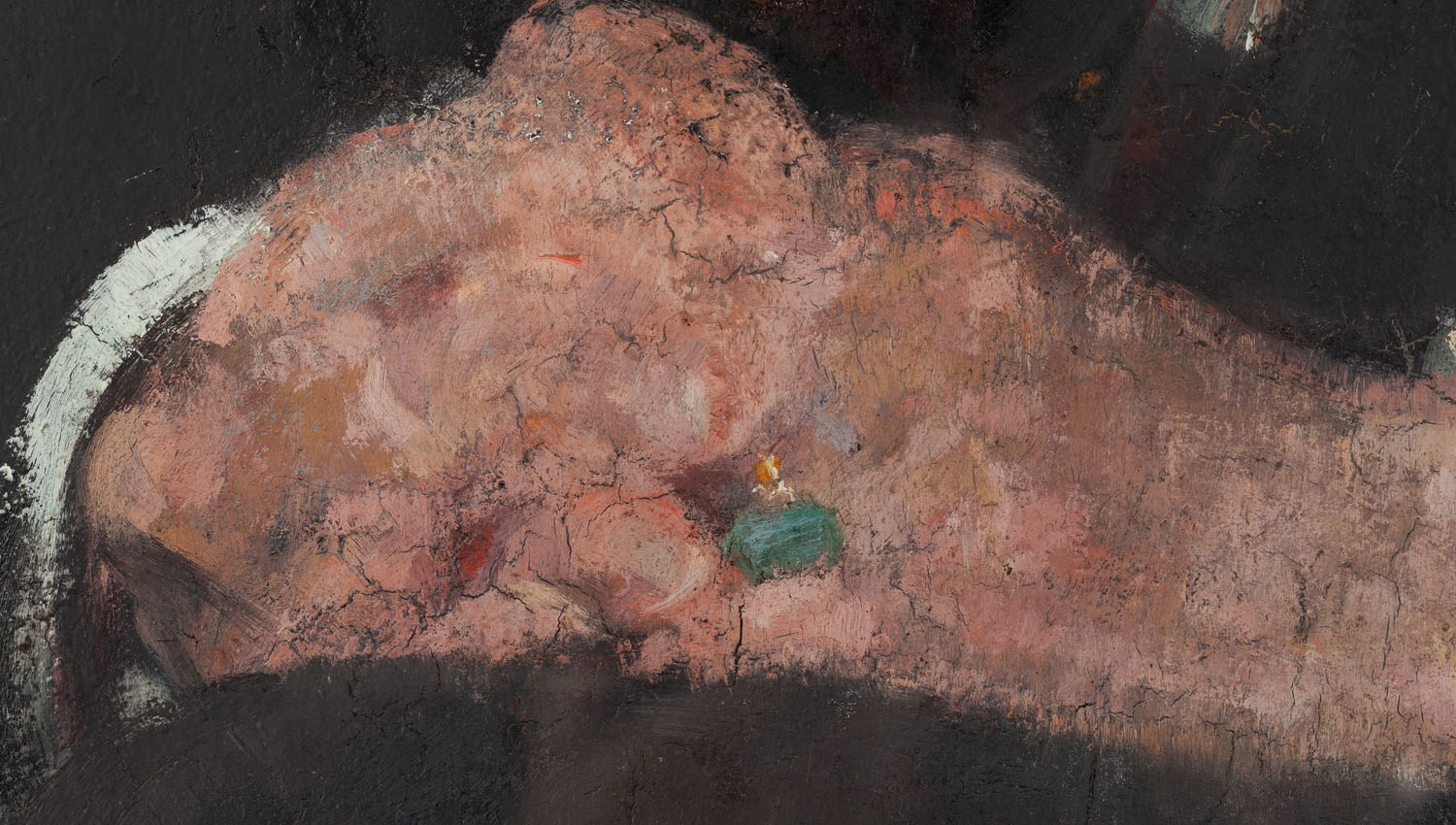
Work mounted
Provenance
private collection, France
private collection, Poland
Bibliography
Helena Blum, Olga Boznańska: An Outline of Her Life and Work, Kraków 1964, p. 100 (ill.)
Biography
One of the most outstanding Polish artists of the turn of the 19th and 20th centuries. Initially, the artist received drawing lessons from her mother, Eugenia Mondan; from 1883 to 1886, she studied under Kazimierz Pochwalski and Józef Siedlecki. She also attended the A. Baraniecki Higher Courses for Women in Kraków, where she was taught by Hipolit Lipiński and Antoni Piotrowski. From 1886 to 1889, she studied at the Munich Academy of Fine Arts under Karl Kricheldorf and Wilhelm Dürr. In Munich, she opened her own studio, remaining under the mentorship of Józef Brandt and Alfred Wierusz-Kowalski. In 1895, she took over the directorship of the Painting School previously led by Teodor Hummle. In 1898, she settled permanently in Paris. She was a member of the Polish Artists’ Society “Sztuka,” the Société Nationale des Beaux-Arts, and the Polish Literary and Artistic Society in Paris, as well as the International Society of Sculptors, Engravers, and Painters in London. Starting in 1886, when she made her debut at the Kraków Society of Friends of the Fine Arts, she exhibited her works in Poland, Europe, and the United States, including in Berlin (1892, 1893, 1913), Munich (1893), Prague, London, and Paris (1896), the Carnegie Institute in Pittsburgh (1901, 1906, 1907, 1920–28), Vienna (1902, 1908), Amsterdam (1912), and Venice (1910, 1914, 1938). She received numerous awards, including a gold medal at the International Exhibition in Munich (1905), the French Legion of Honor (1912), the Grand Prix at the Paris World’s Fair (1939), and the Order of Polonia Restituta (1938). She was primarily a portraitist; the portraits she created of both famous figures and ordinary subjects are part of the trend of expressive modernist portraiture. In her paintings, the artist focused on the model’s face, capturing their psychological state and the mood of the moment. She also painted still lifes, flowers, and interiors, particularly those of her own studios.










