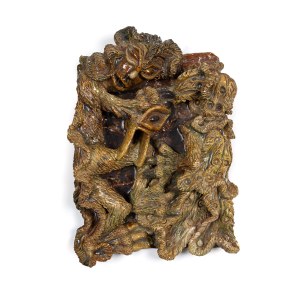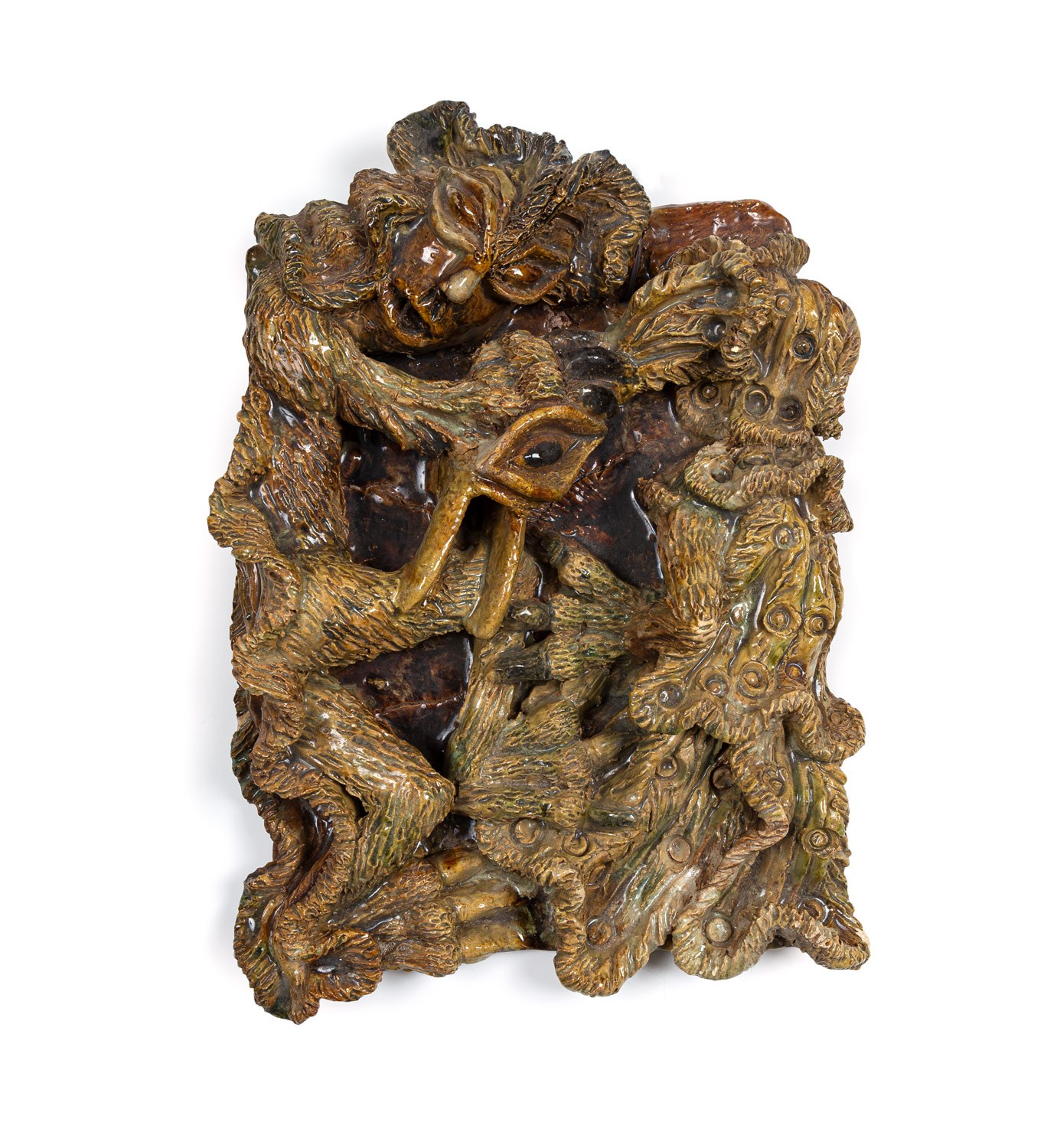
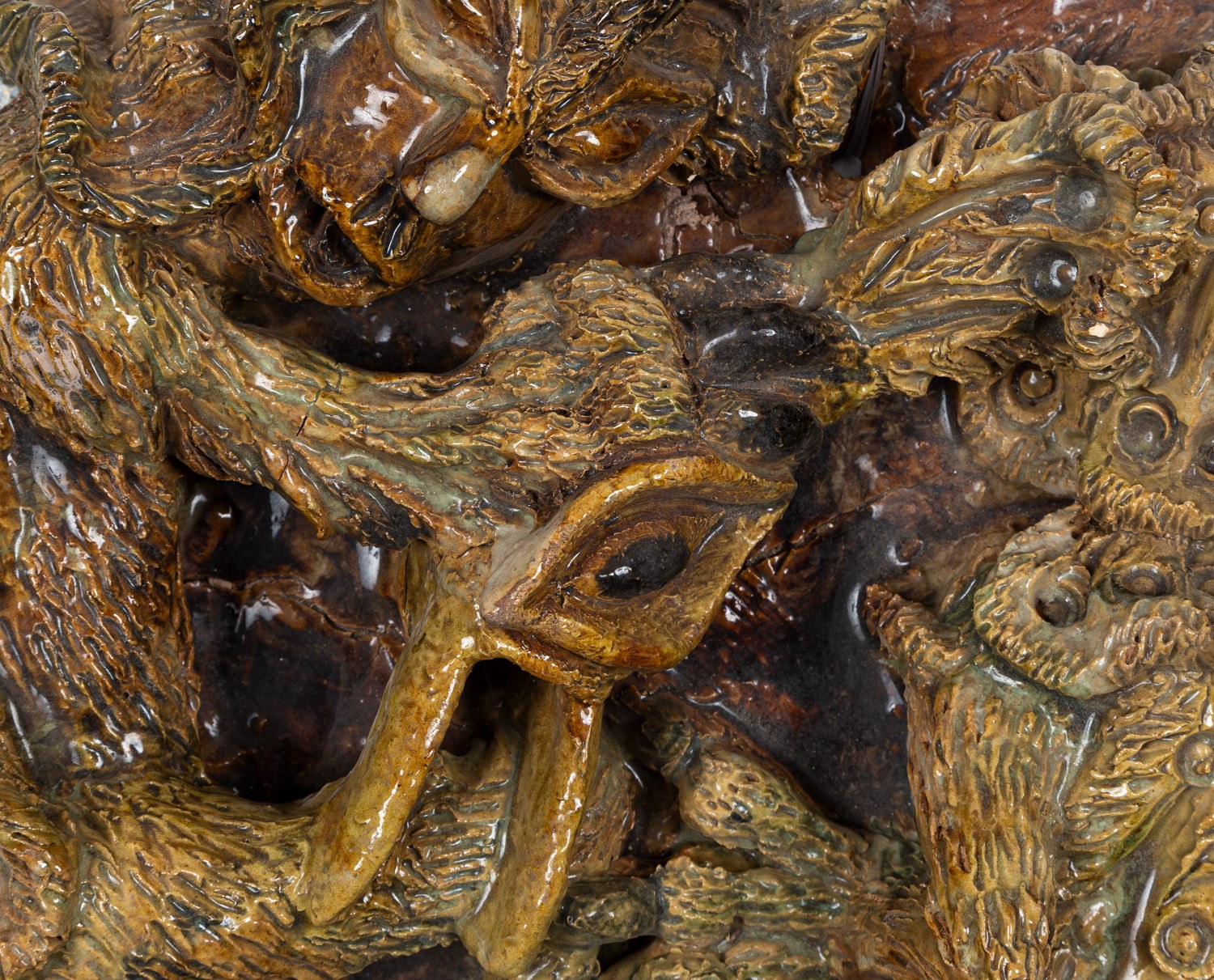
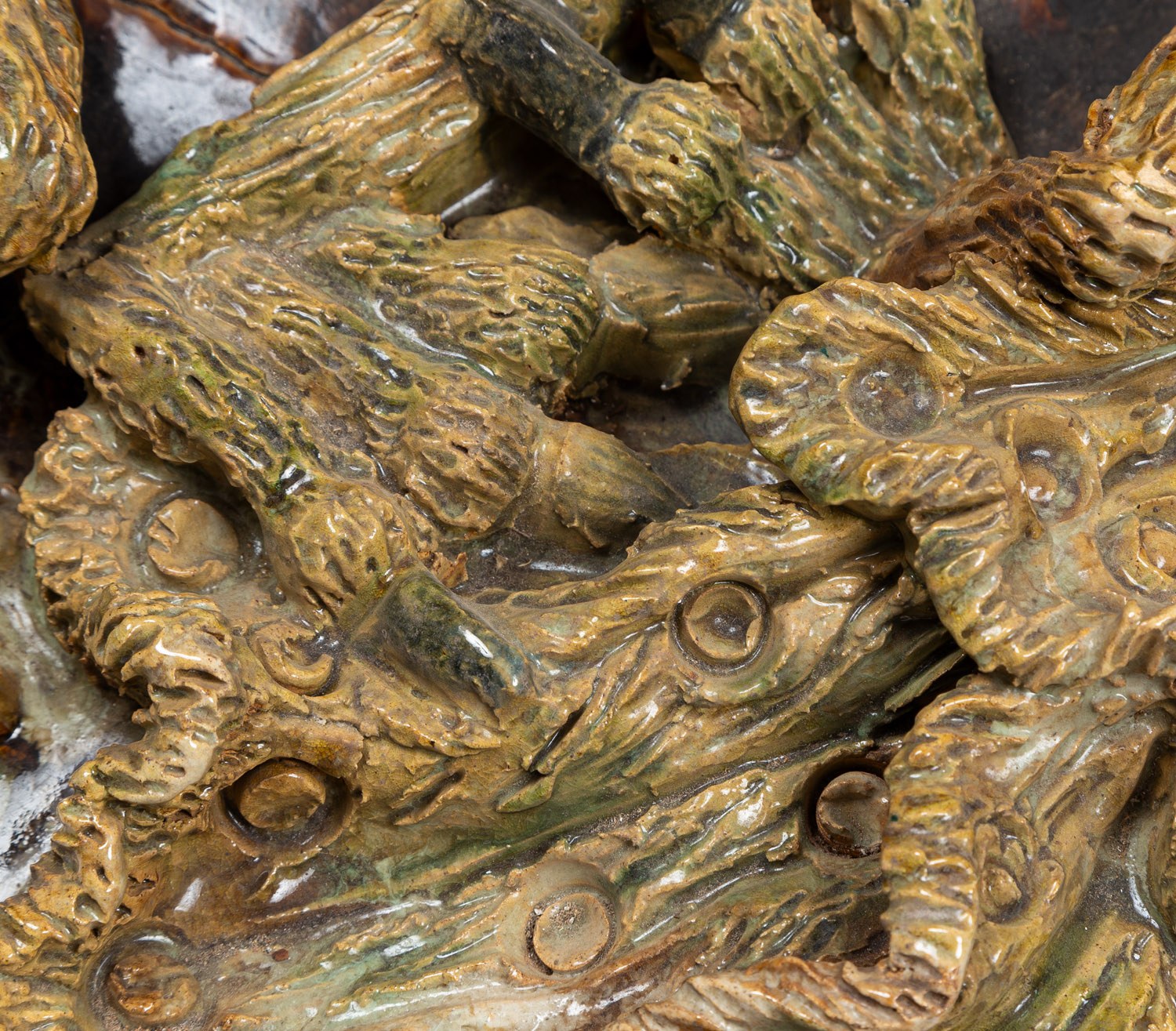
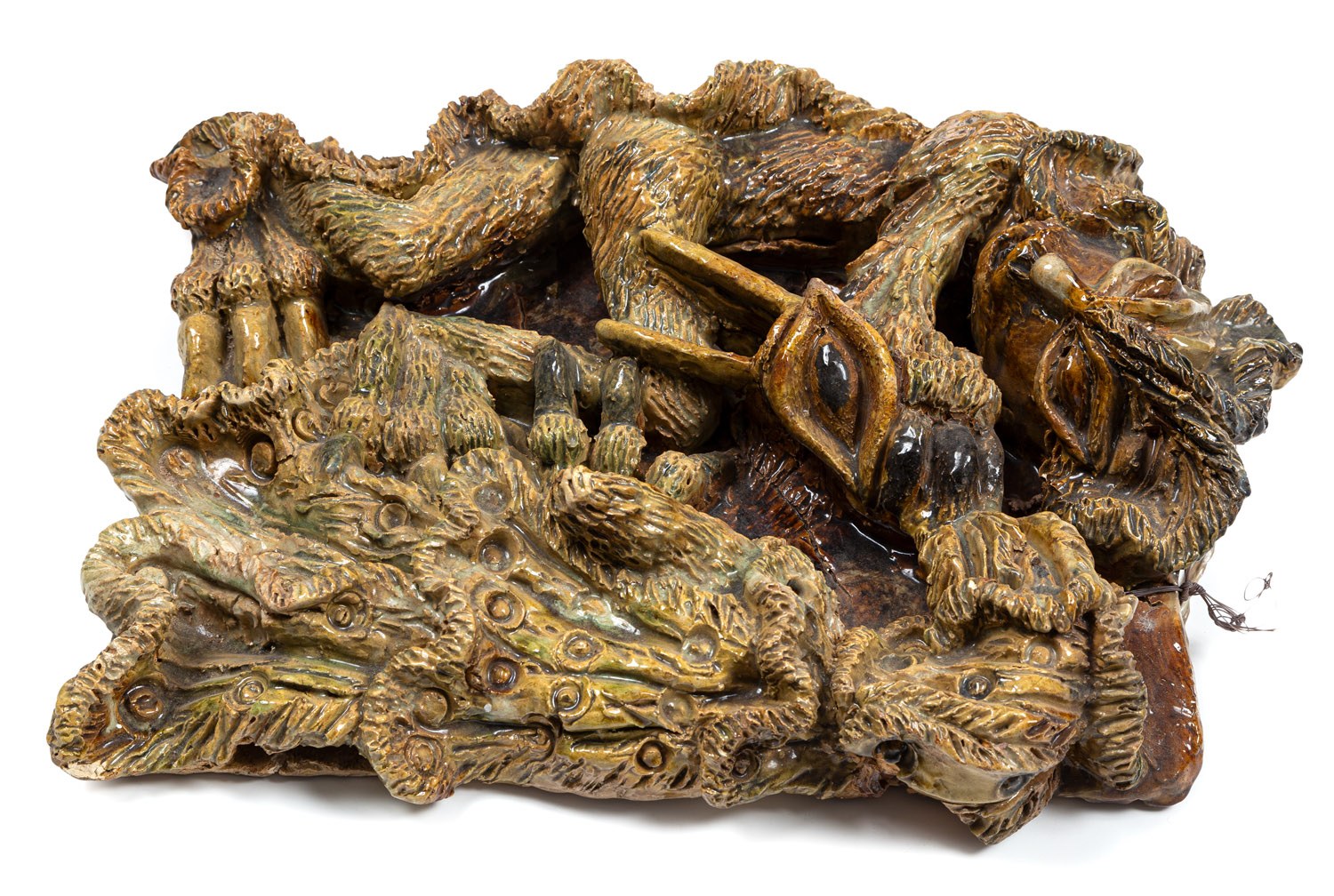

Dimensions: 50 x 35 x 10 cm
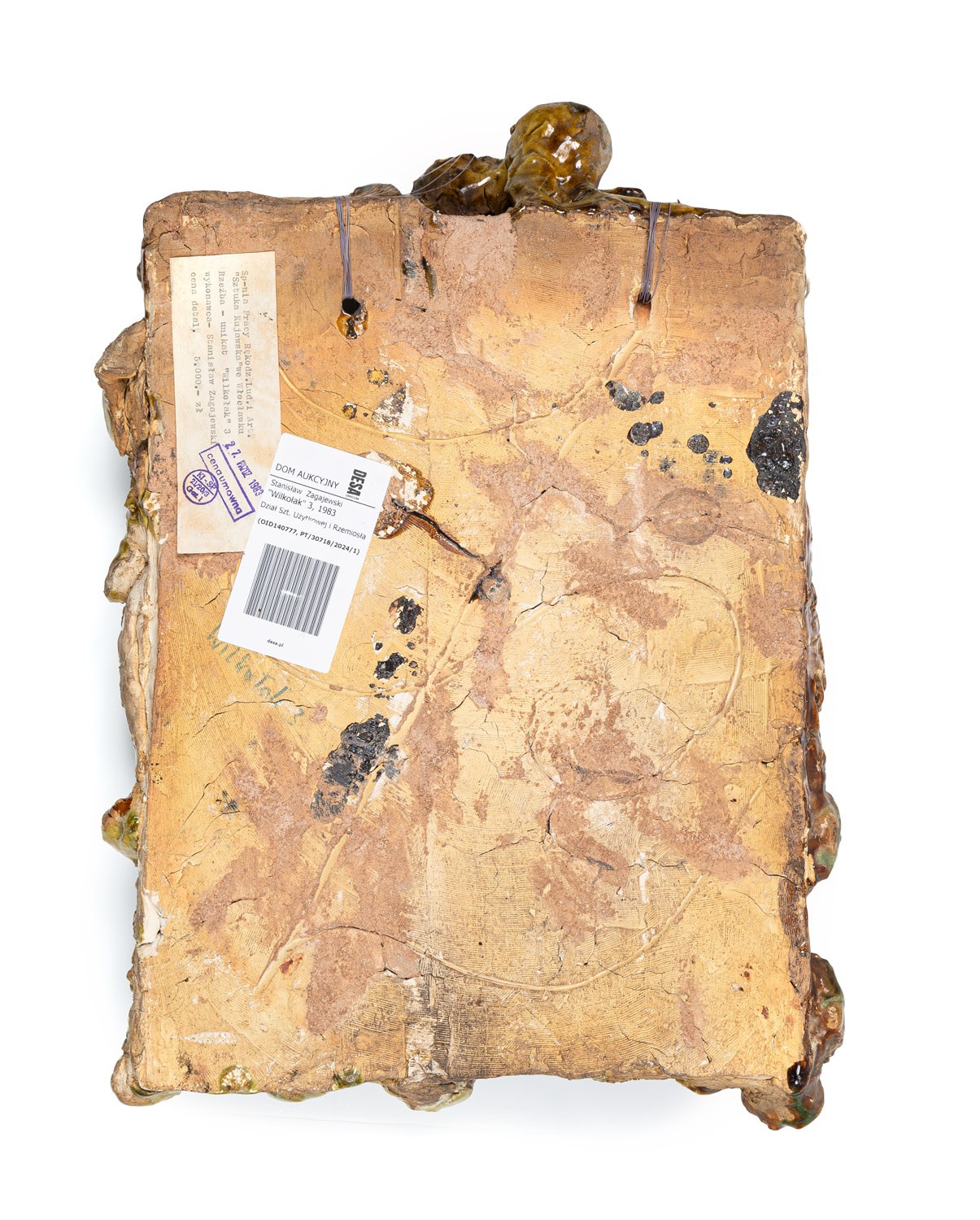
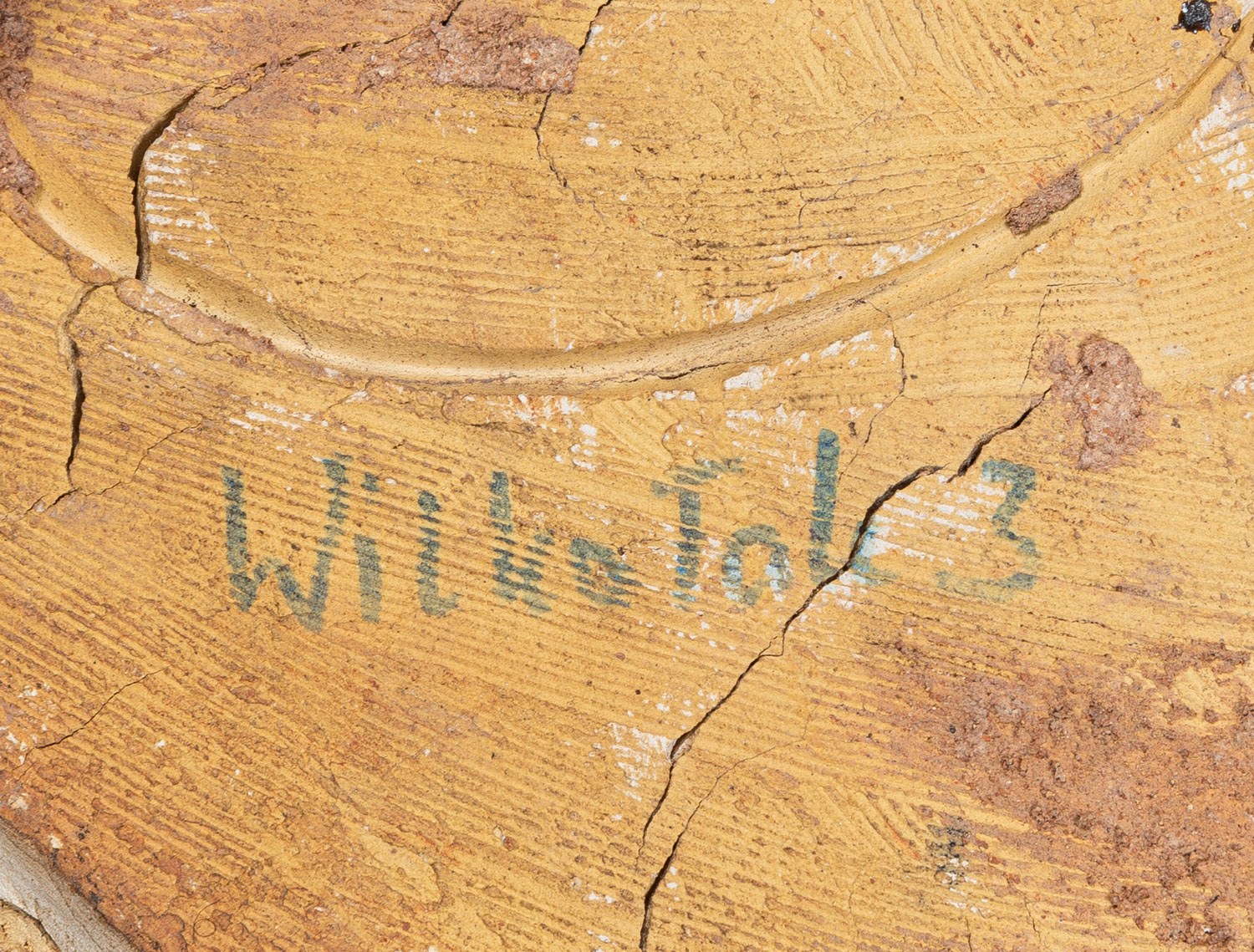
On the back, there is a paper tag and a handwritten description: 'Wikołak 3'
Condition
chips on the edges
Biography
An outstanding self-taught artist. His date and place of birth are unknown. He was found in the winter of 1929 on the steps of St. Barbara’s Church in Warsaw. The found child was given a first and last name, and a fictitious date and place of birth were recorded (Warsaw, September 27, 1927). He spent his childhood in religious orphanages in Ciechocinek and Grabie near Toruń. He earned a living by working in many different professions: as a cook, gardener, bookbinder, and tailor; he also worked as a night watchman and security guard. He also created stucco work in Warsaw’s Old Town and worked on the construction of the MDM housing complex in Warsaw and the W-Z Highway. Sculpting in clay was his great passion and love from a very young age. His talent was discovered quite early, but he could not be admitted to the secondary art school because he had not completed elementary school, nor to the construction school—due to his frail health. He was taught the art of firing clay forms at “Cepelia,” for which he made clay birds. Thanks to the personal efforts of Prof. A. Jackowski of the Institute of Art at the Polish Academy of Sciences, he was given a small house in Włocławek, where he lived and worked for the rest of his life. The most comprehensive collection (a permanent exhibition of over 120 sculptures, including several altars) is owned by the Museum of the Kuyavian and Dobrzyń Region in Włocławek. Zagajewski’s sculptures are also held in the collections of, among others, the Ethnographic Museum in Warsaw, the Silesian Museum in Katowice, the Ethnographic Museum in Toruń, and the Collection de l’Art Brut in Lausanne. His works are featured in all major exhibitions of artists associated with the so-called Art Brut movement.